
Dog Separation Anxiety: Signs, Causes and How to Help Your Dog Feel Safer Alone
Separation anxiety in dogs is not disobedience, stubbornness or an attempt to punish an owner for leaving. It is a genuine distress response that occurs when a dog is separated from an important attachment figure or, in some cases, left without human company. The visible behavior may include barking, howling, pacing, panting, destruction, house soiling or attempts to escape, but some dogs experience significant distress much more quietly. Because the behavior happens mainly when the owner is absent, the problem can remain hidden, be underestimated or be confused with boredom, insufficient training or another behavioral or medical condition. Effective support therefore begins with careful observation, realistic expectations and an understanding that every dog may have a different trigger, threshold and path toward improvement. Separation anxiety training is usually gradual, highly individual and rarely linear, but meaningful progress is possible when the dog and the owner receive appropriate support.
What Is Separation Anxiety in Dogs?
Dog separation anxiety is a behavioral condition in which separation from an attachment figure or being left alone triggers a level of distress that the dog cannot comfortably regulate. The dog is not simply choosing an undesirable behavior after the owner leaves. The barking, pacing, scratching, panting or destruction that owners observe is more accurately understood as an outward expression of fear, panic, frustration, heightened arousal or an urgent attempt to restore contact with the absent person.
Veterinary and behavioral literature also uses the broader term separation-related problems or separation-related behavior. This terminology is important because dogs who appear similar on camera may not be experiencing exactly the same emotional problem. One dog may panic specifically when separated from one person, another may struggle whenever no human is present, and another may become distressed primarily because of confinement, noises outside the home or frustration around an exit. Similar symptoms can therefore arise from different underlying causes, which is why observing one destroyed door or one period of barking is not enough to establish a diagnosis.
Separation anxiety, isolation distress and separation-related behavior
The terminology can feel confusing, but the distinctions are useful:
- Separation anxiety commonly describes distress connected with separation from a particular attachment figure. A dog may remain anxious even when another person is present because the specific person they depend on has left.
- Isolation distress describes difficulty being completely alone. A dog with isolation distress may be comfortable when any familiar or trusted person stays with them, even if their primary owner is absent.
- Separation-related behavior is a broader descriptive term for problematic or distress-related behavior that happens during an owner's absence. It does not assume a single emotional cause before the dog's history, environment and behavior have been properly assessed.
Owners do not need to determine the perfect diagnostic label alone. What matters initially is recognizing that the dog may be experiencing genuine distress, documenting what happens and seeking qualified help when the symptoms are severe, persistent or difficult to interpret.
What Separation Anxiety Feels Like for a Dog
We cannot directly ask a dog to describe the emotional experience of being left alone, so behavioral professionals infer emotional state through body language, timing, physiological signs and patterns of behavior. For some dogs, the owner's departure appears to trigger an intense threat response. Heart rate, breathing, muscle tension, vigilance and movement may increase as the nervous system prepares the body to respond to something the dog perceives as unsafe.
This helps explain why separation anxiety symptoms are not always voluntary or easily interrupted. A dog in a highly distressed state may be physically unable to settle, eat, sleep or engage normally with a toy. Scratching a door may represent an attempt to follow the owner rather than an intention to damage the home. Urination or defecation may result from physiological stress rather than forgotten house training. Persistent barking or howling may function as distress communication rather than attention-seeking behavior.
Understanding the emotional mechanism does not make the consequences easier for the owner, especially when there are neighbor complaints, property damage or safety concerns. It does, however, change the type of response that is likely to help. Punishment may temporarily suppress a visible behavior, but it does not teach a frightened dog that being alone is safe.
Signs of Separation Anxiety in Dogs
The signs of separation anxiety in dogs vary considerably. Some dogs become visibly panicked within seconds of the owner leaving, while others remain relatively still but stay tense, vigilant and unable to rest. Some show symptoms only after a certain length of time, and some begin reacting before the departure has happened.
Signs before the owner leaves
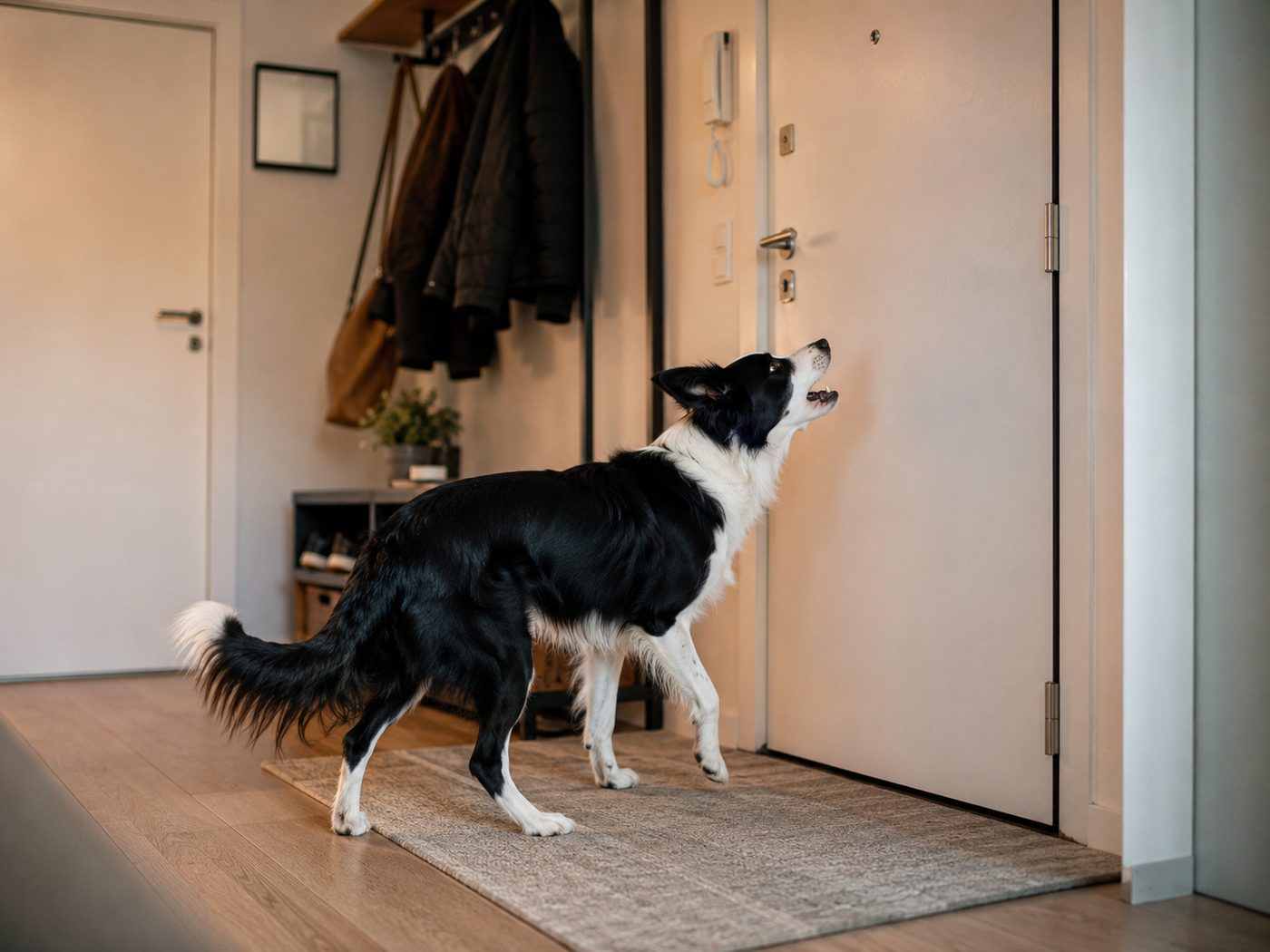
A dog may begin responding to pre-departure cues that predict an absence. These cues can include the owner putting on shoes, collecting keys, preparing a work bag, applying a particular perfume, closing windows or following a familiar morning routine. Possible anticipatory signs include:
- Following the owner more closely than usual.
- Blocking the doorway or repeatedly moving between the owner and the exit.
- Panting, trembling or salivating before the departure.
- Refusing food as soon as the departure routine begins.
- Becoming unusually restless, withdrawn or unable to settle.
- Whining, barking or pawing at the owner.
- Reacting strongly when keys, shoes or bags appear.
Following an owner around the home is not, by itself, proof of separation anxiety. Many dogs prefer proximity to their people without becoming distressed when left alone. The behavior becomes more informative when it appears together with other signs and follows a consistent relationship with departures.
Signs after the owner leaves
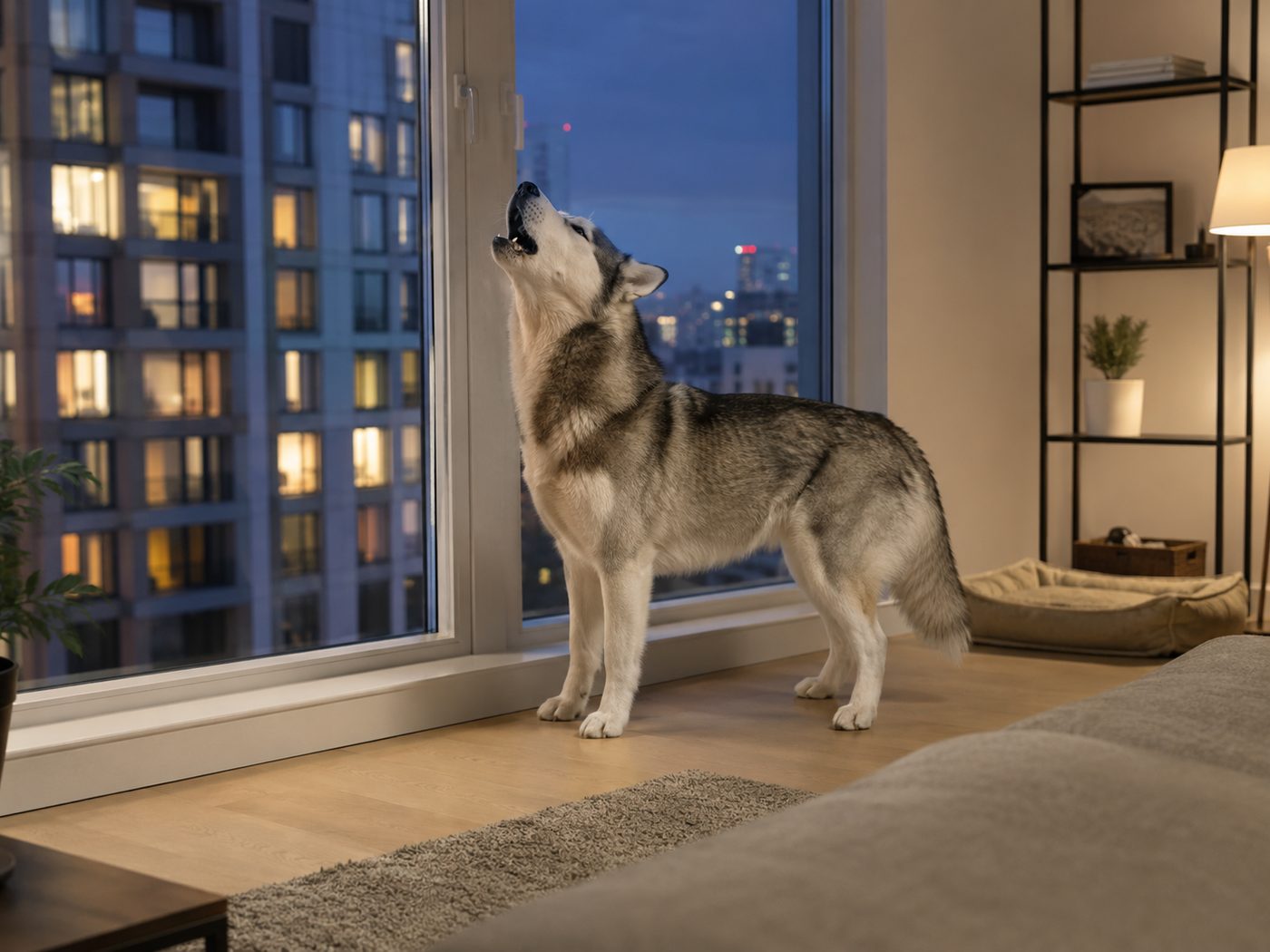
Common dog separation anxiety symptoms during an absence include:
- Barking, whining, crying or prolonged howling.
- Pacing in repeated routes or moving continuously between rooms.
- Panting when the temperature and recent activity do not explain it.
- Excessive drooling or leaving wet areas around doors and resting places.
- Trembling, scanning the room or remaining hypervigilant.
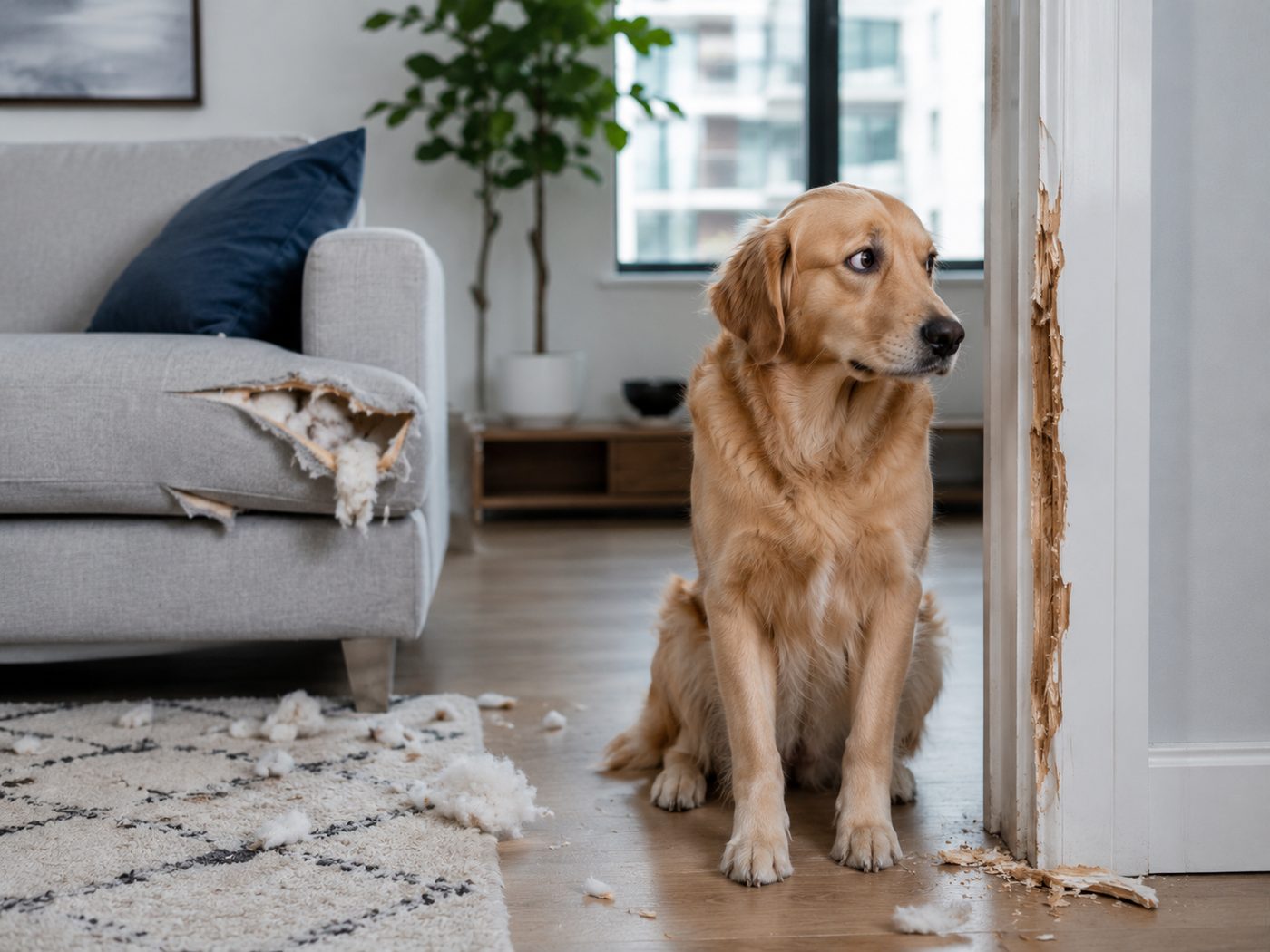
- Scratching, biting or chewing doors, frames, windows or barriers.
- Damaging objects carrying the owner's scent.
- Urinating or defecating despite being reliably house-trained.
- Vomiting, diarrhea or other gastrointestinal signs associated with distress.
- Refusing treats, meals, chews or enrichment that the dog normally enjoys.
- Trying to escape a crate, room or home.
- Injuring teeth, nails, paws, mouth or skin during escape attempts.
- Remaining frozen, withdrawn or unusually inactive without genuinely relaxing.
- Repetitive behaviors that appear difficult for the dog to stop.
- Repeatedly searching rooms or monitoring the entrance.
- Failing to sleep or settle throughout the absence.
The absence of destruction does not mean the dog is comfortable. A quiet dog may still spend the entire absence standing near the door, breathing rapidly, monitoring every sound or remaining too tense to sleep. This is one reason video observation is more reliable than judging the dog only by the condition of the home after returning. The Merck Veterinary Manual identifies video as an invaluable part of evaluating separation-related behavior because it reveals timing, body language, arousal and possible environmental triggers that owners would otherwise never see.
Behavior when the owner returns
Some dogs greet their owners with extreme intensity and take a long time to calm down. They may jump, vocalize, tremble, run repeatedly between rooms or remain physically attached to the owner after the reunion. An enthusiastic greeting alone does not diagnose separation anxiety, but an exaggerated and prolonged reunion can contribute useful context when it appears together with distress during the absence.
Is It Separation Anxiety or Something Else?
A dog barking or destroying something while alone does not automatically have separation anxiety. Several medical, behavioral and environmental problems can produce similar signs, and more than one problem may occur at the same time.
Boredom or insufficient activity
A dog with unmet physical or behavioral needs may chew objects, investigate cupboards or find ways to occupy themselves. Boredom-related behavior is often more exploratory and may not include panting, drooling, frantic pacing, escape attempts or persistent distress vocalization. However, boredom and anxiety can coexist, so the distinction is not always simple.
External noises and environmental triggers
Dogs may bark at neighbors, delivery workers, other dogs, construction noise, lifts, traffic or sounds in a shared hallway. A camera can help determine whether the dog becomes distressed because the owner has left or whether specific external events are triggering arousal.
Confinement distress
Some dogs are relatively comfortable when allowed to move through a familiar space but panic when placed in a crate, closed room or restricted area. A crate is therefore not automatically calming. For dogs with confinement-related distress, forcing crate use can intensify panic and increase the risk of injury.
Incomplete house training or medical causes
Urination, defecation, vomiting, restlessness or changes in behavior may have medical explanations. Pain, gastrointestinal problems, urinary conditions, endocrine disorders, neurological disease, medication effects, sensory decline and age-related cognitive changes can all influence behavior. A veterinary assessment is especially important when symptoms begin suddenly, occur in an older dog or appear outside the context of separation.
Normal puppy behavior
Puppies naturally need time to develop bladder control, emotional regulation and comfort with short periods of independence. Some vocalization or restlessness can occur during this learning process. Persistent panic, frantic escape behavior or an inability to tolerate even very short, carefully introduced separations deserves attention rather than being dismissed as something the puppy will inevitably outgrow.
What Causes Separation Anxiety in Dogs?
There is rarely one simple cause of dog separation anxiety. Current evidence supports a multifactorial explanation in which temperament, genetics, early experience, learning history, environment, health and major life events interact differently for each dog. Potential contributing factors include:
- A sudden change in the owner's work or daily schedule.
- Moving to a new home or spending time in an unfamiliar environment.
- Adoption, rehoming or previous loss of an attachment figure.
- The death or departure of a person or animal in the household.
- A frightening event that happened while the dog was alone.
- A major reduction in the amount of time the dog spends alone.
- Noise sensitivity or a history of noise-related fear.
- Insufficient gradual experience of safe independence.
- Confinement-related fear or frustration.
- Changes associated with illness, pain, aging or cognitive decline.
- Individual temperament and inherited vulnerability to fear or anxiety.
Research following dogs through changes in owner routines has found that separation-related behavior can emerge or change when the amount of time spent alone changes substantially. This does not mean that one schedule change inevitably causes separation anxiety, but it illustrates why routine, history and environmental context need to be evaluated together.
It is also important not to blame owners for being too loving or affectionate. A close bond does not automatically create separation anxiety, and a dog following a person around the home does not by itself establish increased risk. Owners are usually doing the best they can while trying to understand a complicated condition with limited and often contradictory information.
How to Tell Whether Your Dog Is Anxious When Left Alone
The most useful first step is usually safe video observation. You can use a pet camera, indoor security camera, laptop, tablet or phone to observe your dog without purchasing a specialized device. Record a normal, safely manageable absence and review:
- What happens when the departure routine begins.
- How soon the first behavioral change appears.
- Whether your dog eats after you leave.
- Whether the dog can lie down and genuinely settle.
- How breathing, movement and vigilance change.
- Whether barking is continuous or triggered by external events.
- Where destruction is directed.
- Whether the dog returns to a calm state.
- Whether symptoms intensify after a specific duration.
- How behavior changes across different days and conditions.
Do not deliberately create a prolonged panic episode simply to obtain a recording. If your dog has previously injured themselves, destroyed barriers, experienced severe gastrointestinal symptoms or shown extreme distress, speak with a veterinarian or qualified behavior professional before testing another absence.
A single video can provide useful information, but separation-related behavior often changes from day to day. Repeated observations are more informative because they help reveal whether sleep, exercise, health, noise, travel, household changes, departure time or previous experiences influence the outcome.
How Dog Separation Anxiety Is Assessed
Assessment usually involves more than counting how many minutes a dog can remain alone. A veterinarian or qualified behavioral professional may consider:
- Medical and behavioral history.
- Age and developmental stage.
- When the problem began.
- Changes in the household or routine.
- Symptoms before, during and after separation.
- Video of the dog during an absence.
- Whether another person or animal changes the response.
- Whether confinement is involved.
- Whether noises or external activity trigger behavior.
- Previous training methods and outcomes.
- Current medications and health conditions.
- The dog's ability to eat, rest and recover.
- The severity and safety implications of the behavior.
This broader assessment matters because separation-related problems are heterogeneous. Research has identified different clusters of behavioral presentation involving social panic, exit frustration, noise sensitivity, elimination and other patterns. Treating every dog with the same generic protocol may therefore overlook meaningful differences in what is driving the behavior.
How to Help a Dog With Separation Anxiety
There is no universal dog separation anxiety treatment plan. The appropriate approach depends on severity, underlying causes, household constraints, medical status, available support and the dog's individual response. In many cases, effective support combines management, gradual behavior modification, environmental adjustments, owner education and, when appropriate, veterinary treatment.
1. Begin with management
Management means reducing exposure to absences that predictably cause intense panic while a longer-term plan is being developed. Depending on the household, this may involve family members, trusted friends, a pet sitter, suitable daycare, taking the dog to work or adjusting schedules temporarily. Complete avoidance is not possible for every owner, and owners should not be shamed when practical or financial limitations make management difficult. The goal is to reduce unnecessary, repeated distress as much as realistically possible while building a sustainable plan.
2. Identify the dog's current baseline
The baseline is not the longest absence the dog has survived. It is the duration and context in which the dog can remain sufficiently calm. For one dog, the baseline may be several minutes. For another, it may be the few seconds required for the owner to touch the door and return. Starting from the dog's actual capacity makes training more informative and reduces the risk of repeatedly pushing the dog into panic.
3. Use gradual departure training
Gradual departure training introduces absence in carefully controlled steps. The objective is to return before the dog becomes significantly distressed and to increase difficulty only when the dog is coping consistently. This process is often connected with systematic desensitization, in which the trigger is introduced at an intensity the dog can tolerate, and counterconditioning, in which the emotional association with separation is gradually changed. The terminology sounds technical, but the practical principle is straightforward: learning is more likely when the dog is not overwhelmed.
Progress should not be increased according to a fixed online schedule. A dog who manages five minutes comfortably today is not automatically ready for ten minutes tomorrow. Training decisions should reflect body language, consistency, recovery and context rather than duration alone. Reviews of canine separation-anxiety management identify gradual behavior modification, often supplemented by professional and veterinary support, as a central part of treatment.
4. Make departure information more predictable
Some dogs benefit from a clear, neutral cue that distinguishes a short, controlled training absence from an unavoidable longer departure. The Merck Veterinary Manual describes the use of a novel safety signal during graduated departure training to indicate that the owner will return before the dog becomes anxious. Predictability does not mean creating an elaborate ritual that makes the dog increasingly vigilant. It means reducing confusion and helping the dog learn from repetitions that remain within their capacity.
5. Use food and enrichment thoughtfully
Food enrichment, frozen toys, lick mats or chews may help some dogs, particularly when anxiety is mild enough for them to eat and engage normally. However, food is not a reliable measure of emotional comfort and is not a complete treatment. A dog may consume food quickly and panic once it is finished. Another dog may ignore a normally valuable treat because their stress level is already too high. Hard chews, damaged toys and foods that create choking or digestive risks should not be left unsupervised. The dog's behavior, health, size, eating style and previous response must guide the decision.
6. Consider veterinary treatment when appropriate
Moderate or severe separation anxiety may require veterinary involvement. Medication does not replace behavior modification, but it may reduce anxiety enough for some dogs to learn, rest and respond more effectively to a training plan. Only a veterinarian can assess whether medication is appropriate, select a suitable option and monitor possible effects. Medication should not be presented as a failure, a shortcut or something reserved only for the most extreme situation. Anxiety is a welfare concern, and veterinary treatment may be a responsible part of a comprehensive behavioral-management plan. Current veterinary guidance recognizes that behavior modification and medication can be used together according to the individual case.
7. Work with the right professional
A veterinarian should be involved when symptoms are severe, sudden or potentially connected with health. Veterinary behaviorists and appropriately qualified behavior professionals can help evaluate video, identify likely triggers, design a gradual plan and adapt it when progress changes. Professional support is particularly important when the dog:
- Injures themselves during absences.
- Experiences sustained panic.
- Cannot tolerate even very brief separation.
- Has multiple anxiety or fear problems.
- Shows sudden behavioral change.
- Has a medical condition or is taking medication.
- Lives in a situation where barking or damage creates urgent housing risk.
- Has not improved despite careful, consistent training.
What Not to Do
Do not punish behavior discovered after returning
A dog cannot connect delayed punishment with a behavior that happened earlier in the absence in the way an owner may imagine. Punishment may increase fear around the owner's return without changing the emotional reason for the separation-related behavior.
Do not use a "cry it out" approach
Allowing a dog to remain in escalating distress until they become quiet does not necessarily teach comfort. The dog may become exhausted, shut down or stop vocalizing while remaining emotionally distressed. Repeated overwhelming absences can make future departures more difficult.
Do not increase duration too quickly
Progress is not determined by willpower. Large increases may exceed the dog's threshold and create confusing results. Smaller, observable steps usually produce more useful information.
Do not assume a crate will solve separation anxiety
Crates can be comfortable resting places for dogs who already feel safe in them. They can also intensify panic in dogs with confinement distress and create serious injury risk when escape behavior occurs.
Do not rely on exercise alone
Appropriate physical activity, sleep and enrichment support general wellbeing, but exhaustion is not treatment for panic. A tired dog can still experience separation anxiety.
Do not assume another dog will fix the problem
Some dogs are calmer with canine company, but many remain distressed because the missing element is a human attachment figure or human presence. Adding another animal is a major commitment and should not be treated as a predictable cure.
Do not compare your timeline with another dog
Breed, age, history, environment, severity, health and owner circumstances all influence progress. Comparison often increases pressure without providing useful behavioral information.
What Progress Really Looks Like
The easiest metric to notice is alone-time duration, but duration is only one part of separation anxiety progress. A dog may remain alone for longer while still spending the entire absence pacing and panting. Another dog may remain alone for the same duration as before but show a major reduction in symptom intensity. Meaningful progress can include:
- Taking longer to show the first mild sign of concern.
- Settling more quickly after the owner leaves.
- Sleeping during part of the absence.
- Showing less panting, pacing or vocalization.
- Recovering more quickly after a small disturbance.
- Eating calmly rather than frantically.
- Responding less intensely to departure cues.
- Experiencing fewer severe sessions.
- Maintaining progress more consistently across days.
- Coping in a wider range of familiar circumstances.
Separation anxiety progress is commonly non-linear. Illness, travel, fireworks, construction noise, visitors, hormonal changes, disrupted sleep, household stress or an unfamiliar environment can temporarily affect the dog's capacity. A regression does not automatically mean previous learning has disappeared. It may indicate that the conditions have changed and the plan needs to return temporarily to an easier level.
The Impact of Separation Anxiety on Dog Owners
Separation anxiety affects far more than what happens inside the home after the door closes. Owners may reorganize work, social activities, appointments, exercise, travel and relationships around the dog's ability to remain alone. They may depend on daycare, sitters or family support, face neighbor complaints, pay for damaged property or repeatedly cancel plans.
The emotional burden can be equally significant. Owners often describe guilt when leaving, frustration when training stalls, fear of losing housing, uncertainty about contradictory advice and isolation from people who believe the problem should be easy to solve. Because the recovery process can be slow and unpredictable, even highly committed owners may become exhausted.
Supporting the owner is not separate from helping the dog. Owners make the observations, organize the environment, implement the training and decide when additional help is needed. Clear information, realistic expectations and visible evidence of progress can reduce uncertainty and make the process more sustainable. Qualma was created around this principle: helping the owner understand the behavioral journey is one of the most effective ways to help the dog.
When to Contact a Veterinarian Urgently
Arrange veterinary or specialist support promptly when:
- Your dog injures themselves trying to escape.
- Scratching or chewing has damaged teeth, nails, paws or skin.
- Your dog experiences vomiting, diarrhea, collapse or severe physical distress.
- The behavior began suddenly without an obvious explanation.
- An older dog develops new anxiety, confusion or house soiling.
- The dog cannot eat, rest or recover during absences.
- Symptoms are becoming more severe.
- There is a risk to the dog, another animal or a person.
- You cannot safely manage unavoidable absences.
- You suspect pain, illness or medication-related changes.
Emergency symptoms should be addressed through an appropriate veterinary emergency service rather than through an application or online article.
How Qualma Supports the Separation Anxiety Journey
Qualma is an AI-powered behavioral wellness platform designed to help owners organize and understand their dog's separation-related behavior over time. It does not diagnose separation anxiety, prescribe treatment or replace veterinarians, veterinary behaviorists or qualified trainers. With Qualma, owners can:
- Create an individual behavioral profile for their dog.
- Record alone-time training sessions.
- Document barking, howling, pacing, panting, drooling, destruction, house soiling and other symptoms.
- Record departure context, routine changes and environmental conditions.
- Build a connected long-term behavioral history.
- Monitor progress beyond absence duration alone.
- Review trends and recurring patterns.
- Receive AI-assisted summaries and contextual suggestions.
- Maintain clearer records for professional consultations.
- Access evidence-informed educational resources.
A paper journal records what happened. Qualma is designed to connect observations across time so owners can see how symptoms, context and progress relate to one another. The purpose is not to replace human judgment but to reduce fragmentation and help owners make more informed decisions throughout a complicated and often emotional process.
Start tracking your dog's progress
Begin with a 10-day free trial. No credit card required. Qualma supports—and never replaces—professional veterinary and behavioral care.
Start tracking your dog's progressFrequently Asked Questions
Can separation anxiety in dogs be cured?+
Many dogs can make substantial progress and become more comfortable during absences, but no responsible professional or platform can guarantee a specific outcome. Severity, history, health, environment, owner circumstances and access to professional support all affect the result. The most useful goal is meaningful improvement in the dog's emotional comfort and the household's quality of life.
How long does dog separation anxiety training take?+
There is no standard timeline. Some dogs respond relatively quickly, while others require many months of gradual work and ongoing management. Progress should be based on the individual dog's behavior rather than a fixed online programme.
Why does my dog bark as soon as I leave?+
Immediate barking can be associated with separation distress, but it may also be triggered by hallway noises, visual stimuli, frustration or a learned response. Video can help determine what happens immediately before the barking and whether other signs of anxiety are present.
Why does my dog destroy the door when left alone?+
Damage concentrated around doors or windows may represent an attempt to follow the owner or escape the area. It is not necessarily revenge. Because escape behavior can cause serious injury, severe destruction should be discussed with a veterinarian or qualified behavior professional.
Why does my dog ignore a Kong or food toy when I leave?+
Dogs experiencing significant stress may lose interest in food. Some dogs eat at first and become distressed after the food is finished. Food refusal is useful information, but it does not establish a diagnosis by itself.
Can a pet camera help with dog separation anxiety?+
Yes. A camera allows owners and professionals to observe symptom timing, body language, settling behavior, environmental triggers and changes across sessions. It should be used for observation rather than repeatedly testing absences that are known to cause severe panic.
Will getting another dog help separation anxiety?+
Not reliably. Another dog may help when the problem is specifically related to being completely alone, but many dogs remain distressed without a human present or without a particular attachment figure. A second dog should never be adopted solely as a presumed treatment.
Does crate training help separation anxiety?+
It depends on the dog. A dog who already relaxes comfortably in a crate may find it familiar, but a dog with confinement distress can become more panicked and may injure themselves trying to escape. Crate use should be evaluated individually.
Can puppies have separation anxiety?+
Puppies can experience separation-related distress and need gradual opportunities to learn safe independence. Not every protest indicates a disorder, but persistent panic, extreme vocalization, escape behavior or inability to settle should not be ignored.
Can rescue dogs develop separation anxiety?+
Dogs from any background can experience separation-related problems. Rehoming, changes in attachment relationships and previous experiences may contribute in some cases, but rescue status does not determine an individual dog's outcome.
Why has my dog suddenly developed separation anxiety?+
Sudden changes may follow a move, schedule change, loss, frightening event or period during which the dog was rarely left alone. Sudden behavior change can also be connected with pain, illness, sensory decline or cognitive changes, so veterinary assessment is important.
Is medication used for separation anxiety in dogs?+
Medication may be considered by a veterinarian, particularly when anxiety is moderate or severe or when distress prevents the dog from responding to behavior modification. It should be part of an individualized veterinary plan rather than used without professional supervision.
Final Thought
A dog who struggles to remain alone is not giving the owner a difficult time on purpose. The dog is having a difficult time. Understanding that distinction does not remove the practical challenge, but it creates a more useful starting point—one based on observation, compassion, gradual learning and informed support.
You do not need to solve the entire journey today. Begin by observing what is happening, protecting your dog from avoidable panic where possible, recording the patterns you can see and asking for professional help when the situation requires it. Progress may be slow and uneven, but every clearer observation gives you better information for the next decision.
Go deeper on separation anxiety
Three in-depth guides, each gathering the articles on its subject in one place.
Understand
The signs, the causes, and what your dog experiences
What separation anxiety is, how to recognise it, and how it differs from boredom.
Train
Building confidence with time alone
Thresholds, gradual exposure, session structure, and judging progress.
Support
Treatment, management and professional help
Veterinary assessment, medication conversations, cover, and environment.
Enrichment
Food, chews and calming activities
What enrichment can and cannot do, which activities suit an anxious dog, and safety.
Living with it
Your life, not just your dog's
Guilt, a shrinking social life, burnout, cost, and getting some freedom back.
Build your dog's behavioral history with Qualma
Track symptoms, context and meaningful progress in one connected separation anxiety app.
Start freeReferences and Further Reading
- Merck Veterinary Manual: behavior problems and separation distress in dogs.
- de Assis et al.: diagnostic frameworks for separation-related problems in dogs.
- Sargisson: treatment and management strategies for canine separation anxiety.
- Harvey et al.: changes in time left alone and separation-related behavior.
- FDA information on fear-based behavioral conditions and veterinary treatment.
Veterinary disclaimer: This page provides educational information and behavioral tracking guidance. It does not diagnose separation anxiety, provide veterinary treatment or replace advice from a veterinarian, veterinary behaviorist or appropriately qualified dog behavior professional.
Log tonight's session from your phone
The Qualma app is available now on Android and iPhone. Sign in with your existing account — no need to subscribe twice.