
Can Music Help Dogs Feel Safer When Home Alone?
Music is one of the most commonly recommended tools for dogs struggling with separation anxiety, yet many owners are unsure how much it actually helps. While music is not a cure for separation anxiety, research suggests that calm and predictable soundscapes may help some dogs relax, rest more comfortably, and feel less affected by sudden environmental noises. This article explores what science tells us about music and dogs, how to use music effectively, and why Qualma created calming soundtracks
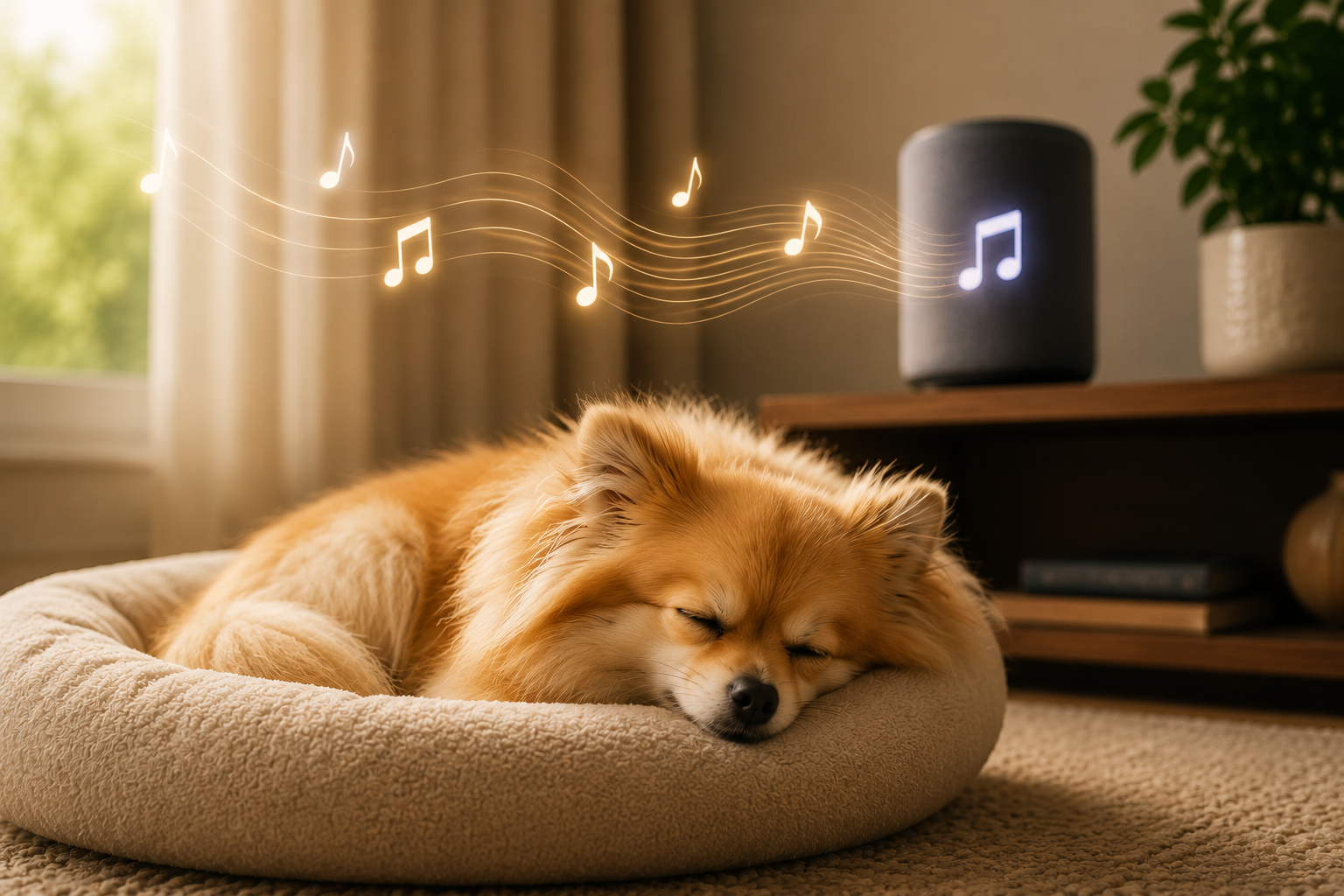
Why Many Owners Leave Music Playing When They Leave The House
One of the first things many dog owners try when they discover their dog struggles with being home alone is turning on music. The idea appears almost instinctive. If music can help humans relax, concentrate, sleep, or feel less alone, perhaps it can provide some comfort to a dog as well. Over the years, this simple idea has become one of the most commonly recommended management tools for dogs experiencing separation anxiety, noise sensitivity, or general stress when left home alone.
The popularity of music among dog owners is understandable because it is easy to implement, relatively inexpensive, and can become part of a daily routine without requiring significant effort. A speaker, a television, a radio, or a streaming playlist can transform an otherwise silent apartment into an environment that feels more familiar and predictable. For owners looking for ways to support their dogs while working through a separation anxiety training plan, music often feels like a natural place to start.
At the same time, it is important to understand what music can and cannot do. Music is not a cure for separation anxiety. It cannot teach a dog that being alone is safe. It cannot replace carefully structured training, observation, or professional support when needed. What music can do is help create a calmer environment, reduce the impact of sudden noises, and provide a consistent background that may make some dogs feel more comfortable. In many cases, these benefits are enough to make music a valuable part of a broader management strategy.
What Science Tells Us About Music And Dogs
The relationship between music and animal behavior has attracted increasing attention from researchers over the last two decades. While dogs do not experience music in exactly the same way humans do, studies have shown that auditory environments can influence canine behavior, activity levels, and relaxation patterns.
One of the most frequently cited findings is that dogs exposed to certain types of music often spend more time resting and less time engaging in stress-related behaviors. Classical music has received particular attention in research settings, where dogs housed in shelters sometimes showed increased relaxation and reduced activity when calm music was played. While these studies do not prove that music eliminates anxiety, they suggest that sound environments can influence emotional states and behavioral responses.
Researchers have also explored the importance of predictability in animal welfare. Dogs, like humans, generally cope better when their environment feels stable and understandable. Sudden and unpredictable sounds can interrupt rest, trigger vigilance, and increase arousal. A consistent background soundtrack may help soften the impact of those environmental disruptions, especially in urban environments where noise is difficult to control.
The scientific evidence does not support the idea that a particular song can cure separation anxiety. What it does support is the broader understanding that environmental factors matter. Sound is part of the environment, and changing the soundscape can influence how some dogs experience their surroundings.
Silence Is Not Always Peaceful
Many owners imagine that silence is the ideal environment for a dog left home alone. Human intuition often tells us that a quiet apartment should be relaxing. In reality, silence can sometimes make certain noises even more noticeable.
Think about a typical apartment building. Elevators move. Neighbors open and close doors. People walk through hallways. Deliveries arrive. Conversations happen outside. Cars pass beneath windows. Dogs bark in nearby apartments. None of these sounds are unusual, but for a dog already monitoring the environment carefully, they can become highly significant.
When there is no background sound, every unexpected noise stands out. A door slamming in the hallway may seem abrupt and important. A neighbor returning home may immediately capture the dog's attention. For dogs that are already sensitive, these interruptions can make settling down more difficult.
Music can help by creating a consistent layer of background sound. It does not remove environmental noises completely, but it can reduce the contrast between silence and sudden interruptions. The result is often a softer and more predictable auditory environment.
Why Music Works Best When It Is Part Of Everyday Life
One mistake owners sometimes make is introducing music only when they leave the house. While this approach is understandable, it can accidentally create a new departure cue.
Dogs are extraordinary pattern-recognition experts. If music only appears moments before an owner leaves, the dog may eventually learn that music predicts separation. Instead of becoming a comforting signal, it becomes another part of the departure routine.
This is one reason many trainers recommend incorporating music into normal daily life rather than reserving it exclusively for absences. Playing music while relaxing together, working from home, reading, or spending quiet time in the apartment allows the dog to experience those sounds in positive and neutral situations.
Over time, the music becomes part of the environment rather than part of the departure ritual. When the same music continues playing after the owner leaves, the dog is hearing something familiar rather than something associated exclusively with absence.
Choosing The Right Type Of Music
Not all music creates the same atmosphere.
Many people naturally choose music based on their own preferences, but what feels energizing or exciting to a human may not be ideal for a dog trying to rest. Fast tempos, sudden volume changes, heavy percussion, and highly dynamic tracks can create stimulation rather than relaxation.
In contrast, slower and more predictable soundscapes tend to be better suited to calm environments. Soft piano music, gentle ambient music, slow instrumental compositions, and carefully designed relaxation tracks often create a more stable auditory background. The goal is not entertainment. The goal is creating an atmosphere that supports rest and predictability.
This is one reason dog-focused music has become increasingly popular. Instead of prioritizing dramatic musical experiences, these tracks are designed around consistency, softness, and emotional neutrality. They are intended to blend into the environment rather than dominate it.
Why We Created Music For Dogs
As we continued learning about separation anxiety and speaking with owners around the world, one theme appeared repeatedly. People were constantly searching for practical tools that could support their dogs during daily life. They were looking for enrichment ideas, management strategies, environmental adjustments, and small ways to make departures easier.
Music was one of the recommendations that appeared again and again.
At Qualma, we understand that no single tool solves separation anxiety. We also understand that owners often need resources that are simple, accessible, and easy to integrate into everyday routines. This is why we decided to create music specifically for dogs and the people who care for them.
Our goal was not to create a treatment. Our goal was to create calm soundscapes that could become part of a dog's environment. Music that owners could use while working, relaxing, reading, sleeping, or preparing for departures. Music that could help create consistency in a world that often feels unpredictable to an anxious dog.
How To Use Music In A Separation Anxiety Plan
The most effective way to use music is as one component of a larger strategy. Music works best when combined with observation, training, routine management, environmental support, and realistic expectations.
Try introducing music during calm periods when you are home. Observe your dog's response. Experiment with different styles and volumes. Avoid making music the exclusive signal that you are about to leave. Instead, allow it to become part of the normal rhythm of daily life.
If your dog already responds positively to certain sounds, consider incorporating those sounds into quiet periods throughout the day. If you use a camera, observe whether the dog appears to settle more easily with music playing. If there is no noticeable difference, that information is useful too. Every dog is an individual, and not every strategy works equally well for every animal.
The goal is not to force a solution. The goal is to discover what helps your dog feel most comfortable.
Where To Find Qualma Music
We have made our music available on multiple streaming platforms so owners can easily access it wherever they already listen to audio content. Whether you prefer Spotify, YouTube, Apple Music, or other streaming services, you can find Qualma music and incorporate it into your dog's daily routine.
We encourage owners to use the music not only during absences but also during calm moments together at home. Familiarity often matters as much as the music itself. The more the dog associates those sounds with normal, safe experiences, the more naturally they can become part of the environment when the owner is not present.
Final Thoughts
Music is not a cure for separation anxiety, and it should never be presented as one. Dogs struggling with separation anxiety deserve thoughtful training plans, careful observation, and, when necessary, support from qualified professionals. At the same time, small environmental adjustments can still play an important role in helping dogs feel more comfortable.
For some dogs, music provides a familiar and predictable background that makes the environment feel calmer. For others, it helps soften sudden noises that might otherwise interrupt rest. For many owners, it becomes one more useful tool in a larger collection of strategies designed to support their dog.
The goal is not to replace training. The goal is to create an environment that gives training the best possible chance to succeed. Sometimes that begins with something as simple as pressing play.
Log tonight's session from your phone
The Qualma app is available now on Android and iPhone. Sign in with your existing account — no need to subscribe twice.