
Do Certain Dog Breeds Have More Separation Anxiety?
Do certain dog breeds have more separation anxiety? Learn what research says about breed tendencies, genetics, rescue dogs, and why your dog’s individual personality matters more than labels.
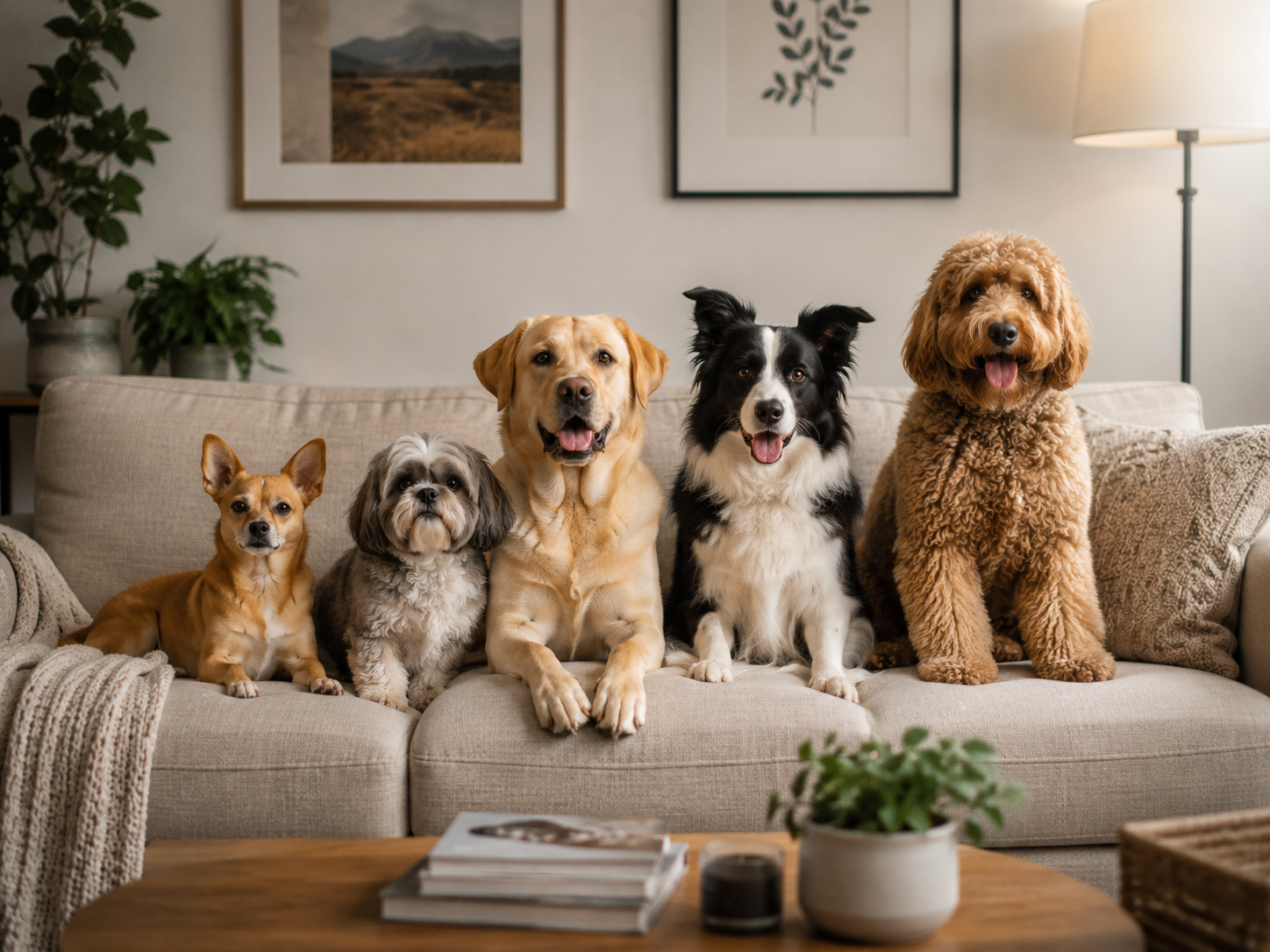
Many dog owners wonder whether separation anxiety is linked to specific breeds or if it is purely a matter of individual personality and experience. Some breeds are often described as “more prone” to anxiety, while others are perceived as independent and resilient when left alone. This raises an important question: is separation anxiety something you can predict based on breed, or is it shaped by a combination of factors that go far beyond genetics? The answer is more nuanced than a simple list of “anxious breeds.” While research does suggest that certain breed groups may have tendencies that influence attachment and sensitivity, these tendencies interact with environment, early life experiences, training, and the unique personality of each dog. Understanding this complexity is essential, because relying too heavily on breed stereotypes can lead to incorrect assumptions, misplaced expectations, and ineffective training strategies. This article explores what science and experience tell us about breed tendencies, genetics, rescue dogs, and why your individual dog’s story matters far more than their breed label.
Why This Question Is So Common
It is natural to look for patterns when trying to understand behavior. If your dog struggles with being alone, it is reassuring to know whether this is something typical for their breed or something unusual. Breed information is often one of the first things owners turn to, especially when searching online or speaking with other dog owners.
Certain breeds are frequently mentioned in discussions about separation anxiety. Labrador Retrievers are described as highly social and people-oriented. Border Collies are known for their intelligence and sensitivity. Smaller companion breeds are often labeled as “velcro dogs” that prefer constant proximity to their owners. These descriptions create an impression that some dogs are almost destined to struggle with being alone.
At the same time, there are breeds that are often described as more independent. Some working or guardian breeds are believed to tolerate solitude better, leading to the assumption that they are less likely to develop anxiety. This contrast between “dependent” and “independent” breeds can feel convincing, but it simplifies a much more complex reality.
The truth is that breed can influence tendencies, but it does not determine outcomes. Understanding where breed matters—and where it does not—is essential for setting realistic expectations.
What Research Actually Suggests
Scientific research into separation anxiety and breed differences does not support the idea that specific breeds are inherently “anxious” while others are not. However, it does suggest that certain traits associated with breed groups may influence the likelihood of developing separation-related problems.
Dogs bred for companionship and close human interaction often have a stronger tendency to form attachments. This does not mean they will develop separation anxiety, but it does mean that the relationship with the owner plays a central role in their emotional experience. Labrador Retrievers, for example, are highly social and responsive to human presence, which can make them more sensitive to changes in that presence.
Breeds like Border Collies, which are highly intelligent and responsive to environmental cues, may also show strong reactions to changes in routine or predictability. Their sensitivity is not inherently negative, but it can contribute to heightened awareness of absence and environmental shifts.
At the same time, research consistently shows that individual variation within breeds is significant. Two dogs of the same breed can have completely different temperaments, coping mechanisms, and stress thresholds. This variability often outweighs the influence of breed itself.
What this means in practice is that breed can provide context, but it cannot predict behavior with certainty. It is one factor among many.
Breed Tendencies vs Individual Personality
One of the most important distinctions to make is between tendencies and guarantees. Breed tendencies describe patterns that may be more common within a group, but they do not define every individual.
Personality plays a critical role. Some dogs are naturally more resilient, while others are more sensitive. Some adapt quickly to changes, while others require more time and structure. These differences can exist within the same litter, let alone within the same breed.
Temperament is influenced by both genetics and early experiences. A dog that is genetically predisposed to be more cautious may respond differently to being alone than a dog that is naturally more confident. However, early socialization, exposure, and training can shape how these traits develop over time.
Focusing too heavily on breed can lead to misleading conclusions. If a dog is struggling, it is not helpful to assume that the breed is the cause. It is more useful to look at the individual dog’s history, environment, and current behavior.
The Role of Genetics
Genetics does play a role in behavior, but it operates at the level of traits rather than specific outcomes. Traits such as sensitivity, sociability, and stress reactivity can influence how a dog responds to being alone.
Some dogs are more reactive to environmental changes. Others have a lower threshold for stress. These traits can make certain dogs more vulnerable to developing anxiety under the right conditions. However, vulnerability is not the same as inevitability.
Genetic predisposition interacts with experience. A dog with a higher sensitivity may do very well in a stable, predictable environment with gradual training. The same dog may struggle more in an environment with frequent changes or inconsistent routines.
This interaction between genetics and environment is why separation anxiety cannot be explained by breed alone. It is always a combination of factors.
The Impact of Early Life Experiences
Early life experiences are one of the most significant influences on how a dog responds to being alone. Puppies that are gradually introduced to independence often develop stronger coping skills. Those that experience abrupt changes, inconsistent routines, or early stress may find it more challenging.
This is particularly relevant for rescue dogs. Many rescue dogs have experienced disruptions such as changes in home, separation from previous caregivers, or time in shelters. These experiences can affect their sense of security and predictability.
It is important to approach this with nuance. Not all rescue dogs develop separation anxiety, and not all dogs from stable backgrounds are free from it. However, changes and instability can increase sensitivity to absence.
The key takeaway is that history matters. Understanding where your dog comes from can provide valuable insight into their behavior, but it should not be used to limit expectations.
Rescue Dogs and Separation Anxiety
Rescue dogs are often mentioned in discussions about separation anxiety, sometimes in ways that can create unnecessary concern. While it is true that some rescue dogs may be more sensitive to changes and attachment, it is not accurate to assume that they are more likely to develop anxiety as a rule.
What rescue dogs often share is a history of change. They may have experienced multiple environments, different caregivers, or periods of uncertainty. These experiences can influence how they perceive safety and predictability.
At the same time, many rescue dogs adapt remarkably well. With consistency, patience, and clear routines, they can develop strong coping mechanisms and confidence in being alone.
It is important not to view rescue status as a limitation. It is simply part of the dog’s story. What matters most is how the current environment supports the dog moving forward.
Why Environment Often Matters More Than Breed
While breed provides a framework of tendencies, environment shapes how those tendencies are expressed. Daily routines, predictability, training methods, and the emotional climate of the household all influence behavior.
A dog in a structured, calm environment with gradual exposure to alone time is more likely to develop confidence, regardless of breed. Conversely, a dog in an unpredictable or highly stimulating environment may struggle, even if their breed is considered “independent.”
Consistency is particularly important. Dogs learn through patterns. When those patterns are stable, they can anticipate what will happen and adjust accordingly. When they are inconsistent, uncertainty increases, and with it, stress.
This is why focusing on what you can control—environment, routine, training approach—is more effective than focusing on what you cannot change, such as breed.
The Risk of Breed Stereotypes
Relying on breed stereotypes can create unrealistic expectations in both directions. If a breed is labeled as prone to anxiety, owners may assume that struggles are inevitable and feel discouraged. If a breed is labeled as independent, owners may underestimate the need for gradual training and support.
Both scenarios can interfere with progress. Behavior is not determined by labels. It is shaped by interaction between the dog and their environment.
Seeing your dog as an individual allows for a more accurate understanding of their needs. It encourages observation, flexibility, and adaptation, rather than reliance on generalizations.
What Actually Predicts Separation Anxiety
When looking at what predicts separation anxiety, several factors are consistently more relevant than breed alone.
Changes in routine or environment can trigger anxiety, especially if they occur suddenly. Lack of gradual exposure to being alone can make independence more difficult. Strong attachment combined with limited experience of separation can increase sensitivity.
Emotional state also matters. Dogs that are generally more reactive or sensitive may require more structured support. At the same time, dogs that are well-exercised, mentally stimulated, and living in predictable environments tend to cope better.
The most reliable predictor is not breed, but the interaction of these factors over time.
Final Thoughts
The question of whether certain breeds have more separation anxiety does not have a simple answer. Breed can influence tendencies, but it does not determine outcomes. Genetics, early experiences, environment, and individual personality all play significant roles.
Focusing too much on breed can distract from what truly matters: understanding your individual dog. Their behavior, their history, and their responses provide far more useful information than any general description.
Separation anxiety is not defined by breed. It is defined by the emotional experience of the dog and the context in which that experience develops. By shifting the focus from labels to observation, you create a clearer path toward meaningful progress.
Your dog is not a stereotype. They are an individual—and that is where real understanding begins.
Log tonight's session from your phone
The Qualma app is available now on Android and iPhone. Sign in with your existing account — no need to subscribe twice.