How Food Can Help Manage Separation Anxiety In Dogs Without Pretending It Is A Cure
Food is one of the most commonly recommended tools for dogs with separation anxiety, yet it is also one of the most misunderstood. Frozen enrichment toys, lick mats, snuffle mats, food puzzles, and long-lasting chews can help some dogs stay engaged and reduce stress during departures, but they are not a cure for anxiety. Understanding what food can and cannot do allows owners to use it effectively without creating unrealistic expectations. This article explores how food enrichment works, which o
Food Is Not A Cure, But It Can Become A Very Useful Tool
One of the first lessons many owners learn during a separation anxiety journey is that there is rarely one clean solution that fixes everything. Most people begin by searching for the perfect method, the perfect trainer, the perfect toy, or the perfect departure routine that will finally make their dog comfortable at home alone. Over time, however, the reality becomes more complicated and also more human. Progress often comes from combining many small tools that each help in a different way, and food is one of those tools. It does not cure separation anxiety, and it should never be presented as a replacement for training, veterinary support, or careful observation. What it can do, when used thoughtfully, is help some dogs redirect their attention, regulate their stress, and stay engaged during the most difficult first minutes after the owner leaves.
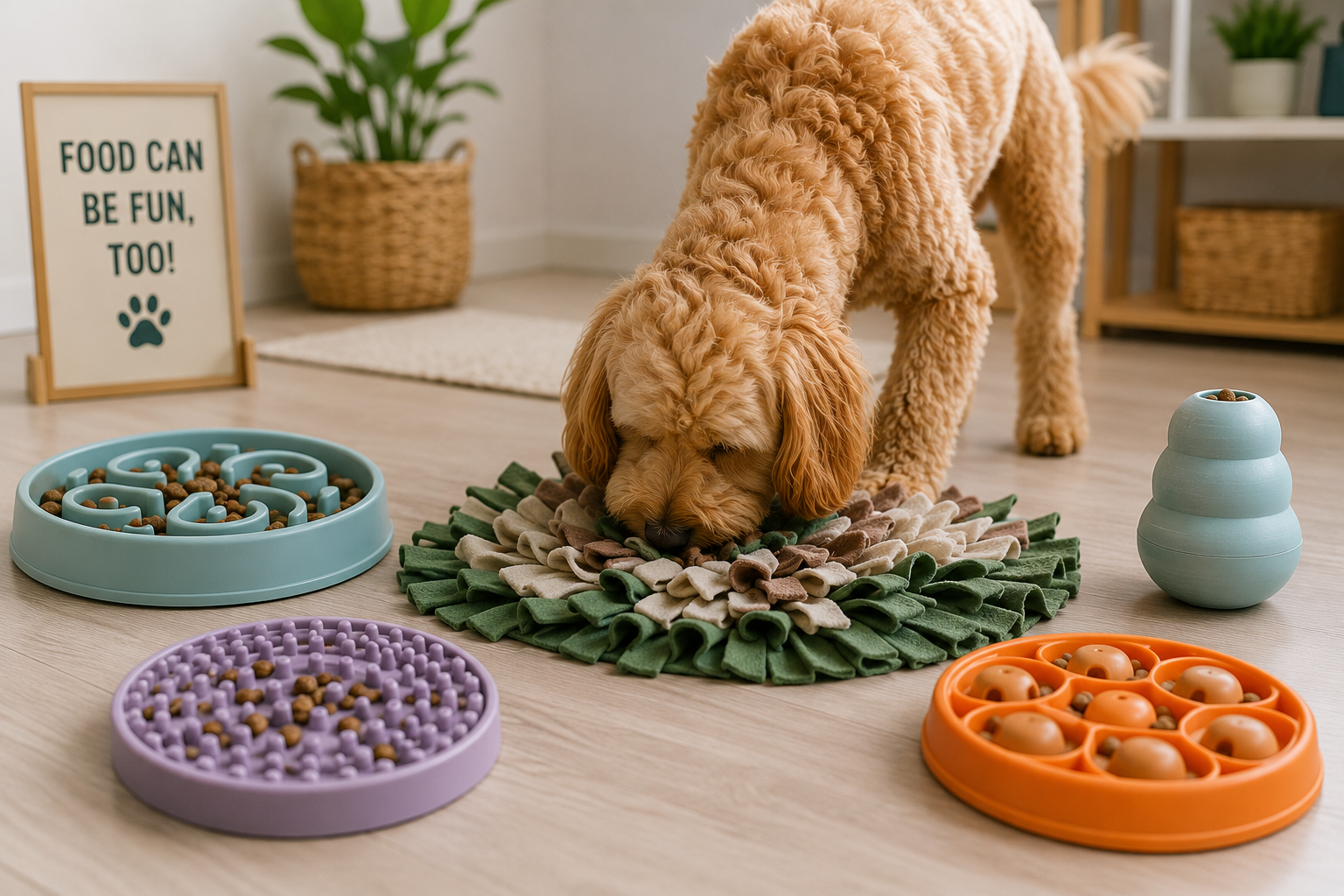
For many owners, those first minutes are the hardest part of the absence. The dog watches the shoes, the keys, the jacket, the bag, and the movements toward the door with a level of attention that can feel almost impossible to interrupt. Some dogs begin worrying before the owner has even left, because they have learned to read the entire departure pattern in advance. In these situations, food can sometimes create a competing focus that gives the dog something else to do with their body and mind. A frozen enrichment toy, a lick mat, a snuffle mat, or a long-lasting chew can shift the dog from watching the door to working on a task that feels familiar and rewarding. This does not mean the anxiety disappears, but it may reduce the intensity of the moment enough to make a short departure more manageable.
I think it is important to be very honest about this distinction because many owners already feel confused by advice that sounds too simple. When someone says, "Just give the dog a Kong," it can feel insulting if your dog is howling, pacing, or refusing food entirely when you leave. Dogs with significant separation anxiety are often too emotionally activated to eat, and an untouched enrichment toy can become another painful reminder that the problem is deeper than boredom. At the same time, for dogs who are still able to engage with food, enrichment can become one of the most practical management tools available. It may help the owner create ten or fifteen minutes of calmer absence, and sometimes that is exactly what real life requires.
Why Food Can Help Some Dogs During Departures
Food is powerful because it connects to several natural dog behaviors at the same time. Dogs do not experience food only as calories in a bowl. They experience it through smell, texture, searching, licking, chewing, problem-solving, and anticipation. When food is presented in a way that requires effort, the dog is no longer simply eating; the dog is interacting with the environment. This kind of interaction can be calming for some dogs because it gives them a structured task at a moment that might otherwise feel uncertain or emotionally charged. A dog who is sniffing through a mat or licking a frozen surface is using the brain and body in a different way than a dog who is standing at the door listening for every sound in the hallway.
Licking, chewing, and sniffing are especially valuable because they tend to be slower and more absorbing than simply swallowing food quickly. A normal meal can disappear in less than a minute, particularly if the dog is enthusiastic or hungry. A frozen food activity may last much longer, especially if the food has been spread thinly across a textured surface or placed inside a toy that requires repeated licking. Sniffing activities can also be mentally tiring because dogs process enormous amounts of information through scent. What looks simple to us can be meaningful work for them. This is why many trainers and behaviorists use food-based enrichment not only for entertainment but also as part of a broader emotional regulation strategy.
The usefulness of food also depends on the dog's emotional state. A dog who can eat while alone is often in a better place than a dog who cannot. This does not automatically mean the dog is relaxed, but it does suggest that the dog has enough emotional capacity to engage with the environment. When a dog ignores food completely, especially food they normally love, it may indicate that anxiety is too high for enrichment to work at that stage. That information is still valuable. It tells the owner that the dog may need a different training plan, shorter departures, professional guidance, or veterinary support before food-based activities can become useful.
Frozen Food Is Often The Simplest Place To Start
Frozen food is one of the easiest enrichment strategies for owners to understand and implement. The principle is simple: instead of offering food in a way that disappears immediately, you freeze it so the dog needs time and effort to consume it. Some owners use wet food, dog-safe yogurt, soaked kibble, pumpkin, mashed banana, or other ingredients that are appropriate for their individual dog. Others prefer ready-made dog food designed for enrichment toys. The exact recipe is less important than the idea behind it. Food that requires licking and persistence can keep a dog engaged for much longer than food placed in an ordinary bowl.
The practical advantage of frozen food is that it can be prepared in advance. An owner who knows they will need to leave later in the day can prepare a frozen enrichment item in the morning or the night before. This matters because separation anxiety management has to fit real life. Most owners are not living in ideal conditions where they can calmly prepare a perfect training setup every time they need to leave. They are working, managing responsibilities, dealing with appointments, and trying to create small windows of freedom without making their dog suffer. Frozen food is useful because it can be ready before the stressful moment arrives.
There are several ways to use frozen food depending on the dog and the home environment. Some owners use lick mats because they are flat, easy to prepare, and encourage slow licking. Others use enrichment toys that can be filled and frozen, which makes the food more difficult to access and extends the activity. Some people freeze food in slow-feeder bowls or textured plates, especially if the dog is not interested in toys but enjoys licking from a surface. The important thing is to choose something safe, stable, and appropriate for the dog’s size, chewing style, and level of frustration tolerance. A tool that is too easy may be finished too quickly, while a tool that is too difficult may make the dog give up or become frustrated.
Lick Mats And Slow Feeders Can Create Calmer Moments
Lick mats are popular for a reason. They are simple, affordable, and easy to adapt to different dogs. The textured surface allows food to be spread thinly, which encourages the dog to lick repeatedly rather than swallow quickly. For some dogs, this repetitive licking can become a calming activity, especially when the mat is associated with predictable routines. If the owner uses it consistently before short departures, the dog may begin to understand that this object appears during a familiar pattern rather than during a chaotic or frightening event. That sense of predictability can matter almost as much as the food itself.
Slow feeders can serve a similar purpose, especially for dogs who eat too quickly from normal bowls. Instead of receiving food in one accessible pile, the dog has to navigate ridges, shapes, or compartments. This slows down eating and turns the meal into a task. For separation anxiety management, the goal is not simply to slow the meal for digestive reasons, although that can also be useful for some dogs. The goal is to create a longer period of engagement during the transition from owner present to owner absent. If the dog spends the first part of the departure focused on food rather than scanning the door, the departure may become slightly less emotionally intense.
It is important, however, not to make these tools appear only when something scary is about to happen. If a lick mat always predicts the owner leaving, some dogs may begin reacting to the lick mat itself as a departure cue. This does not happen with every dog, but it is something owners should watch for carefully. One way to avoid this is to use food enrichment at different times, not only before absences. The dog can receive the same type of activity while the owner is home, during quiet evenings, after walks, or as part of normal enrichment. This helps the object remain positive rather than becoming a warning sign.
Food Puzzles Help Some Dogs Use Their Brain Instead Of Watching The Door
Food puzzles are another useful category because they require the dog to solve a problem rather than simply consume food. These toys come in many forms, from simple rolling balls that release kibble to more complex boards with sliding pieces, hidden compartments, or moving parts. The dog may need to push the toy with the nose, paw at it, roll it across the floor, lift a cover, or figure out how movement produces food. This kind of activity can be helpful because it gives the dog a job at a moment when the brain might otherwise become locked onto the owner’s absence. A dog who is thinking about how to access food is, at least temporarily, not only thinking about the closed front door.
The difficulty level matters a lot. A puzzle that is too easy may be finished in a few minutes, which gives the owner very little benefit. A puzzle that is too difficult may lead to frustration, especially in a dog who is already emotionally sensitive. The best puzzle is one that the dog understands well enough to enjoy but that still requires enough effort to be engaging. Owners often need to introduce these toys while they are home before using them during departures. A dog should not be left alone with a confusing object for the first time and expected to solve it under emotional pressure.
Food puzzles also work best for dogs who genuinely enjoy problem-solving. Some dogs become excited and confident when interacting with this kind of toy, while others lose interest quickly or prefer licking and sniffing activities. This is where observation becomes essential. Owners sometimes buy a product because it is recommended online, then feel disappointed when their dog ignores it. The truth is that dogs are individuals. The right enrichment strategy is not the one that looks best in a product video; it is the one your dog actually uses when the emotional context is difficult.
Snuffle Mats Are Powerful Because Dogs Experience The World Through Smell
Snuffle mats are one of the most natural enrichment tools for many dogs because they allow the dog to search for food using the nose. Humans often underestimate how meaningful sniffing is because we do not rely on scent in the same way dogs do. For dogs, scent is not a decorative detail added to the environment. It is one of the primary ways they collect information, solve problems, and engage with the world. When food is hidden in a snuffle mat, the dog has to slow down, search, investigate, and use concentration. This can make the activity mentally tiring in a way that a simple bowl of food never could.
For separation anxiety management, snuffle mats can be helpful because they spread the activity across time and space. Instead of one object that the dog licks in a fixed position, the dog is encouraged to move the nose through fabric layers and search for small pieces of food. Some owners place more than one snuffle mat in different parts of the room, especially if they want to encourage the dog to explore the environment rather than wait at the door. Others hide small amounts of food around a safe area, creating a simple scent game before leaving. The goal is not to overstimulate the dog, but to offer a quiet task that feels rewarding and familiar.
The challenge with snuffle mats is that they are not appropriate for every dog in every situation. Some dogs may try to chew the mat, shake it, or destroy it, especially if they become frustrated. Others may finish the activity very quickly if the food is too easy to find. Owners should introduce the mat while supervising and learn how their dog interacts with it before using it during absences. As with all food tools, safety comes first. A snuffle mat that becomes a chew toy is no longer enrichment; it becomes a potential risk.
Rolling Toys, Licking Balls, And Long-Lasting Food Activities
Some enrichment toys combine movement and licking, which can make the activity more dynamic. A rolling toy filled with yogurt or another dog-safe soft food can require the dog to follow it, adjust position, and continue working to access the reward. This type of activity can be useful for dogs who lose interest in stationary objects but enjoy interactive challenges. The movement keeps the task changing, while the food reward keeps the dog engaged. For some dogs, this combination is more interesting than a standard lick mat or bowl.
Long-lasting chews can also be useful, but they require more caution. Many dogs find chewing relaxing, and a safe chew can occupy them for a meaningful period of time. However, chew products vary enormously in safety, digestibility, hardness, and suitability. Some can be too hard for teeth, some can splinter, and some can cause digestive upset. Puppies, senior dogs, small dogs, and dogs with sensitive stomachs may need especially careful choices. This is why owners should not treat chewables as automatically safe just because they are sold for dogs. It is always better to discuss regular chew use with a veterinarian, especially if the dog will be consuming them frequently as part of a separation anxiety management plan.
There is also a behavioral consideration. If a dog guards food or becomes overly intense around high-value items, certain chews or enrichment toys may not be appropriate. Separation anxiety is already stressful enough without adding conflict, frustration, or unsafe excitement around food. The best enrichment items are enjoyable but not chaotic. They should help the dog settle into an activity, not push the dog into a frantic state.
Food Needs To Fit The Dog, Not The Internet Recommendation
One of the most common mistakes owners make is assuming that a popular enrichment idea will work for every dog. The internet is full of recommendations, recipes, toys, and routines that look wonderful in videos. A dog happily licking a frozen toy for forty minutes can make the solution appear simple. Then an owner tries the same thing at home and discovers that their dog is not interested, finishes it too quickly, becomes frustrated, or develops digestive problems afterward. This does not mean the owner did something wrong. It means the enrichment needs to fit the individual dog.
Some dogs are extremely food-motivated and will work hard for almost anything edible. Others are more selective and may only engage with food when they are already calm. Some dogs love frozen food, while others prefer dry treats hidden in puzzles. Some enjoy sniffing games, while others want to lick or chew. A few dogs with separation anxiety refuse all food when left alone, even if they love the same food when the owner is home. Each of these responses provides useful information. The dog is showing you what feels possible in that emotional state.
This is why food-based management should be approached as experimentation rather than a fixed prescription. Owners can test different textures, durations, delivery methods, and difficulty levels. They can observe what the dog chooses, what the dog ignores, what helps, and what creates problems. Over time, patterns begin to appear. Those patterns are more valuable than generic advice because they belong to your dog, your home, your routine, and your actual separation anxiety journey.
Food Can Help With Short Errands And Real-Life Management
One of the most practical uses of food enrichment is helping owners manage very short absences. Many people living with separation anxiety are not trying to leave their dog for six hours at the beginning. They are trying to go downstairs, collect a delivery, take out the trash, visit a nearby shop, or buy groceries without creating a crisis. These small absences may seem insignificant to people who have never lived with the problem, but they can represent enormous freedom for someone whose dog struggles to be alone.
Food can sometimes make these short absences possible. A frozen item that lasts fifteen minutes may allow the owner to go to the closest store. A snuffle mat may help the dog stay engaged while the owner steps out briefly. A puzzle toy may create enough distraction during the departure transition that the dog does not immediately escalate. These are not glamorous wins, but they are real. For an owner who has been planning life around every minute outside the apartment, fifteen calm minutes can feel like oxygen.
At the same time, food should not be used to force the dog far beyond their capacity. If the food buys ten calm minutes but the dog panics at twenty, the owner still needs to respect that information. Management is not the same as flooding. The purpose is not to distract the dog so intensely that the owner can disappear for far longer than the dog can handle. The purpose is to support the dog during manageable absences while the broader training plan continues. Food works best when it is used with observation, not as a way to avoid observing.
Calories, Weight, And Overfeeding Matter
Because separation anxiety can be emotionally exhausting, owners sometimes fall into the pattern of using food generously without calculating the total amount. This is understandable. If something helps, it is natural to want to use it often. The problem is that all enrichment food still counts as food. Frozen treats, yogurt, wet food, chews, puzzle rewards, and hidden snacks can add up quickly, especially for small dogs. What looks like a small amount to a human may represent a significant part of a small dog’s daily calories.
This matters because overfeeding can create its own health problems. Weight gain affects mobility, cardiovascular health, joints, energy levels, and overall wellbeing. If food enrichment becomes part of a daily separation anxiety plan, owners should think about redistributing calories rather than simply adding more. Some dogs can receive part of their normal meal through enrichment toys instead of in a bowl. Others may need smaller breakfast portions if a frozen activity will be used later in the day. The goal is not to deprive the dog, but to make the food strategy sustainable.
This is another reason a veterinarian can be helpful. A vet can advise on ideal weight, safe foods, digestive tolerance, and whether certain products are appropriate for the dog’s age, size, and health condition. Owners should be especially careful with puppies, senior dogs, dogs with pancreatitis risk, dogs with allergies, and dogs with sensitive stomachs. Separation anxiety management should not accidentally create nutritional or digestive problems. The best plan is one that supports emotional wellbeing without undermining physical health.
Digestive Sensitivity And Safety Should Come First
Food enrichment becomes much less helpful if it causes stomach problems. Some dogs tolerate dietary variety easily, while others react strongly to even small changes. A new chew, a rich frozen mixture, too much yogurt, too many treats, or an unfamiliar ingredient can lead to diarrhea, vomiting, gas, or discomfort. For a dog already dealing with anxiety, digestive discomfort can make life even harder. A dog who does not feel well may become more restless, more sensitive, and less able to cope with being alone.
Owners should introduce new foods gradually and watch carefully for changes. It is tempting to prepare elaborate enrichment recipes after reading suggestions online, but simple is often better at the beginning. A small amount of a familiar food is safer than a large amount of something new. If the dog tolerates it well, the owner can slowly increase complexity. This is especially important for puppies, whose digestive systems may be more sensitive, and for small dogs, where even modest portions can become significant.
Safety also includes the physical object used for enrichment. Any toy or feeder left with the dog should be appropriate for unsupervised use, and this depends heavily on the individual dog. Some dogs gently lick and chew, while others destroy objects with impressive speed. A toy that is safe for one dog may be dangerous for another. Owners should always test enrichment tools under supervision before using them during absences. If there is any doubt, safety should win over convenience.
When Food Does Not Work, It Still Tells You Something
There is a painful moment many owners experience after preparing the perfect enrichment item. They choose the food carefully, freeze it, place it in the right location, leave the house, and hope that this time the departure will be easier. When they return, the food is untouched. The dog may have barked, paced, waited by the door, or ignored everything except the owner’s absence. It can feel deeply discouraging because the owner wanted so badly for something simple to help.
However, an untouched enrichment item is not useless information. It may tell you that the dog’s anxiety is too high for food to function as a management tool right now. It may suggest that the departure was too long, the routine was too difficult, or the dog needs a slower training plan. It may also mean the specific food or delivery method was not motivating enough. The important thing is not to interpret it as failure. The dog is not rejecting your effort. The dog is showing you what their nervous system can and cannot do during separation.
In some cases, owners discover that food works only under certain conditions. The dog may eat when the owner is in another room but not when the owner leaves the apartment. The dog may engage for five minutes but stop once the first hallway sound appears. The dog may lick a frozen mat during morning departures but ignore the same item in the evening. These details matter because they reveal patterns. The more precisely you understand when food helps and when it does not, the better you can use it as part of a larger plan.
Food Works Best When Combined With Observation
Food enrichment should never be used blindly. If possible, it should be paired with observation through a camera, an old phone, or even an audio recording. Without observation, the owner may assume the dog was happily engaged for twenty minutes when, in reality, the dog licked for three minutes and then spent the rest of the time pacing. Alternatively, the owner may assume the tool failed because the dog barked at some point, while the recording shows that the dog actually rested longer than usual before becoming worried. Observation turns vague impressions into useful information.
A camera can show whether the dog eats calmly or frantically. It can show whether the dog returns to the food after a noise or abandons it completely. It can show whether the dog finishes the activity and then settles, or whether the end of the food triggers anxiety. These details are extremely useful. They help owners understand whether the food is truly supporting relaxation or merely delaying distress for a few minutes. Both outcomes matter, but they require different decisions.
This is one of the reasons food fits so naturally into a data-driven approach to separation anxiety. It gives the owner variables to observe. What food was used? How long did the dog engage with it? Did the dog settle afterward? Did barking start before or after the food was finished? Did the time of day matter? Did exercise before departure change the result? Over time, these observations can help owners move from guessing to understanding. That shift is often one of the most important parts of the entire journey.
Food Is Management, Not A Substitute For Treatment
The most responsible way to think about food is as a management tool. It can support the dog, make short absences easier, and create more positive associations around departures. It can also help owners survive the practical reality of living with separation anxiety while they work on training. What it cannot do is replace a treatment plan. If a dog is genuinely panicking when alone, food alone will not teach emotional safety. If a dog is too stressed to eat, food will not magically override the nervous system. If a dog has underlying medical issues, food enrichment will not address them.
This distinction matters because owners deserve realistic expectations. False hope can be emotionally damaging. When people are told that one toy or one treat will solve the problem, they feel even worse when it does not work. A more honest message is also more helpful. Food can be valuable. Food can create small windows of calm. Food can help certain dogs engage in soothing behaviors. Food can buy time for a quick errand. Food can provide information about emotional state. But food is one part of the plan, not the entire plan.
A complete separation anxiety approach may include training, gradual absences, routine adjustments, environmental changes, camera observation, veterinary support, behaviorist guidance, and careful tracking of progress. Food can sit inside that system as one helpful component. When used this way, it becomes both practical and respectful. It supports the dog without pretending that the problem is simpler than it really is.
Final Thoughts
Food can be one of the kindest and most practical tools available to owners dealing with separation anxiety. It gives dogs something natural to do with their mouths, noses, and brains. It can make departures less intense, provide calming activities, and help some dogs stay engaged during short absences. For owners, it can create small but meaningful pockets of freedom in a life that may otherwise feel tightly controlled by the dog’s anxiety. Even fifteen minutes to visit a nearby shop can matter when separation anxiety has made leaving home feel impossible.
At the same time, food must be used thoughtfully. Owners need to consider calories, digestive sensitivity, safety, age, health conditions, and the dog’s actual emotional response. They need to remember that some dogs are too anxious to eat, and that this is not stubbornness or failure. They need to observe what happens instead of assuming that a finished treat automatically means the dog was calm. Most importantly, they need to understand that food is not a cure. It is a tool, and like every tool in separation anxiety work, it is most effective when used with patience, honesty, and attention to the individual dog.
The goal is not to distract the dog forever or trick them into ignoring reality. The goal is to make being alone a little more manageable while you continue helping your dog build confidence and emotional safety over time. Some days, food enrichment may feel like a small thing. But in separation anxiety, small things often matter more than outsiders understand. A frozen lick mat, a snuffle mat, a puzzle toy, or a carefully chosen chew may not solve the whole problem, but it can give your dog a better experience and give you a little more room to breathe. For many owners, that is not a miracle, but it is still deeply valuable.
Log tonight's session from your phone
The Qualma app is available now on Android and iPhone. Sign in with your existing account — no need to subscribe twice.