
How to Know If Your Dog Has Separation Anxiety: The Signs Most Owners Miss
Many dog owners assume separation anxiety is easy to recognize because the dog barks, destroys furniture, or causes complaints from neighbors. In reality, some dogs experience significant emotional distress while remaining surprisingly quiet. Learn the obvious and hidden signs of separation anxiety, how to observe your dog's behavior when home alone, and why cameras are one of the most valuable tools for understanding what your dog is really experiencing.
Introduction
When people think about separation anxiety, they usually imagine the worst-case scenario. They picture a dog barking non-stop for hours, destroying furniture, scratching doors, or generating complaints from frustrated neighbors. Those situations certainly happen, and for some owners they are the first clear sign that something is wrong. The problem is that separation anxiety does not always look like that.
Some dogs suffer loudly. Others suffer quietly.
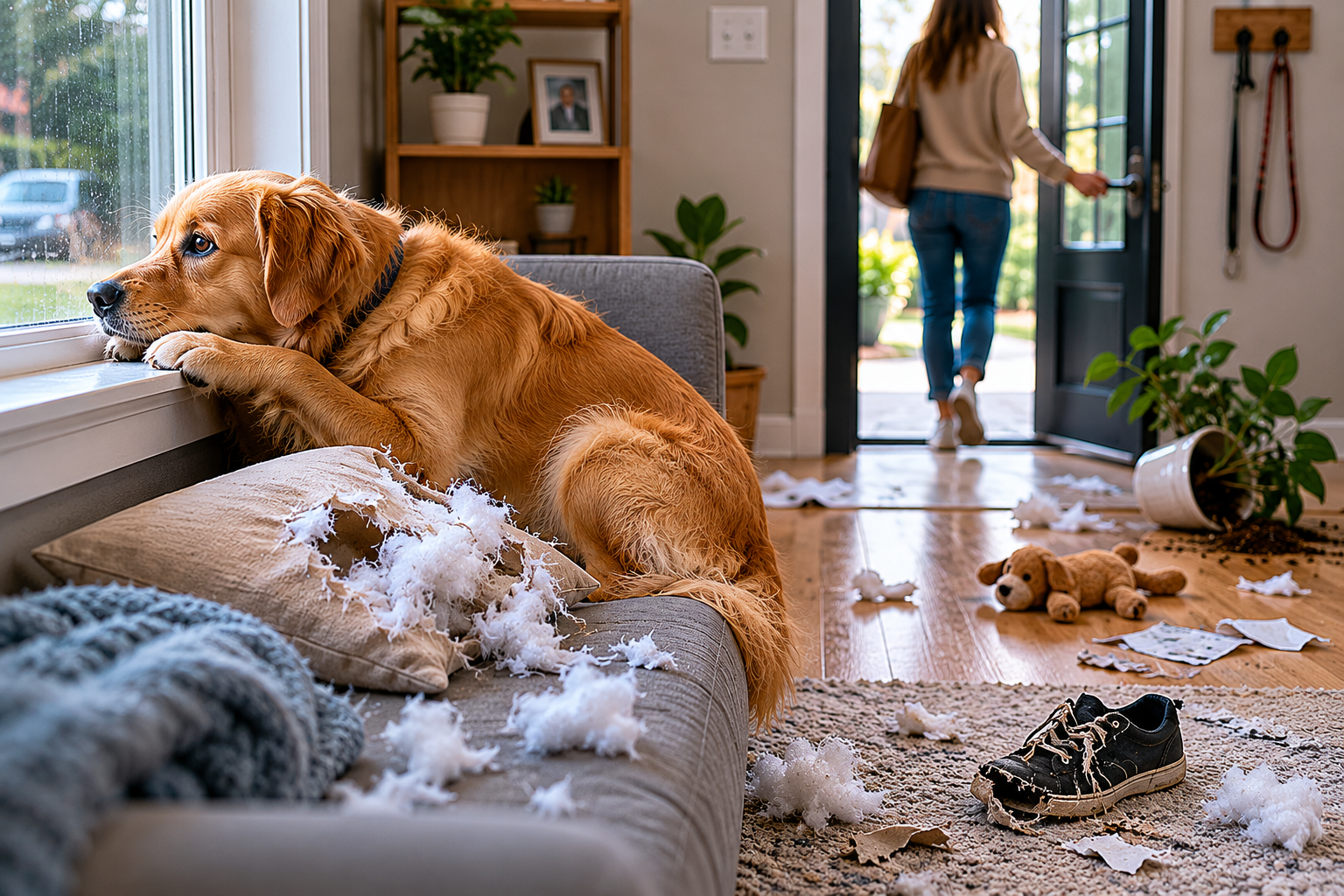
One of the biggest misconceptions about separation anxiety is that it must be obvious. Many owners assume that if their dog is not destroying the apartment or creating noise complaints, everything is fine. In reality, some dogs experience significant emotional distress while remaining surprisingly silent. They may spend hours pacing, monitoring doors, staring out windows, or simply waiting without ever truly relaxing. To an owner returning home, the apartment appears normal. To the dog, however, the experience may have been anything but calm.
This creates an unfortunate situation. The dogs experiencing the most visible symptoms often receive help quickly because their owners immediately recognize there is a problem. Dogs with quieter forms of separation anxiety can struggle for months or even years because nobody realizes what is happening during those hours alone.
The truth is that separation anxiety is not defined by barking, destruction, or accidents. It is defined by emotional distress during periods of separation. The visible behaviors are simply different ways that distress can appear.
Why Many Owners Never Realize There Is A Problem
One of the reasons separation anxiety is difficult to identify is that most owners are not present when it happens. By definition, the behavior occurs while the owner is away. This means people are often forced to rely on indirect evidence, and indirect evidence can be misleading.
Imagine a dog that spends three hours lying near the front door every day. The dog does not bark. The dog does not chew furniture. The dog does not have accidents. The moment the owner returns home, the dog gets up, wags its tail, and behaves normally. Without additional information, most people would assume everything is fine.
Now imagine watching a recording from a camera. Instead of sleeping peacefully, the dog spends those three hours repeatedly checking the hallway, reacting to every sound, changing positions every few minutes, and never entering a deep state of rest. The apartment is quiet, but the dog is clearly unable to relax.
This distinction is important because the goal is not simply to have a quiet dog. The goal is to have a dog that feels safe enough to rest, sleep, and recover while home alone.
The Most Obvious Signs Of Separation Anxiety
Some signs are difficult to miss.
Dogs with more severe separation anxiety often bark, howl, whine, or cry for extended periods after their owner leaves. The vocalization may continue for minutes or even hours depending on the severity of the condition. In apartment buildings, neighbors are frequently the first people to notice the problem.
Destructive behavior is another common warning sign. Owners may return home to find damaged doors, scratched walls, destroyed cushions, chewed furniture, or torn bedding. While many people interpret this behavior as anger or revenge, it is usually a response to stress rather than an intentional attempt to punish the owner.
Accidents inside the home can also be a warning sign, especially when they occur only during absences. A dog that is reliably house-trained but repeatedly urinates or defecates when left alone may be experiencing anxiety rather than a house-training problem.
These symptoms tend to get attention quickly because they directly affect the owner's life. The challenge is that not every dog displays them.
The Quiet Signs Most Owners Miss
The quiet signs are often more difficult to recognize because they require observation rather than cleanup.
A dog with separation anxiety may spend most of the absence monitoring the environment rather than resting. They move between rooms, repeatedly check the door, react to sounds from the hallway, or remain in a state of constant alertness. Some dogs choose a position near the entrance and remain there for hours as if waiting for the owner's return.
Perhaps the most important sign is the inability to sleep.
Healthy, comfortable dogs typically spend a significant portion of their alone time resting or sleeping. Dogs experiencing separation anxiety often struggle to do this. Even when they lie down, they may remain alert, frequently lifting their heads to investigate noises or changing positions repeatedly without fully settling.
Many owners are surprised when they first review camera recordings because they discover that their dog spends far less time sleeping than expected. What looked like calm behavior was actually prolonged vigilance.
The Best Tool: Use A Camera
If there is one recommendation that every owner concerned about separation anxiety should follow, it is this: use a camera.
Modern pet cameras are inexpensive, easy to install, and often provide more useful information than weeks of guessing. A single recording can reveal patterns that would otherwise remain completely invisible.
The goal is not simply to determine whether the dog barks. The goal is to understand how the dog spends their time while alone.
Ask yourself:
- Does my dog sleep?
- How long does it take them to settle?
- Do they pace?
- Do they monitor the door?
- Do they react strongly to sounds?
- Are they eating treats I leave behind?
- Do they appear relaxed?
These observations provide a much clearer picture of emotional wellbeing than the condition of the apartment when you return home.
In many cases, the most important discovery is not what the dog does. It is what the dog cannot do. A dog that cannot rest is often telling us something important about their emotional state.
Questions To Ask Yourself
If you suspect separation anxiety, ask yourself the following questions:
- Does my dog become unusually attentive when I prepare to leave?
- Does my dog follow me more closely before departures?
- Does my dog bark, howl, or cry after I leave?
- Has my dog ever destroyed items specifically during absences?
- Does my dog have accidents only when left alone?
- Does my dog refuse food or treats while I am away?
- Does my dog spend most of the time waiting near the door?
- Does my dog actually sleep when home alone?
The more "yes" answers you have, the more valuable it becomes to investigate further.
Final Thoughts
One of the biggest mistakes owners make is assuming that silence equals comfort. Some dogs communicate distress loudly. Others communicate it through restlessness, vigilance, and an inability to relax. Both experiences matter.
The good news is that understanding your dog's behavior has never been easier. Cameras allow us to observe what happens when we are not there and replace assumptions with evidence. For many owners, that first recording becomes the moment everything changes. It reveals not only whether the dog has separation anxiety but also how the dog experiences the world during those hours alone.
The question is not whether your dog is being quiet. The question is whether your dog feels safe enough to rest when you are gone.
Log tonight's session from your phone
The Qualma app is available now on Android and iPhone. Sign in with your existing account — no need to subscribe twice.