
How To Tell If Your Dog Is Stressed: The Signs Most Owners Miss
Many dog owners only recognize stress when it becomes obvious through barking, destruction, accidents, or severe separation anxiety. In reality, dogs often communicate discomfort long before these dramatic symptoms appear. Changes in body language, sleeping habits, appetite, movement patterns, and daily routines can all reveal important clues about a dog's emotional wellbeing. Learning to recognize these subtle signals allows owners to help their dogs earlier and build a deeper understanding of
Stress Does Not Always Look Like Barking
When most people think about stress in dogs, they imagine dramatic behavior. They picture a dog barking nonstop after being left alone. They imagine destruction, accidents in the house, scratching at doors, or obvious panic. These behaviors certainly can be signs of stress, and in severe cases they often are. The problem is that by the time these symptoms appear, the dog's stress level is usually already quite high. As a behaviorist, one of the most common things I hear from owners is that they wish they had noticed the problem sooner. Looking back, they realize that their dog had been showing signs of discomfort for weeks, months, or even years before the situation became impossible to ignore.
Dogs rarely wake up one morning and suddenly develop extreme behaviors without any warning. In most cases, there is a long period during which the dog communicates through subtle body language and behavioral changes. The challenge is that these signals are easy to miss because they do not match our expectations. Owners are usually looking for obvious problems, while the dog is communicating through small changes in posture, movement, sleeping habits, appetite, attention, and daily routines. Learning to recognize these early signs is one of the most valuable skills any dog owner can develop because it allows intervention before stress becomes a much larger problem.
One of the reasons this is difficult is that stress itself is not a disease. Stress is a normal biological response. Every healthy dog experiences stress from time to time. A loud noise, an unfamiliar environment, a visit to the veterinarian, a change in routine, or a challenging situation can all trigger temporary stress responses. The goal is not to eliminate stress completely. The goal is to understand when stress becomes frequent, intense, or prolonged enough to affect the dog's quality of life.
Dogs Speak Through Body Language Long Before They Speak Through Behavior
One of the biggest differences between humans and dogs is the way we communicate discomfort. Humans often use words. We explain what hurts, what worries us, what frustrates us, and what makes us uncomfortable. Dogs do not have that option. Instead, they communicate through body language. Long before a dog starts barking, destroying furniture, or refusing to stay alone, their body is often telling a story that attentive owners can learn to read.
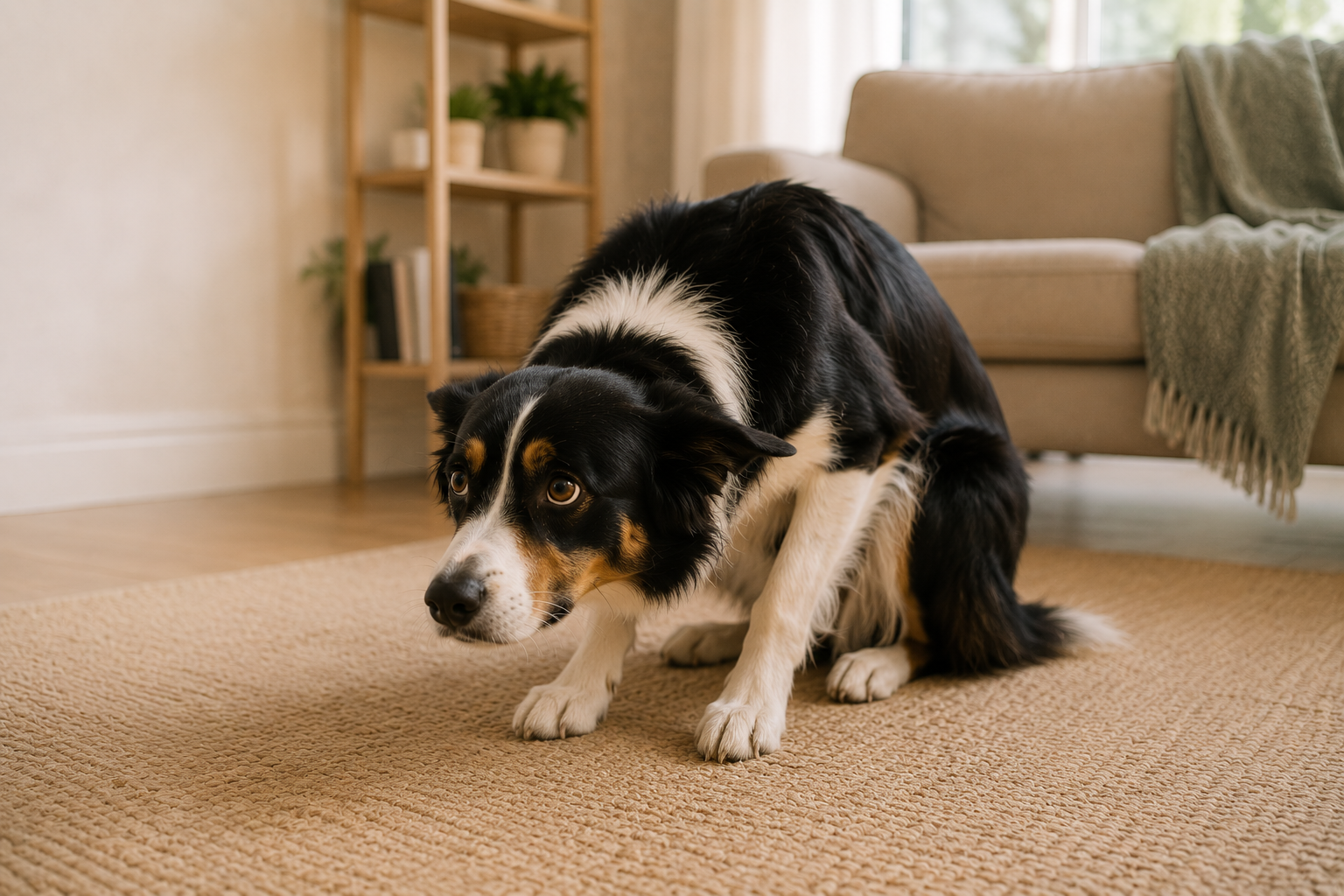
Stress frequently appears first through small physical changes. A dog may become unusually alert. Their muscles may look slightly tense. Their breathing may change. Their eyes may appear wider than normal. They may spend more time monitoring their environment instead of relaxing. These changes are easy to overlook because they do not necessarily seem problematic. In fact, many owners interpret them as signs that the dog is simply paying attention.
The difficulty is that body language only becomes meaningful when viewed in context. A dog with wide eyes while playing fetch is very different from a dog with wide eyes while lying quietly in the living room. A dog who is alert because they hear a squirrel outside is experiencing something different from a dog who remains alert for hours waiting for their owner to return. Understanding stress requires observing patterns rather than isolated moments.
This is one reason why behaviorists spend so much time watching dogs instead of immediately giving advice. Before we can understand why a dog behaves a certain way, we need to understand how that dog experiences the world. Stress often reveals itself through body language long before it reveals itself through major behavioral problems.
The Small Signals Owners Often Miss
Many of the earliest signs of stress look surprisingly ordinary. A dog may yawn repeatedly even though they are not tired. They may lick their lips when no food is present. They may shake themselves off as though they have just gotten wet despite being completely dry. Some dogs begin scratching more frequently without having any skin condition. Others start pacing occasionally before settling down again.
None of these behaviors automatically mean a dog is stressed. Dogs yawn for many reasons. Dogs lick their lips for many reasons. Dogs scratch themselves for many reasons. The key is not the behavior itself but the frequency, timing, and context. When multiple stress-related behaviors begin appearing together, particularly in situations where the dog appears uncomfortable, they become much more meaningful.
Many owners are surprised to learn that excessive panting can also be a stress signal. Panting is often associated with exercise or warm temperatures, but dogs can also pant when they are emotionally aroused. A dog sitting in a cool room who begins panting heavily without obvious physical exertion may be communicating something very different from simple overheating.
Another frequently overlooked signal is an inability to settle. Some stressed dogs never truly relax. They move from room to room. They repeatedly change sleeping positions. They get up whenever a sound occurs. They monitor doors, windows, and hallways. At first glance, this behavior may appear normal because the dog is not actively misbehaving. However, healthy relaxation involves periods of genuine rest. A dog who remains constantly vigilant may be telling us that their nervous system is struggling to switch off.
When Stress Changes Daily Habits
One of the most reliable indicators of stress is not a specific behavior but a change in normal behavior. Dogs are creatures of habit. Most develop predictable routines around sleeping, eating, playing, exploring, and interacting with family members. When these patterns suddenly change, it is often worth paying attention.
Some stressed dogs become less interested in food. Others become more interested in food. Some sleep more than usual. Others sleep less. A normally social dog may become withdrawn. A normally independent dog may suddenly become unusually clingy. These changes can be subtle enough that they happen gradually, making them difficult to recognize until owners look back and compare current behavior with previous months.
One example I frequently see in separation anxiety cases is increased shadowing behavior. The dog begins following the owner from room to room. At first, owners often find this endearing. The dog seems affectionate and attached. Over time, however, the behavior becomes more intense. The dog struggles to remain relaxed when separated even briefly within the home. This progression often begins long before obvious separation anxiety symptoms appear during absences.
Changes in daily habits are important because they often reveal how stress is affecting the dog's overall emotional state. Stress does not always appear as an isolated event. It can gradually reshape how the dog interacts with the world.
The Difference Between Excitement And Stress
One reason stress is often misunderstood is that it can look remarkably similar to excitement. Both emotional states activate the nervous system. Both can increase movement, attention, vocalization, and physiological arousal. As a result, owners sometimes mistake one for the other.
Consider a dog greeting visitors at the front door. They may jump, bark, run around, wag their tail, and appear highly energetic. Many owners automatically interpret this as happiness. In reality, the dog may be experiencing excitement, stress, frustration, uncertainty, or a combination of all four. Without looking more closely, it is impossible to know.
This distinction matters because chronic excitement can be exhausting for some dogs. Not every highly stimulated dog is enjoying the experience. Some dogs struggle because they are emotionally overwhelmed, even when the trigger itself is positive. Weddings, parties, busy streets, dog parks, family gatherings, and highly social environments can all become sources of stress despite appearing enjoyable from a human perspective.
Behaviorists often ask a simple question when evaluating these situations: can the dog recover? A healthy emotional response usually has a clear beginning and end. The dog becomes excited, experiences the event, and then returns to baseline. Dogs experiencing chronic stress often struggle with that final step. Their nervous system remains activated long after the event has ended.
Stress And Separation Anxiety Are Closely Connected
One of the reasons stress matters so much in the context of separation anxiety is that separation anxiety itself is fundamentally a stress-related condition. When a dog becomes distressed by being alone, the symptoms we observe are expressions of emotional stress. Barking, pacing, destruction, accidents, whining, and restlessness are not acts of disobedience. They are attempts to cope with an emotional state that feels overwhelming.
What many owners do not realize is that stress levels outside of absences also matter. A dog who spends the entire day feeling overwhelmed by environmental triggers may have fewer emotional resources available when left alone. A dog who is struggling with chronic stress from other sources may find separation more difficult than a dog who generally feels secure and relaxed.
This is why separation anxiety treatment rarely focuses only on departures. Good treatment plans often consider the dog's overall emotional wellbeing. Sleep quality, physical health, daily routines, enrichment, exercise, social interactions, and environmental factors all contribute to the dog's ability to cope.
Learning To Become A Better Observer
Perhaps the most valuable skill a dog owner can develop is observation. Not observation focused exclusively on problems, but observation focused on understanding. Dogs are constantly communicating with us. The challenge is not whether they are sending signals. The challenge is whether we know how to recognize them.
Many owners become dramatically better observers once they begin recording their dogs. Cameras often reveal details that are difficult to notice in real time. Owners discover how often their dog changes position, how frequently they monitor sounds, whether they truly rest, and how they react to specific situations. These observations create a much richer understanding of the dog's emotional experience.
The goal is not to become obsessed with every movement or every yawn. The goal is to notice patterns. Stress is rarely defined by a single behavior. It emerges through combinations of behaviors, changes in routines, and shifts in emotional flexibility. The better we become at recognizing these patterns, the earlier we can intervene when something is not right.
Final Thoughts
One of the biggest mistakes owners make is waiting for dramatic symptoms before taking stress seriously. By the time a dog is barking continuously, destroying furniture, or experiencing severe separation anxiety, their nervous system has often been communicating discomfort for a long time. The signs were there, but they were subtle enough to be overlooked.
Learning to recognize stress is not about becoming anxious every time your dog yawns or scratches their ear. It is about developing a deeper understanding of how your dog communicates. The more familiar you become with your dog's normal behavior, the easier it becomes to recognize when something changes.
Dogs do not tell us they are stressed with words. They tell us through body language, habits, routines, and behavior. The owners who learn to listen to those signals often discover that they can help their dogs much earlier, long before small concerns become major problems. In many cases, that ability to notice the quiet signs is one of the greatest gifts we can offer the animals who share their lives with us.
Log tonight's session from your phone
The Qualma app is available now on Android and iPhone. Sign in with your existing account — no need to subscribe twice.