
The Hidden Burden Of Being A Separation Anxiety Dog Parent
Living with a dog who has separation anxiety affects much more than the dog itself. It changes routines, limits spontaneity, creates invisible planning, and often leaves owners feeling misunderstood by the people around them. Many dog parents find themselves balancing training, work, relationships, and daily responsibilities while trying to help a dog that struggles to be alone. This article explores the emotional reality of separation anxiety from the owner's perspective and offers practical ad
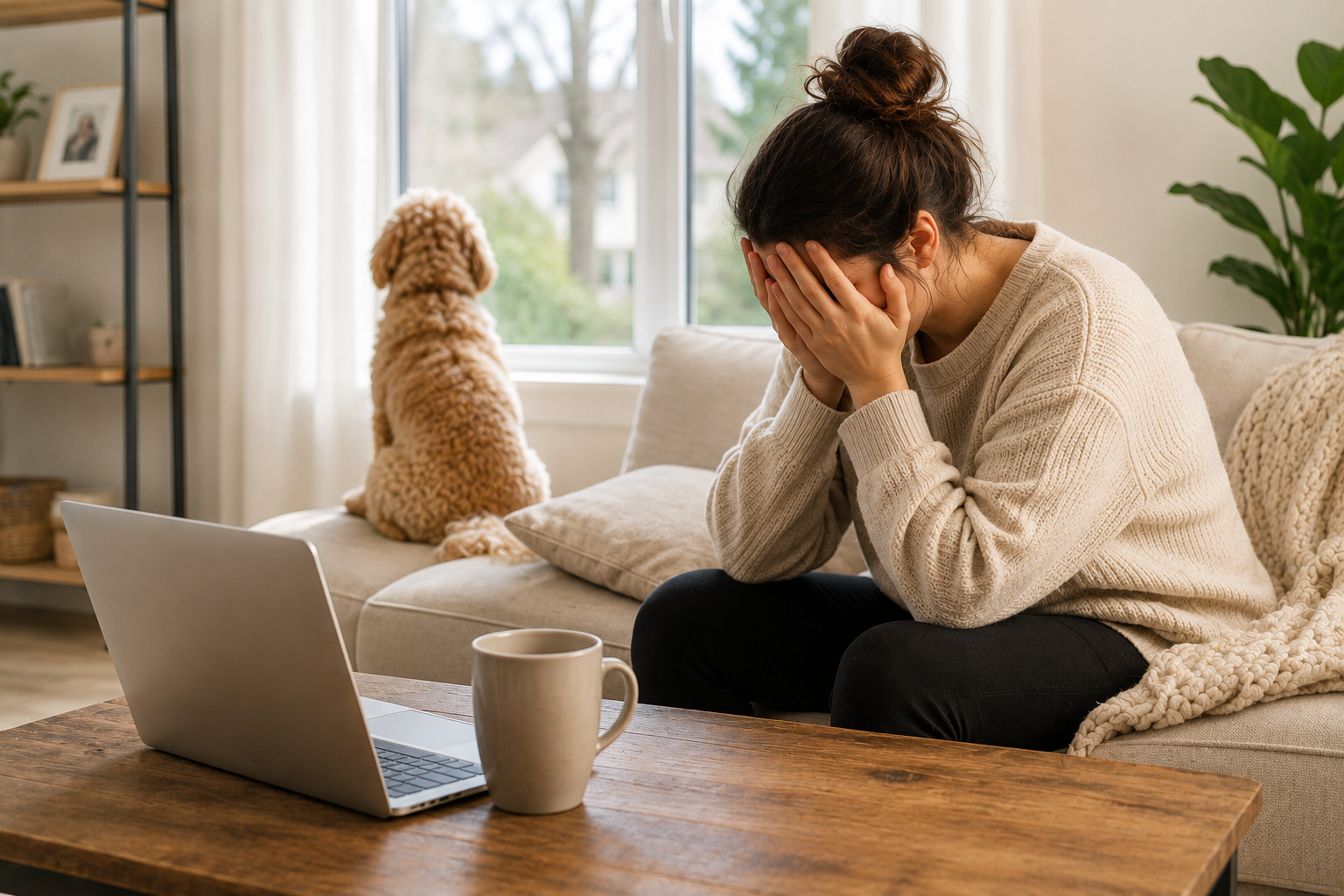
The Day I Realized Most People Did Not Understand
One of the most surprising things about living with a dog who has separation anxiety is that the anxiety itself is often not the hardest part to explain. Most people can understand the basic concept. They understand that the dog becomes distressed when left alone. They understand that the dog may bark, pace, destroy things, or struggle to settle. At least in theory, these ideas are relatively easy to communicate. What is much harder to explain is how profoundly the condition can affect the life of the person trying to help the dog.
When I first started speaking openly about my own experiences, I assumed that people would naturally understand why the situation mattered. After all, if a dog is experiencing genuine distress every time they are left alone, helping them seems like a reasonable priority. Instead, I found myself having the same conversations repeatedly. Friends would ask why I could not stay longer. Family members would suggest that the dog simply needed to get used to being alone. Some people confidently explained that she would eventually grow out of it. Others told me that I was worrying too much. A few implied that I was creating the problem myself by paying so much attention to it.
None of these comments were intended to be cruel. In fact, most came from people who genuinely believed they were being helpful. The problem was that their advice was usually based on assumptions rather than experience. They had owned dogs that were comfortable staying home alone. They had never spent hours reviewing camera recordings. They had never adjusted their schedules around training plans. They had never discovered that a simple trip to the supermarket required the same level of planning that other people reserve for a weekend away. Because they had never lived through separation anxiety, they were evaluating the situation through a completely different lens.
Over time, I began noticing the same pattern in conversations with other owners dealing with separation anxiety. Different dogs. Different countries. Different lifestyles. Yet the stories sounded remarkably similar. Again and again, owners described feeling misunderstood by the people around them. They talked about friends who thought they were exaggerating. They talked about relatives who believed the dog would simply "get over it." They talked about colleagues who could not understand why a person would reorganize their life around a dog. Listening to these conversations, I realized that separation anxiety creates two separate challenges. One belongs to the dog. The other belongs to the owner.
Why Separation Anxiety Changes More Than Your Dog's Life
One of the reasons separation anxiety can feel so overwhelming is that it rarely stays contained within a single part of life. Most behavioral challenges affect specific situations. Separation anxiety is different because it has a tendency to influence almost everything. It affects schedules. It affects travel. It affects social activities. It affects work arrangements. It affects relationships. In some cases, it even affects where people choose to live.
When people hear about separation anxiety for the first time, they often imagine a dog who becomes unhappy when left alone. While that description is technically correct, it fails to capture the practical reality of living with the condition. The issue is not simply that the dog dislikes being alone. The issue is that helping the dog often requires sustained effort over long periods of time. Training sessions need to happen consistently. Progress needs to be monitored. Departures need to be planned carefully. Setbacks need to be analyzed. Small improvements need to be protected so they are not immediately undone by absences that exceed the dog's comfort level.
What makes this especially difficult is that life continues moving forward while all of this is happening. Work deadlines still exist. Family obligations still exist. Friends still invite you to events. Unexpected situations still appear. Most owners are not working on separation anxiety in isolation. They are doing it while simultaneously managing careers, relationships, finances, health concerns, and countless other responsibilities. The training plan becomes one more important thing competing for limited time and energy.
This is one of the reasons many separation anxiety owners eventually feel exhausted. Not because they do not love their dogs. Quite the opposite. They become exhausted because they care deeply and are trying very hard to do the right thing. The emotional burden comes not from the presence of the dog but from the constant responsibility of balancing the dog's needs with the realities of everyday life.
The Invisible Logistics Nobody Sees
One aspect of separation anxiety that outsiders rarely understand is the amount of invisible planning it creates. From the outside, many owners appear to be living perfectly normal lives. They go to work. They attend appointments. They meet friends. They travel occasionally. What people do not see is the amount of coordination that may be happening behind the scenes to make those activities possible.
A simple dinner invitation can require calculations that other people never consider. How long will I be gone? Has the dog already had a training session today? Can someone stay with her if necessary? Is this longer than her current comfort threshold? What happens if the dinner runs late? Can I leave earlier if needed? These questions become so familiar that many owners stop noticing how unusual they are. The planning becomes part of daily life.
The same thing happens with errands. Many people can decide spontaneously to go shopping, meet a friend for coffee, or spend an extra hour outside the house. Owners managing separation anxiety often learn to think differently. They may group multiple errands together. They may schedule departures around training sessions. They may choose locations based on how quickly they can return home if necessary. None of these adjustments seem dramatic individually, but over months and years they accumulate into a very different way of organizing life.
Because this planning happens privately, other people rarely see it. They only see the final decision. When an owner declines an invitation or leaves early, the underlying calculations remain invisible. The result is that outsiders sometimes assume the owner is being overly cautious when, in reality, they are making decisions based on information that nobody else possesses.
Learning To Ignore Bad Advice
One of the most valuable skills separation anxiety owners eventually develop is the ability to distinguish between advice that is informed and advice that is merely confident.
This is harder than it sounds. When you are struggling with a problem, every suggestion initially feels worth considering. You want answers. You want solutions. You want progress. The natural temptation is to listen to everyone. Unfortunately, separation anxiety attracts an enormous amount of advice from people who have never dealt with it themselves.
Some advice sounds reassuring because it promises a simple solution. Leave the dog alone and they will learn. Ignore the barking and it will stop. Get another dog. Walk the dog more. Walk the dog less. Feed them before you leave. Never feed them before you leave. The recommendations often contradict each other completely, yet each one is delivered with absolute certainty.
Over time, many owners discover that the quality of advice matters more than the quantity. Conversations with experienced trainers, behaviorists, veterinarians, and other separation anxiety owners tend to feel very different. These people rarely promise instant solutions. They acknowledge complexity. They understand setbacks. They recognize that every dog is different. Most importantly, they appreciate that separation anxiety is not a problem that can be solved through a single piece of generic advice.
One of the healthiest things an owner can learn is that not every opinion deserves equal weight. Listening politely does not require accepting every recommendation. Protecting your mental wellbeing sometimes means limiting how much influence uninformed opinions have over your decisions.
Why Your Mental Health Matters Too
When discussing separation anxiety, it is easy to become so focused on the dog that the owner's wellbeing disappears from the conversation entirely. Yet anyone who has lived through a long separation anxiety journey knows that emotional fatigue is real. Constant vigilance is tiring. Constant planning is tiring. Constant responsibility is tiring.
Many owners gradually reduce activities that help them recharge. They see friends less often. They travel less often. They spend less time pursuing hobbies. They postpone plans. They stop doing things that once brought them joy because accommodating the dog feels more urgent. Initially these sacrifices seem temporary and manageable. Over time, however, they can begin affecting overall wellbeing.
This does not mean owners should ignore their dog's needs. It means they should recognize that their own needs matter too. A person who is completely exhausted is rarely in the best position to help anyone, including their dog. Maintaining friendships, pursuing interests, exercising, resting, and protecting mental health are not acts of selfishness. They are part of creating a sustainable life while working through a difficult challenge.
One of the most encouraging things I discovered was that many experienced separation anxiety owners eventually learn this lesson. They stop viewing self-care as something that competes with helping the dog. Instead, they begin seeing it as something that supports the entire process. A healthier owner is often a more patient owner, a more consistent owner, and ultimately a more effective owner.
What I Wish Someone Had Told Me At The Beginning
If I could go back and speak to myself at the beginning of the journey, there are several things I would say.
First, progress is rarely linear. There will be improvements that feel exciting and setbacks that feel discouraging. Neither tells the entire story. Looking at a single day or a single week rarely provides an accurate picture of long-term progress.
Second, not everyone will understand what you are doing, and that is perfectly acceptable. You do not need universal approval to make thoughtful decisions about your dog's wellbeing. People who have never lived with separation anxiety are often evaluating the situation from an entirely different perspective.
Third, finding the right community matters enormously. Whether it comes from a trainer, a behaviorist, a support group, or another owner who has walked the same path, understanding is powerful. Simply talking to someone who genuinely understands the challenge can make difficult days feel considerably less isolating.
Finally, I would remind myself that helping a dog with separation anxiety is not a sign that something has gone wrong. It is a reflection of commitment. It means choosing to help a living creature navigate a problem they cannot solve alone. That responsibility can be heavy at times, but it is also one of the reasons the relationship between humans and dogs is so meaningful.
Final Thoughts
Separation anxiety is often described as a behavioral problem, but for many owners it becomes much more than that. It becomes a logistical challenge, an emotional challenge, a social challenge, and occasionally even an identity challenge. It forces people to rethink routines, priorities, and expectations. It introduces responsibilities that many outsiders never see and rarely understand.
Yet within that challenge there is also something surprisingly positive. Owners often develop deeper observational skills, stronger patience, greater empathy, and a more nuanced understanding of their dogs. They learn to celebrate small victories. They learn to adapt. They learn to keep moving forward even when progress feels frustratingly slow.
Most importantly, they learn that they are not alone. Behind every dog struggling with separation anxiety is usually a person doing their best to help. Those people may not always receive the understanding they deserve, but their efforts matter. The work matters. And on the days when the journey feels particularly difficult, it is worth remembering that countless other owners are walking the same path, asking the same questions, and hoping for the same outcome: a dog who feels safe, confident, and comfortable in the world.
What To Do This Week
Tell one person the truth about what this is actually like. Not the light version that ends in a joke, but a plain description of the planning, the cancelled evenings, and the guilt that arrives every time you pick up your keys. Most owners in this situation carry it alone because explaining feels like complaining, and over months that isolation does more damage than the logistics do.
Protect one thing that is yours and put it in the calendar this week. A specific hour on a specific day, covered by a sitter, a family member, or an absence your dog can genuinely manage — chosen deliberately rather than left to whatever happens to be possible. Owners who wait until things get easier tend to wait a very long time, and the waiting is itself part of what wears people down.
Set a floor you will not go below, and write it down. That might be sleeping in your own bed, keeping one weekly commitment, or not cancelling on the same friend twice in a row. Deciding it in advance makes it much harder to erode quietly, which is usually how these things disappear.
If you have been low for weeks rather than days, treat that as its own problem rather than a character flaw. Chronic caregiving strain is well recognized and it responds to support, whether that comes from your doctor, a therapist, or simply other people in the same position. Your dog's progress depends on you being able to keep going, which makes looking after yourself practical rather than indulgent.
Log tonight's session from your phone
The Qualma app is available now on Android and iPhone. Sign in with your existing account — no need to subscribe twice.