
Travel, Hotels, And New Places: Protecting Your Dog's Separation Anxiety Progress Away From Home
Travel can be one of the biggest hidden challenges for dogs recovering from separation anxiety. A dog who feels confident at home may suddenly become clingy, hypervigilant, or unable to settle in a hotel, holiday apartment, Airbnb, or temporary accommodation. This does not mean the training has failed. It often means the dog is trying to navigate an unfamiliar environment while managing existing anxiety. This article explores why travel can affect separation anxiety, how to protect your progress
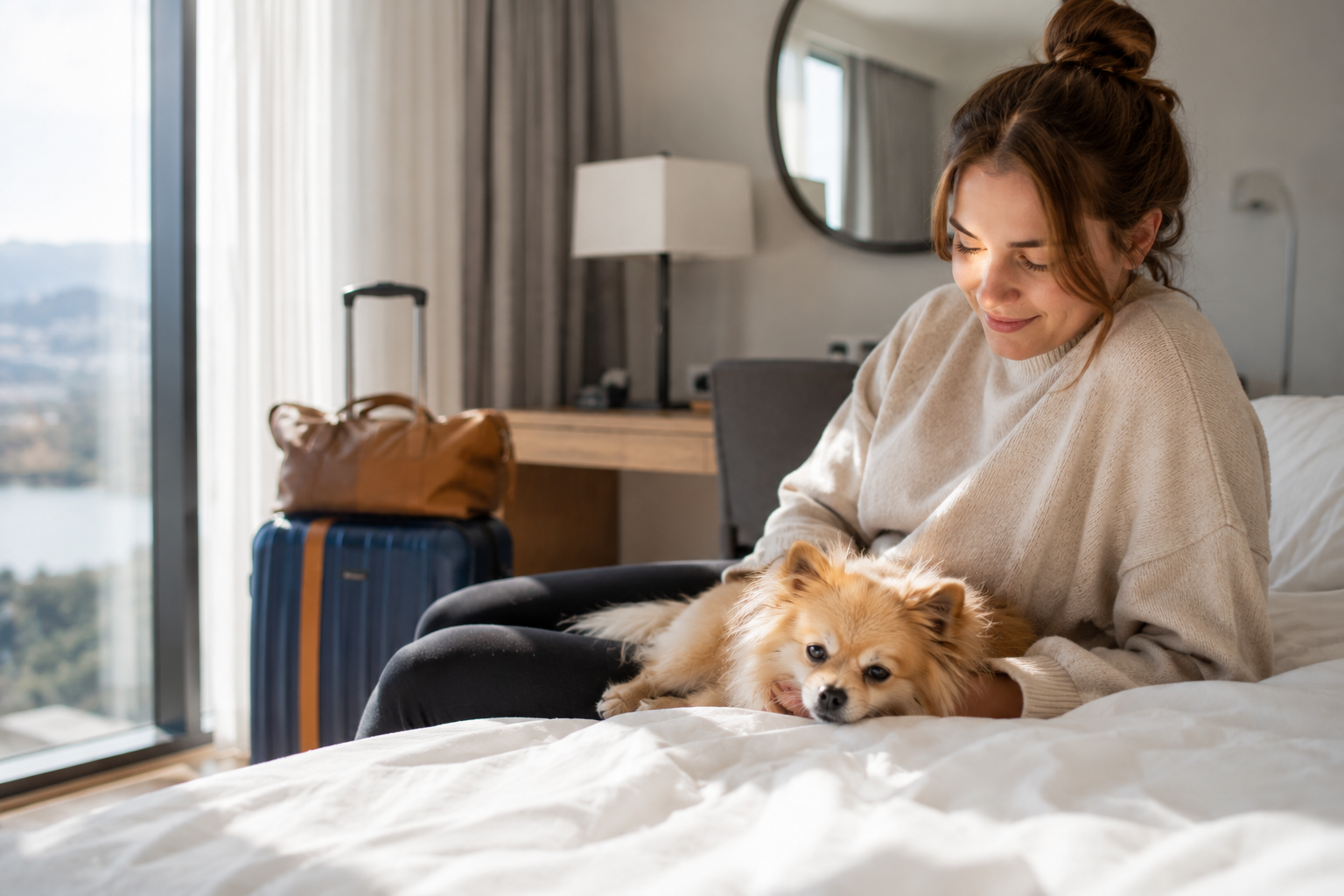
Why Travel Can Feel Like A Setback Even When Training Is Going Well
One of the most discouraging experiences for owners working through separation anxiety is seeing their dog struggle in situations where they expected progress to carry over naturally. It often happens after weeks or months of careful work. The dog has started settling more quickly. They seem more relaxed during short absences. The camera footage looks encouraging. The owner finally feels as though life is becoming manageable again. Then a holiday arrives, a work trip becomes necessary, relatives invite a visit, or a temporary move cannot be avoided. The dog travels with the owner, and within a day or two, behaviors that seemed to be improving suddenly reappear. The dog becomes clingy. They refuse to settle. They follow the owner constantly. They react to every movement. Some owners describe it as feeling as though months of progress disappeared overnight.
The first thing worth understanding is that this reaction is usually not a sign that the training has failed. It is also not evidence that the dog has forgotten everything they have learned. What owners are often witnessing is the emotional impact of environmental change. Humans tend to underestimate how much of a dog's confidence is connected to familiarity. When we think about progress, we often focus on the training exercises themselves. We remember the departures, the duration increases, the management strategies, and the routines we worked so hard to build. The dog experiences all of those things too, but they experience them within a specific environment. That environment becomes part of the learning process.
A dog who has spent months building confidence in one apartment is not simply learning that being alone is safe. They are learning that being alone in that particular environment is safe. They learn the sounds coming from the hallway. They learn the smell of the furniture. They learn the rhythm of the building. They learn where sunlight appears during the day and where they prefer to rest when nobody is home. Over time, these details become part of their emotional map of safety. Most owners never consciously think about these factors because they are constant. For the dog, however, they are significant.
When you suddenly place that same dog into a hotel room, holiday apartment, Airbnb, or unfamiliar house, you remove many of the environmental clues that helped them feel secure. From the owner's perspective, it may still be a comfortable room. From the dog's perspective, almost everything important has changed. The smells are different. The sounds are different. The sleeping locations are different. The windows show different views. Even the way sound travels through the building can feel unfamiliar. The dog is trying to understand an entirely new world while simultaneously managing separation anxiety.
This is one of the reasons many owners notice their dogs becoming unusually attached during travel. A dog who normally rests in another room at home may suddenly refuse to leave their owner's side. A dog who usually settles after a few minutes may spend hours monitoring where the owner is located. Some dogs appear unable to relax unless they maintain visual contact with their person. These behaviors can be surprising, especially when the dog seemed to be progressing well before the trip. In reality, they are often signs that the dog is using the owner as the only predictable element in an environment that feels uncertain.
I remember seeing this with my own dog during travel. At home, she had routines. She knew exactly where she liked to sleep. She understood the sounds coming from the building. She knew when neighbors were returning home and which noises could be ignored. Yet whenever we stayed somewhere new, she became much more dependent on my presence. She would follow me from room to room, check repeatedly where I was, and hesitate to settle unless she could see me. Nothing terrible had happened. Nobody had frightened her. The environment itself was enough to increase her vigilance because she no longer knew what was normal.
This experience is extremely common among dogs with separation anxiety. The mistake many owners make is assuming that the solution is to continue training exactly as they would at home. In reality, travel often requires a different mindset. The goal is not necessarily to continue pushing progress forward. The goal is often to protect the progress that already exists. There is a significant difference between those two objectives. At home, we may be working on building confidence. During travel, we may simply be trying to prevent unnecessary setbacks while the dog adjusts to a situation that feels emotionally demanding.
Understanding this distinction can remove a tremendous amount of pressure. Owners often judge themselves harshly when travel does not go perfectly. They worry that they have damaged months of work or that they are somehow failing their dog. Most of the time, neither conclusion is true. A dog who struggles in a hotel room has not forgotten their training. A dog who becomes clingy in an unfamiliar apartment has not lost all progress. More often, the dog is communicating that they need time, support, and familiarity before they can feel as safe as they do at home.
When we begin looking at travel through that lens, our priorities change. Instead of asking how quickly we can return to normal training, we start asking what the dog needs to feel secure. That shift in perspective often becomes the difference between a stressful trip and a manageable one.
Log tonight's session from your phone
The Qualma app is available now on Android and iPhone. Sign in with your existing account — no need to subscribe twice.