
Why A Camera May Be The Most Important Tool In Your Separation Anxiety Journey
One of the biggest challenges with separation anxiety is that it happens when you are not there to see it. Many owners assume they know what their dog does while home alone, only to discover a completely different reality when they finally start recording. A camera can reveal whether your dog is resting, pacing, barking, waiting at the door, or struggling to settle. More importantly, it replaces assumptions with evidence and allows you to build a training plan based on what is actually happening
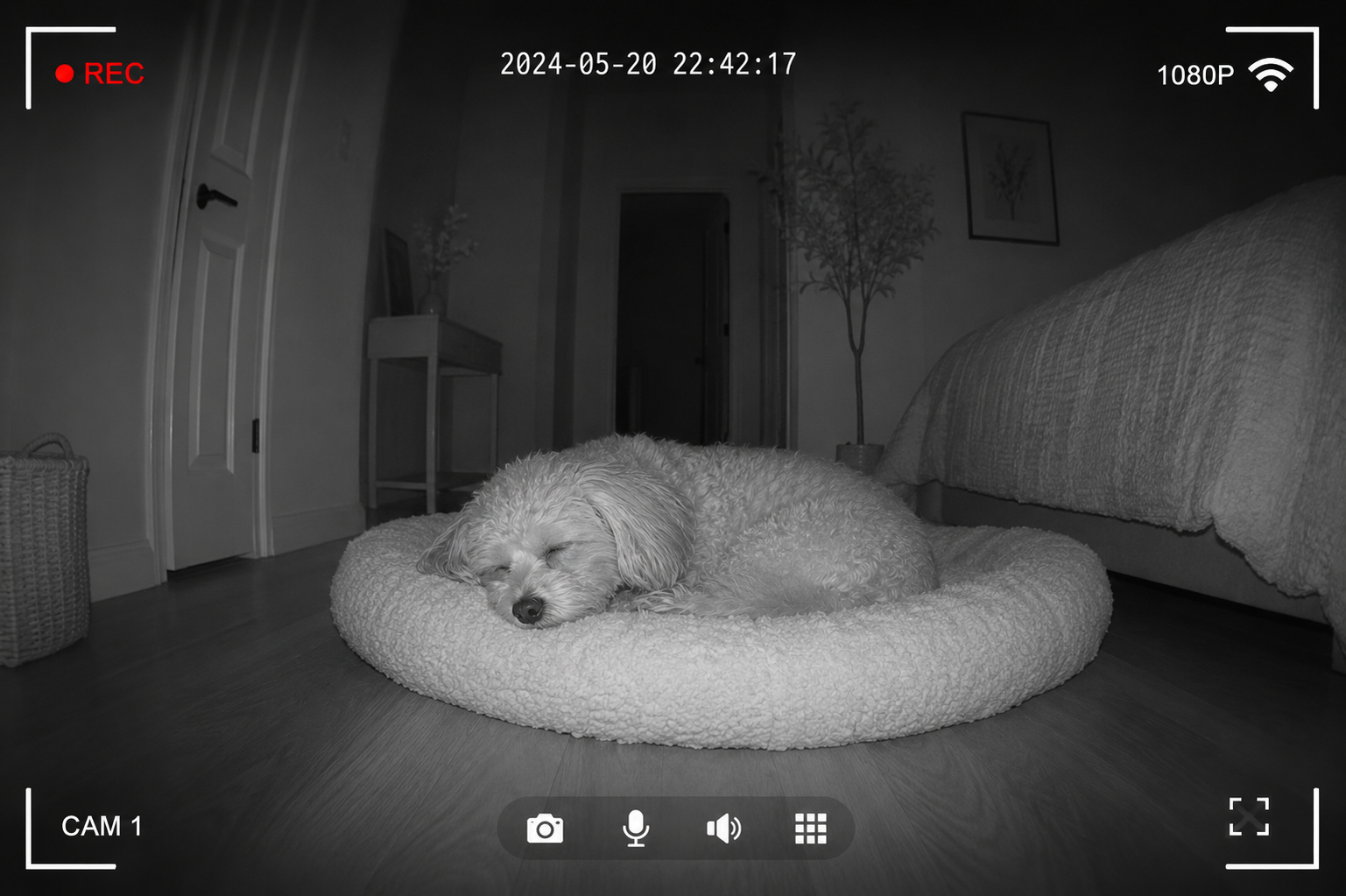
The Biggest Problem With Separation Anxiety Is That You Are Never There To See It
One of the strangest things about separation anxiety is that it happens when the person trying to solve the problem is not present. Imagine trying to understand a football match without ever seeing the game. Imagine trying to diagnose a car problem without ever hearing the engine. That is essentially the situation many dog owners face when they first begin dealing with separation anxiety.
Most people leave home believing they have a reasonable understanding of what their dog does while they are away. They assume the dog sleeps, occasionally walks around the apartment, perhaps looks out the window, and waits for them to come back. The reality can be very different. Some dogs bark continuously. Some pace for hours. Some spend the entire absence sitting by the front door. Others appear calm at first but become distressed twenty or thirty minutes later. Without a way to observe these behaviors, owners are left relying on assumptions, and assumptions are often wrong.
This is one of the reasons cameras have become such an important tool in modern separation anxiety treatment. They allow owners to replace guessing with observation. Instead of wondering whether the dog is sleeping, you can see it. Instead of hoping the dog settled down after five minutes, you can verify it. Instead of relying on complaints from neighbors, you can understand exactly what happened and when it happened. The camera becomes a window into a part of your dog's life that would otherwise remain invisible.
What A Camera Can Teach You About Your Dog
Many owners buy a camera expecting to discover dramatic behavior. They imagine barking, destruction, or obvious signs of panic. Sometimes that is exactly what they find. In many cases, however, the most valuable information is much more subtle.
A camera can show whether your dog is actually resting. This may sound like a small detail, but it is one of the most important indicators of emotional wellbeing. A comfortable dog eventually settles down. A dog struggling with separation anxiety often does not. They move between rooms, monitor sounds from outside, repeatedly check the door, or remain alert for long periods without ever fully relaxing.
The first time I reviewed recordings of my own dog, I discovered something surprising. I expected to see occasional barking. Instead, I found myself paying attention to how little she rested. Even during quiet periods, she was not truly relaxed. She was waiting. Watching. Listening. That observation changed the way I thought about the problem. It was no longer just about barking. It was about whether she felt safe enough to switch off and recover.
A camera can also help identify patterns that are easy to miss. You may discover that your dog becomes distressed only after hearing noises from the hallway. You may notice that barking starts exactly twenty minutes after you leave. You may realize that certain rooms feel safer than others. These observations become incredibly valuable when building a training plan because they provide real evidence instead of assumptions.
What Features Should A Separation Anxiety Camera Have?
The good news is that you do not need expensive equipment. Modern cameras are relatively affordable, and many of them already include features that are extremely useful for monitoring separation anxiety.
One of the most valuable features is sound recording. Barking, whining, howling, and other vocalizations often provide important clues about how your dog is coping with being alone. A camera that only records video may miss part of the story.
Motion detection is another useful feature. Many cameras can send notifications when movement occurs. This can help owners identify periods of activity and understand how often the dog changes location throughout an absence.
Sound alerts can also be helpful. If the camera can notify you when barking or unusual sounds occur, you gain additional visibility into what is happening while you are away.
The ability to move or rotate the camera remotely is another major advantage. Cameras that offer 360-degree coverage allow you to observe larger areas and reduce the risk of losing sight of the dog when they move around the room.
Placement matters as well. With my own dog, I keep the camera relatively low because she is small and rarely jumps onto furniture. For larger dogs, a higher position may provide a better view. The goal is not perfect cinematography. The goal is making sure you can see the areas where your dog spends most of their time.
In larger homes or apartments, one camera may not be enough. Some dogs move between rooms frequently, and important behaviors can happen outside the camera's field of view. If your budget allows, multiple cameras often provide a more complete picture.
What If You Cannot Afford A Camera?
One of the biggest mistakes people make is believing that observation is only possible if they buy specialized equipment. While cameras are extremely useful, they are not the only option.
The simplest alternative is often an old smartphone. Many people have older phones sitting unused in drawers. Numerous applications allow one phone to function as a remote camera while another phone acts as the viewer. In practice, this creates a basic monitoring system without requiring any additional hardware.
Another option is a tablet. If you already own a tablet with a camera and internet access, it can often perform exactly the same role as a dedicated pet camera. The image quality may not be perfect, but perfect is not the goal. Information is the goal.
A laptop with a webcam can also be surprisingly useful. Video conferencing tools, remote desktop applications, or security software can transform an existing computer into a temporary monitoring solution.
Some owners use indoor security systems that were originally purchased for home protection. If you already have security cameras installed, there is often no need to buy separate equipment specifically for your dog.
Even asking a trusted friend or family member to observe a departure can provide valuable information. While not as convenient as continuous monitoring, an external observer may notice behaviors that you would never see yourself.
If You Have Nothing Else, Record Audio
We do not all start from ideal circumstances.
Sometimes there is no camera. Sometimes there is no spare phone. Sometimes buying equipment is simply not possible at the moment.
If that is your situation, do not let perfect become the enemy of good.
One of the simplest things you can do is leave a phone behind and record audio. Even a basic voice recording application can provide valuable information. You may discover that your dog spends hours quietly sleeping. You may discover intermittent barking. You may discover prolonged whining or vocalization that you never knew existed.
Audio will never provide the same level of insight as video, but it is still far better than relying entirely on assumptions. In many cases, the first clue that a dog has separation anxiety comes from hearing what happens when nobody else is there.
Observation Comes Before Improvement
One of the most common questions owners ask is how to help their dog. They want training plans, techniques, exercises, and solutions. Those things matter, but they should come after observation.
Before you can improve a problem, you need to understand it.
How long does your dog take to settle?
Does your dog settle at all?
When does barking begin?
What triggers the barking?
Which rooms feel safest?
Does your dog eat while alone?
Does your dog sleep?
The answers to these questions form the foundation of any successful separation anxiety plan. Without them, you are effectively navigating in the dark.
A camera will not solve separation anxiety. What it can do is something equally important. It can show you the reality of your dog's experience when you are not there. Once you can see that reality clearly, every decision that follows becomes more informed, more targeted, and more likely to help your dog succeed.
Log tonight's session from your phone
The Qualma app is available now on Android and iPhone. Sign in with your existing account — no need to subscribe twice.