
Why Socialization Matters More Than Most Owners Realize
Socialization is often discussed as a way to help dogs interact with people and other dogs, but its impact goes much deeper. Proper socialization helps dogs develop confidence, resilience, and emotional flexibility, all of which can influence how they cope with stress and change. For dogs struggling with separation anxiety, confidence-building experiences can become an important part of recovery. This article explores the connection between socialization, confidence, and emotional wellbeing.
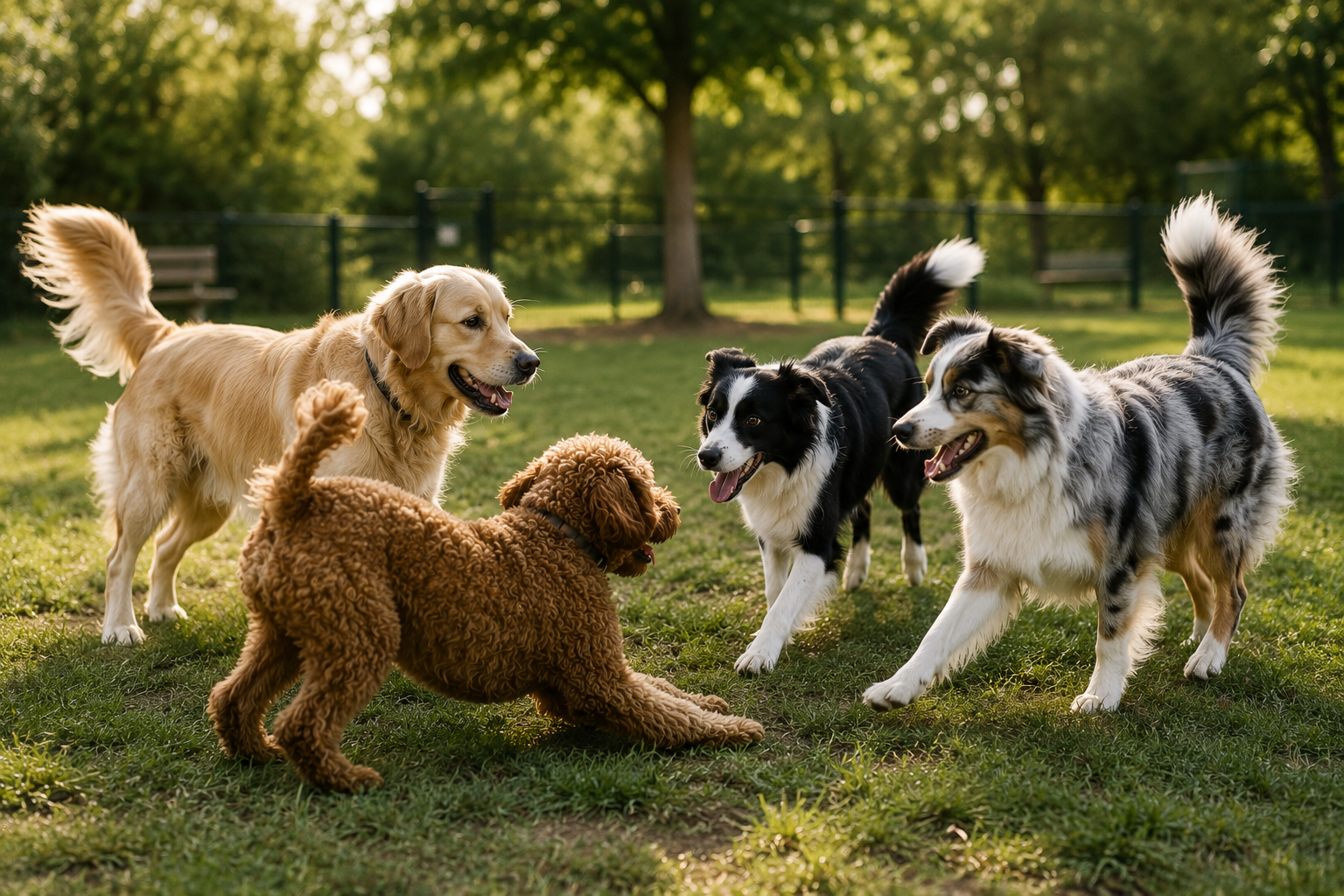
Understanding The Hidden Connection Between Socialization, Confidence, And Separation Anxiety
One of the most common misconceptions about separation anxiety is that the problem exists entirely inside the relationship between the dog and the owner. When people first begin researching the condition, they often focus on departures, absences, training plans, cameras, enrichment toys, and behavior modification exercises. These topics are important because separation anxiety is ultimately expressed through the dog's difficulty coping when left alone. However, after spending enough time observing dogs, speaking with trainers and behaviorists, and living through the experience myself, I began to notice something that was not discussed nearly as often as it should be.
Some dogs seem better equipped to handle change than others. Some dogs recover quickly from new situations while others become overwhelmed by them. Some dogs are curious when they encounter unfamiliar people, while others immediately seek reassurance from their owners. Some dogs walk confidently into new environments, while others hesitate at every step. These differences are not simply personality traits. They are often connected to a much larger concept that influences how dogs experience the world: confidence.
Confidence is not a quality that owners always think about when discussing separation anxiety, yet it appears repeatedly when behaviorists analyze anxious dogs. A dog who feels safe navigating the world independently often approaches challenges differently than a dog who relies heavily on a single person for emotional security. This does not mean confident dogs cannot develop separation anxiety. Many do. It does mean that confidence frequently plays a role in how dogs process uncertainty, recover from stress, and adapt to new situations.
One of the most important foundations of confidence is socialization. Unfortunately, socialization is also one of the most misunderstood concepts in dog ownership. Many people hear the word and immediately think about dog parks, meeting strangers, or playing with other dogs. While those experiences can certainly be part of socialization, the concept itself is much broader. True socialization is not about forcing a dog to interact with everything around them. It is about teaching the dog that the world is generally safe, predictable, and manageable.
When viewed through this lens, socialization becomes far more relevant to separation anxiety than many owners initially realize.
Socialization Is Not About Creating A Social Butterfly
One of the first things behaviorists often explain is that socialization does not mean turning every dog into an extrovert. Dogs, like humans, have individual personalities. Some are naturally outgoing. Some are reserved. Some enjoy greeting strangers. Others prefer observing from a distance. Effective socialization does not erase these differences, nor should it.
The purpose of socialization is confidence, not popularity.
A well-socialized dog is not necessarily the dog that wants to play with every dog in the park. A well-socialized dog is a dog that can encounter new situations without immediately feeling threatened by them. They may not want to interact closely with every person they meet, but they can remain calm in the presence of unfamiliar people. They may not become best friends with every dog they encounter, but they can coexist without excessive fear or stress. The difference is subtle but extremely important.
Many owners unintentionally place their dogs in situations that appear social but are not actually helping confidence. Overcrowded dog parks, uncontrolled greetings, overwhelming environments, and forced interactions can sometimes increase stress rather than reduce it. Socialization is most effective when it allows dogs to build positive experiences at a pace they can handle.
The reason this matters for separation anxiety is that confidence rarely develops through overwhelming experiences. Confidence develops through successful experiences. A dog learns they can cope because they repeatedly encounter manageable challenges and discover that nothing bad happens. Over time, these experiences accumulate into a broader sense of security.
Why Confidence Matters When The Owner Is Gone
Imagine two dogs left alone for the same amount of time.
The first dog has spent years building confidence through positive experiences with different people, environments, sounds, and situations. The dog has learned that unfamiliar experiences are usually manageable. The dog has successfully adapted to changes before and has a history of recovering from uncertainty.
The second dog has had fewer opportunities to build independent confidence. Most of their emotional security comes from a single source: the owner. When the owner is present, everything feels safe. When the owner disappears, that feeling of safety disappears as well.
Real life is obviously more complicated than this simplified example, but it illustrates an important principle. Dogs who have broader confidence often possess more emotional flexibility. They are not necessarily less attached to their owners. They simply have more evidence that the world remains safe even when circumstances change.
Behaviorists sometimes describe this as resilience. Resilience is not the absence of stress. It is the ability to recover from stress. Every dog experiences difficult moments. The question is whether those moments become overwhelming or manageable. Confidence often influences the answer.
This is one reason many separation anxiety treatment plans include activities that appear unrelated to absences themselves. The goal is not only to practice being alone. The goal is to strengthen the dog's overall ability to cope with the world.
Socialization Is Also About Teaching Independence
One aspect of socialization that is rarely discussed is its connection to independence. Many owners understandably focus on creating a strong bond with their dogs. A healthy relationship is important, and attachment is a normal part of dog ownership. However, there is a difference between attachment and dependence.
Dogs benefit from learning that positive experiences can happen without their owner being involved in every moment. They benefit from interacting with trusted people, exploring environments, solving problems, and experiencing success independently. These experiences help create emotional flexibility and reduce the risk that the owner becomes the dog's only source of security.
This does not mean pushing dogs into uncomfortable situations or forcing separation. It means gradually teaching them that safety exists in more places than just next to one person. The broader the dog's comfort zone becomes, the more resilient they often become when faced with change.
The Relationship Between Socialization And Recovery
One of the most encouraging things behaviorists observe is that confidence can be built throughout a dog's life. While early puppy socialization is important, adult dogs are still capable of learning. They can develop new associations, build positive experiences, and become more comfortable with situations that once felt difficult.
For owners working through separation anxiety, this is an important message. You are not trying to create a perfect dog. You are helping your dog build a larger toolkit for navigating the world. Every successful interaction, every positive experience, every new environment explored calmly becomes another piece of evidence that the world is safe.
That evidence matters because separation anxiety is fundamentally about emotional security. The more secure a dog feels in life generally, the more resources they often have available when facing moments of uncertainty.
Practical Ways To Build Confidence Through Socialization
Effective socialization does not require dramatic changes. In fact, many of the most valuable experiences are surprisingly simple. Visiting a new street, meeting a calm and respectful person, observing another dog from a comfortable distance, exploring a pet-friendly shop, hearing unfamiliar sounds, or learning a new training exercise can all contribute to confidence.
The key is allowing the dog to experience success. Socialization should feel manageable rather than overwhelming. If a dog is frightened, frozen, or desperately trying to escape, the situation is probably too difficult. If the dog remains curious, engaged, and capable of recovering quickly, confidence is often being built.
Owners sometimes underestimate how powerful these small victories can become. Confidence is rarely created through one life-changing experience. It is created through hundreds of ordinary experiences that teach the dog they are capable of coping with the world around them.
Final Thoughts
When discussing separation anxiety, it is easy to focus entirely on departures. Yet many of the factors influencing separation anxiety begin long before an owner reaches the front door. Confidence, resilience, adaptability, and emotional flexibility all play a role in how dogs experience the world.
Socialization is not about creating the friendliest dog in the neighborhood. It is about helping dogs feel safe, capable, and comfortable in a wide variety of situations. Every positive experience expands the dog's understanding of what they can handle. Every successful interaction becomes part of a larger story about confidence.
For dogs struggling with separation anxiety, that confidence can become one of the most valuable gifts we help them build. Not because it eliminates anxiety overnight, but because it strengthens the foundation upon which recovery is built.
What To Do This Week
Pick one low-pressure outing and make it deliberately boring. Sit with your dog somewhere moderately busy — a bench outside a shop, a quiet corner of a park — and let them watch the world without being asked to greet anyone or do anything. Ten unremarkable minutes in a new place builds more confidence than an intense hour of forced interaction, and it costs you almost nothing.
Watch your dog's body rather than the clock while you are there. A loose posture, a relaxed mouth, and a willingness to sniff the ground and take a treat all suggest they are coping. A tight body, a closed mouth, or refusing food they normally like means you are too close to whatever is bothering them, and moving further away is more useful than pushing through — a dog over threshold is not building confidence, only rehearsing worry.
Build a little independence at home in the same week. Ask for a settle a few meters away while you stay in the room, or step behind a door for thirty seconds and come back before your dog gets concerned. These moments look trivially small, and that is exactly why they work: you are teaching that distance is unremarkable, which is the same lesson longer absences depend on.
Do not treat any of this as making up for lost time. A dog who missed socialization as a puppy is not behind a deadline, and treating the work as urgent tends to create exactly the pressure that undermines it. Slow, repeated, unremarkable exposure is the method, and confidence built this way is the kind that holds up when you are not there to support it.
Log tonight's session from your phone
The Qualma app is available now on Android and iPhone. Sign in with your existing account — no need to subscribe twice.