
Why Your Dog Follows You Everywhere (And When It's a Sign of Separation Anxiety)
Why does your dog follow you everywhere? Learn when “velcro dog” behavior is normal, when it may signal separation anxiety, and how to build independence without harming your bond.
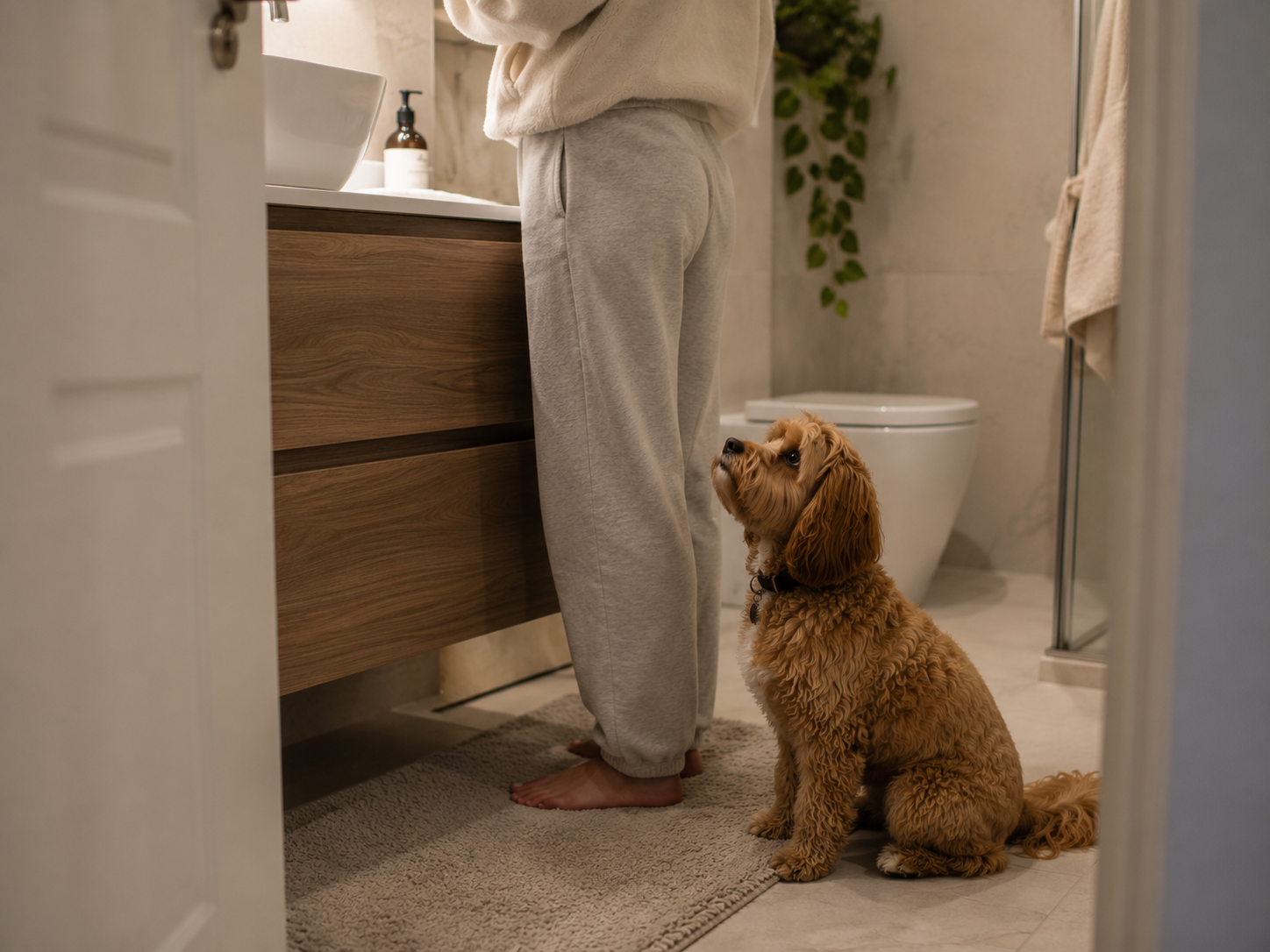
Many dog owners notice that their dog follows them from room to room, watches their every movement, and rarely chooses to be alone—even in the same home. This behavior is often described as being a “velcro dog,” and while it can feel endearing at first, it can also raise concerns about dependency and potential separation anxiety. The challenge lies in understanding the difference between normal attachment and signs of insecurity. Not all dogs who stay close to their owners are anxious, and not all independence training should focus on creating distance. Dogs are social animals, and proximity to their humans is part of their natural behavior. However, in some cases, constant following can indicate difficulty coping with separation or a lack of confidence when alone. This article explores why dogs follow their owners, when the behavior is completely normal, when it may signal a deeper issue, and how to gently build independence without damaging the relationship or creating stress.
Why Dogs Naturally Want to Stay Close to You
Dogs are social by nature. Over thousands of years of domestication, they have evolved to live alongside humans, forming strong social bonds and relying on interaction for safety, communication, and emotional stability.
Following you from room to room is, in many cases, a normal expression of that bond. It is how dogs stay connected, monitor their environment, and participate in what feels like shared activity. Your movements provide information. Where you go, what you do, and how you behave all contribute to how your dog interprets the world.
This behavior is especially common in environments where the dog has learned that your presence is associated with positive experiences—food, walks, play, and interaction. Staying close increases the chance of being part of those experiences.
It is important to recognize that this behavior is not inherently problematic. In many cases, it reflects a healthy attachment rather than an unhealthy dependency.
What Is a “Velcro Dog”?
The term “velcro dog” is often used to describe dogs that stick close to their owners at all times. They follow from room to room, sit nearby, and prefer proximity even when there is no obvious reward.
Some breeds are more commonly associated with this tendency. Companion breeds, as well as dogs bred to work closely with humans, often show stronger attachment behaviors. However, the label itself is more descriptive than diagnostic.
Being a velcro dog does not automatically mean a dog has separation anxiety. It simply means they prefer closeness. The key question is not whether the dog follows you, but how they respond when they cannot.
A dog that happily rests when you leave the room, even if they usually follow you, is very different from a dog that becomes distressed when separation occurs.
When Following Behavior Is Completely Normal
There are many situations where following behavior is expected and healthy.
Puppies
Puppies rely heavily on proximity for safety. Following behavior is part of their natural development. It helps them stay close to caregivers and learn about their environment.
At this stage, independence is something that develops gradually. Expecting a puppy to be comfortable alone too quickly can create unnecessary stress.
Newly Adopted or Rescue Dogs
Dogs that have recently changed environments often stay close to their new owner as they adjust. This is not necessarily anxiety, but a way of seeking stability in an unfamiliar situation.
As the dog becomes more comfortable, this behavior often decreases naturally.
Social and Companion-Oriented Dogs
Some dogs simply enjoy being near their humans. They may choose proximity even when they are capable of being alone. This is a personality trait rather than a problem.
The important distinction is that they can cope with separation, even if they prefer not to.
When Following May Indicate Insecurity
While following is often normal, there are situations where it can signal something deeper.
If your dog shows signs of stress when you move out of sight, follows you with urgency rather than calm interest, or appears unable to settle unless you are present, this may indicate insecurity.
Other signs can include:
- Constant monitoring of your movements
- Difficulty relaxing when you are in another room
- Increased alertness when you prepare to leave
- Attempts to access restricted areas to stay close
These behaviors suggest that proximity is not just a preference, but a source of reassurance.
When It Becomes a Sign of Separation Anxiety
Following behavior becomes more concerning when it is combined with difficulty coping with absence.
A dog with separation anxiety may follow you constantly when you are home and show distress when you leave. The following itself is not the problem—it is the inability to handle separation.
Key indicators include:
- Immediate reaction when you leave
- Persistent vocalization or pacing
- Destructive behavior focused on exits
- Inability to settle when alone
In this context, following is part of a larger pattern. It reflects a reliance on your presence for emotional stability.
Common Misconceptions About Clingy Behavior
One of the most common misconceptions is that following behavior should be discouraged entirely. Owners may worry that allowing their dog to stay close will “create dependency.”
In reality, attachment is not the same as dependency. Dogs need connection. Removing that connection abruptly can increase insecurity rather than reduce it.
Another misconception is that independence must be forced. Strategies that involve ignoring the dog completely or restricting access without preparation can lead to confusion and stress.
Building independence is not about creating distance. It is about creating confidence.
How to Build Independence Without Rejection
Encouraging independence should be gradual and supportive. The goal is to help your dog feel comfortable being alone, not to push them away.
Start With Small Moments of Separation
Begin by creating short, low-pressure separations within the home. Move to another room briefly, then return before the dog becomes stressed. This helps build tolerance in a controlled way.
Encourage Independent Rest
Provide comfortable spaces where your dog can relax independently. Reinforce calm behavior when they choose to settle on their own.
Vary Your Movement Patterns
If your dog follows every movement, introduce small variations. Move around without always engaging, and avoid creating patterns where following leads to constant interaction.
Support Calm Behavior
Reward calmness rather than proximity. When your dog is relaxed and not actively seeking attention, reinforce that state.
Avoid Sudden Changes
Independence develops over time. Sudden increases in distance or absence can create setbacks. Progress should be gradual and aligned with your dog’s comfort level.
Balancing Connection and Independence
The goal is not to reduce your bond with your dog. It is to create a balance where connection and independence can coexist.
A confident dog is one that can enjoy your presence but does not depend on it for emotional stability. They can follow you sometimes and rest independently at other times.
This balance supports not only separation training, but overall wellbeing.
Final Thoughts
If your dog follows you everywhere, it does not automatically mean something is wrong. In many cases, it reflects a natural, healthy attachment.
The key is understanding the context. How does your dog respond when you are not available? Can they settle, or do they become distressed?
By focusing on these questions, you move beyond labels and begin to understand your dog’s experience more clearly.
Building independence is not about creating distance. It is about creating confidence—and that confidence grows best in a relationship where the dog feels safe, supported, and understood.
Log tonight's session from your phone
The Qualma app is available now on Android and iPhone. Sign in with your existing account — no need to subscribe twice.