
Your Fireworks Plan: What to Do in the Four Weeks Before
Almost everything written about dogs and fireworks is written for the night itself, which is the one moment when very little can still be changed. The work that helps happens weeks earlier, and all of it needs lead time: a vet appointment, a safe room your dog already likes, and sound sessions that only work if started early. This article gives you a four-week countdown, plus what to do on the night and why your dog's alone-time tolerance will drop during the season.
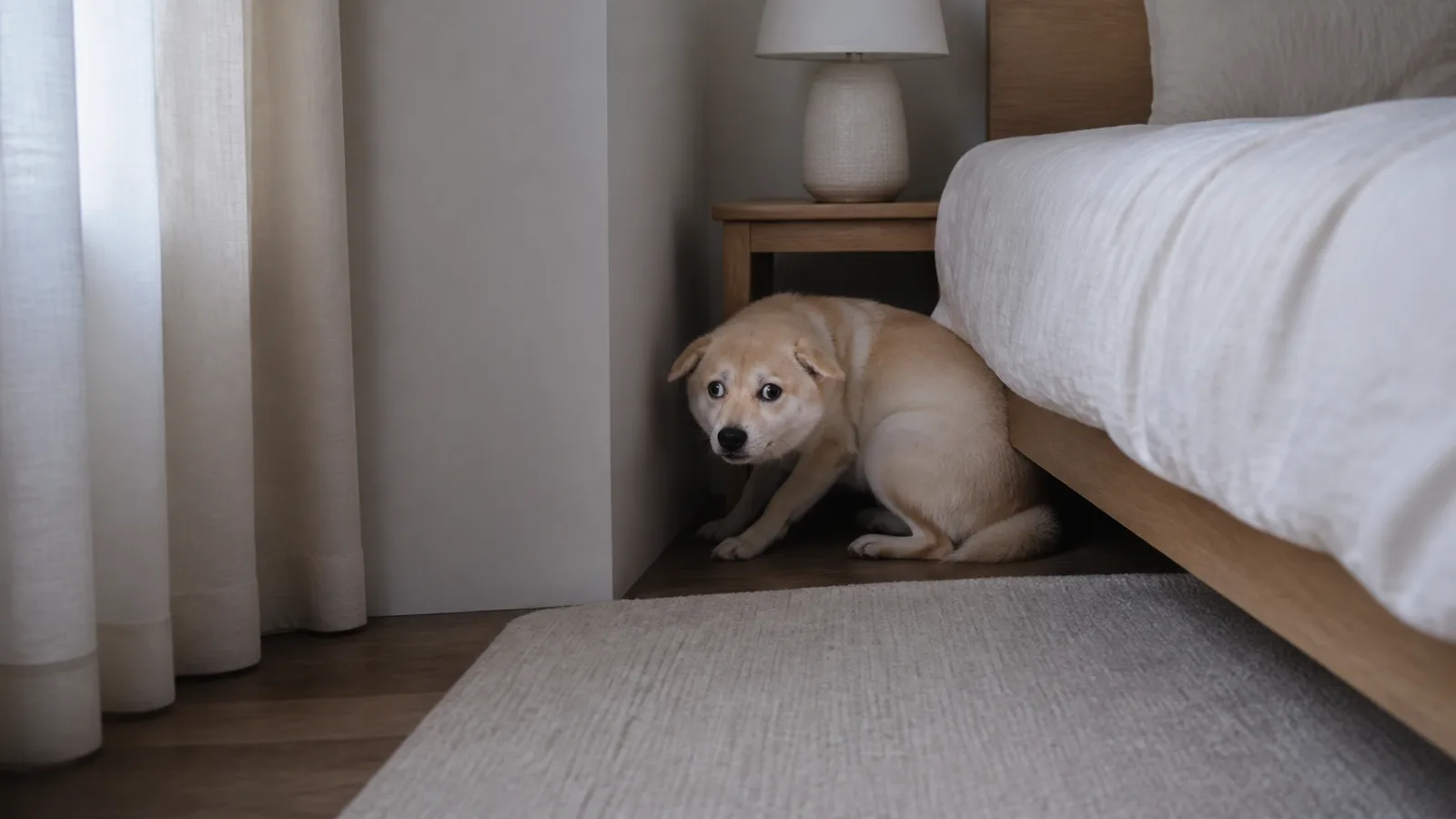
Almost everything written about dogs and fireworks is written for the night itself, which is the one moment when very little can still be changed. By the time the first bang goes off, your options are down to closing the curtains and sitting with your dog. The useful work happens in the weeks beforehand, and most of it is unglamorous: an appointment, a room, a few short sessions, and some scheduling. If you want to prepare your dog for fireworks properly, the time to start is roughly a month out, and this article sets out what to do in that window and in what order.
Why Prepare Weeks Ahead Instead of on the Night?
Because the three things that help most all need lead time, and none of them can be arranged at short notice. Medication has to be discussed with a vet, prescribed, and usually trialed on an ordinary day before you rely on it. A safe space only works if your dog already likes it, which means building the association weeks before it is needed. Sound desensitization is a slow process that does nothing if started the day before.
There is also a practical reason that catches many people out. Firework nights are among the most common nights for dogs to go missing, because frightened dogs bolt, push through gates, and get through doors left open by visitors. Checking that your fences, gates, doors, and your dog's identification are all in order is a twenty-minute job that has to happen while you still have time to fix whatever you find.
When Should You Speak to Your Vet?
Four weeks out, and earlier if your dog has reacted badly before. This is the task with the longest lead time, because appointments take time to get, and because anything prescribed should ideally be tried once on a quiet day first. You want to know how your dog responds to a medication before the night you are depending on it, not discover an unexpected reaction while fireworks are going off outside.
Nothing in this article is veterinary advice, and noise fear is one of the areas where professional input genuinely changes outcomes. Tell your vet exactly what your dog did last year, including whether they hid, shook, drooled, refused food, escaped, or would not settle for days afterward. Mention anything else your dog takes, including supplements you started yourself, since interactions matter. We cover why the vet belongs in this from the start in why your vet should be part of the plan.
What Should You Set Up at Home?
Build the safe space now, several weeks before you need it, because a hiding place your dog has never used is not a safe space. Pick an interior room with as few windows as possible, ideally away from the street, and make it somewhere your dog already chooses to be. Add their bed, something that smells of you, and water, and leave the door open at all times so it is a refuge rather than a confinement.
The part people skip is making it valuable in advance. Feed meals in there, hide treats in there, and let your dog nap there for a few weeks so the room already means good things by the time it matters. A den built on the afternoon of the fifth is just an unfamiliar room your frightened dog has no reason to trust. Doing this early costs nothing and is probably the highest-value hour you will spend.
While you are at it, do the escape check. Walk the garden looking for gaps, check that gates latch properly, confirm your dog's microchip details are current, and make sure their collar tag is readable. This is the least interesting item on the list and the one most likely to matter if things go wrong.
Is It Worth Doing Sound Training?
It is worth doing if you start now and it is close to pointless if you start next week. Sound desensitization means playing firework recordings at a volume so low your dog barely notices, pairing it with something good, and raising the volume across many short sessions over weeks. Done properly it can genuinely reduce a dog's reaction. Done in a rush it simply frightens the dog and confirms that bangs are worth being afraid of.
The rule that makes it work is that your dog must stay relaxed throughout. If they lift their head, stop eating, or leave the room, the volume is already too high and you have gone too fast. Sessions should be short, a few minutes at most, and should end while your dog is still comfortable. If you cannot commit to several weeks of this, skip it entirely and put the effort into the safe space and the vet appointment instead, which will do more for you in the time available.
What Should Change About Walks and Routine?
Move walks earlier in the day, starting a week or so before the main dates rather than on the night. Dogs need to have been out, fed, and toileted well before dark, because a walk during fireworks is genuinely risky and a dog who needs the garden at ten o'clock is a dog you have to persuade outside during the worst of it. Shifting the routine gradually is easier on an anxious dog than changing everything abruptly.
It also helps to find out when the fireworks are actually happening near you, rather than assuming a single date. Local displays, community events, and private parties often spread across two or three weekends, and being surprised by the wrong evening is what leaves people unprepared. Once you know the dates, arrange to be at home for them, because leaving a noise-fearful dog alone through fireworks is the single worst thing on this list. Predictable routine helps anxious dogs generally, and this is a case where it matters more than usual, as we cover in why routine helps dogs with separation anxiety.
How Does This Affect a Dog With Separation Anxiety?
Expect their tolerance for being alone to drop during the season, and plan around it rather than being caught out. A dog who was managing forty minutes comfortably in October may manage far less in early November, and that is a normal response to accumulated stress rather than a loss of progress. Treating it as failure leads people to push harder at exactly the wrong moment.
The practical implication is straightforward: pause any progression in your alone-time training during firework season and hold at a step your dog can do easily. Do not test their threshold, do not add minutes, and do not schedule practice sessions on evenings when bangs are likely. You are aiming to get through the season without your dog rehearsing panic, and holding steady for two weeks costs you almost nothing in the longer run.
What Should You Actually Do on the Night?
Close the curtains before it gets dark, turn on background sound before the fireworks start rather than after, and get your dog into the room they already like. Starting the sound early matters, because switching on a television in response to the first bang tells your dog that something has changed. Feed earlier than usual and do the last toilet trip while it is still quiet outside.
Then behave normally and let your dog do whatever they need to do. If they want to hide under the bed, let them, because a hiding dog is coping and dragging them out removes their only strategy. Comfort them if they come to you, since reassuring a frightened dog does not reinforce the fear. Do not punish barking or pacing, and do not attempt any training that evening. Background sound helps by masking, but it will not do the whole job on its own, which we explain in what white noise and TV can and cannot fix.
What About the Days Afterward?
Expect a few days of a shorter fuse, and do not read it as a setback. Stress hormones take time to clear, and a dog who has had a frightening night is often more reactive, less settled, and less able to cope with being alone for several days afterward. Owners frequently panic at this point because months of progress appear to have vanished overnight.
It has not. The pattern of an apparent regression after a stressful event, and how to come back from it without starting over, is covered in separation anxiety regression after fireworks, storms or a stressful weekend. The short version is to give it a few quiet days, drop back a step or two, and resume when your dog is genuinely back to normal rather than when the calendar says the season is over.
Your Four-Week Countdown
Work backward from the first date you know about rather than from the most famous one, since local displays often come earlier. Treat this list as the whole plan rather than a summary of the article. Each item is deliberately small enough to do in an evening, because a plan that requires a free weekend tends not to happen at all.
- Four weeks out. Book the vet appointment. Check the microchip details, the collar tag, the fences, and the gates.
- Three weeks out. Build the safe space and start feeding and treating your dog in it daily so it becomes somewhere they choose.
- Two weeks out. Begin sound sessions only if you can commit to doing them properly, and trial any prescribed medication on a quiet day.
- One week out. Confirm the local dates, arrange to be home for them, shift walks earlier, and stock up so you are not going out on the night.
- On the night. Curtains closed and sound on before dark, everything done early, and no training, no punishment, and no forcing your dog out of hiding.
If the month has already got away from you, do not abandon the plan and wait for next year. Even the first two items put you well ahead of most households, so start with the vet call and the safe room. Neither takes long, and between them they cover the two things that are genuinely impossible to arrange at the last minute. Everything else on the list is a bonus.
Log tonight's session from your phone
The Qualma app is available now on Android and iPhone. Sign in with your existing account — no need to subscribe twice.