Dog Enrichment for Separation Anxiety: Food, Chews and Calming Activities
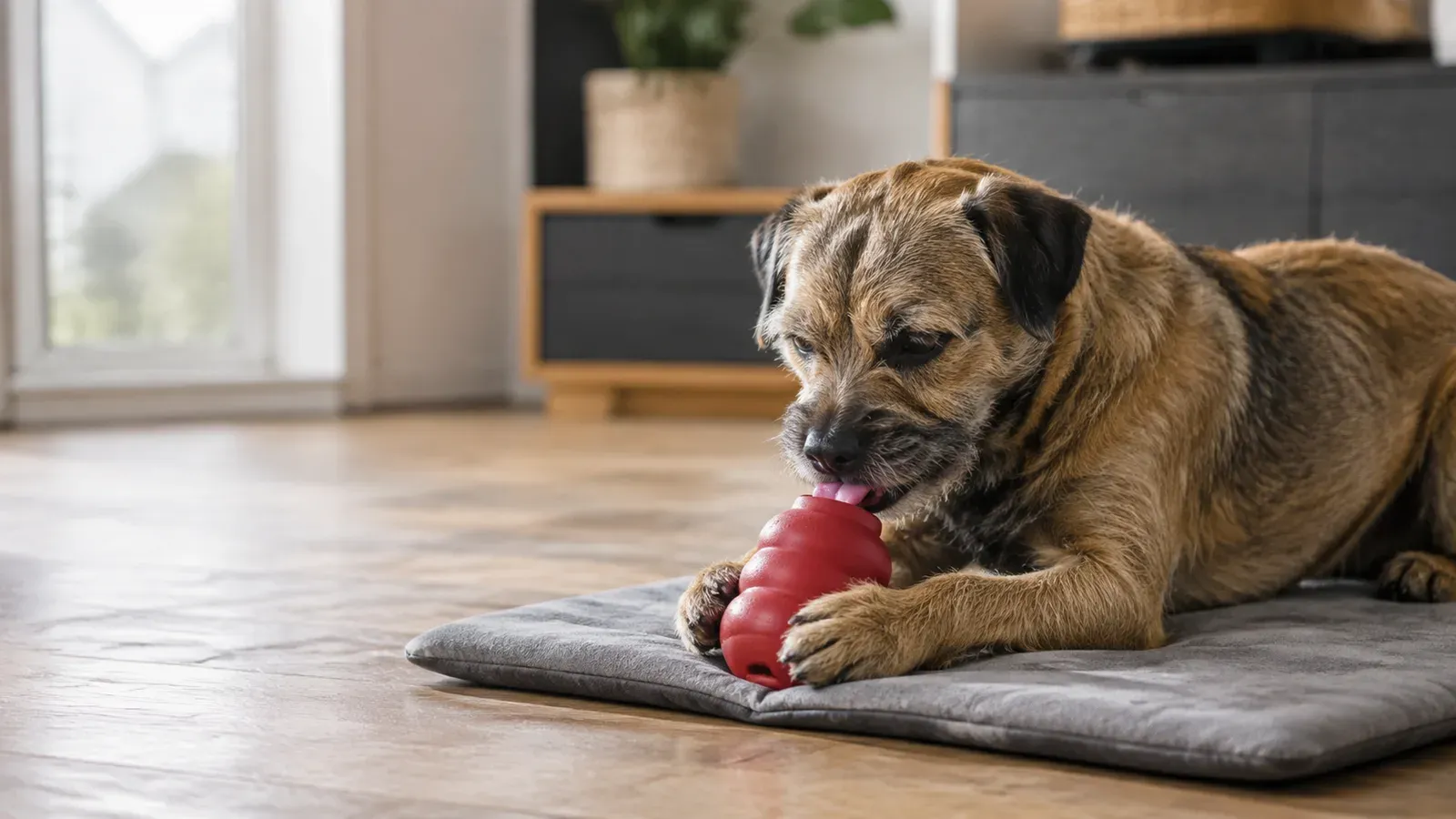
Enrichment is the most over-promised part of separation anxiety advice. Food toys and puzzle feeders are recommended constantly, and for a dog in genuine distress they frequently sit untouched on the floor for two hours.
That does not make enrichment useless. It makes it a support rather than a treatment, and something that works in a narrower band than most articles suggest. This page covers what it genuinely does, which activities suit an anxious dog, how to use food as a measurement rather than a distraction, and what is actually safe to leave with an unsupervised dog.
What can enrichment actually do?
It occupies, it satisfies natural behaviors, and for a dog who is close to coping it can shift an absence from just about tolerable to genuinely fine. Those are real benefits and worth having.
What it does not do is teach a dog that being alone is safe. That is a different mechanism — it comes from repeated absences your dog gets through without distress — and no amount of stuffing a toy substitutes for it. Enrichment supports the training; it is not a smaller version of it.
Why does enrichment often fail with an anxious dog?
Because eating and searching are behaviors that belong to a settled animal. A dog in genuine distress has limited capacity to engage with food at all, which is not a judgement about the food or the dog's motivation but a fairly direct consequence of what the nervous system is doing.
This produces the pattern owners find most confusing: the same dog who would take that filled toy instantly while you were in the room ignores it completely once you leave. Nothing about the toy changed. What changed is the state your dog is in.
What does an untouched food toy tell you?
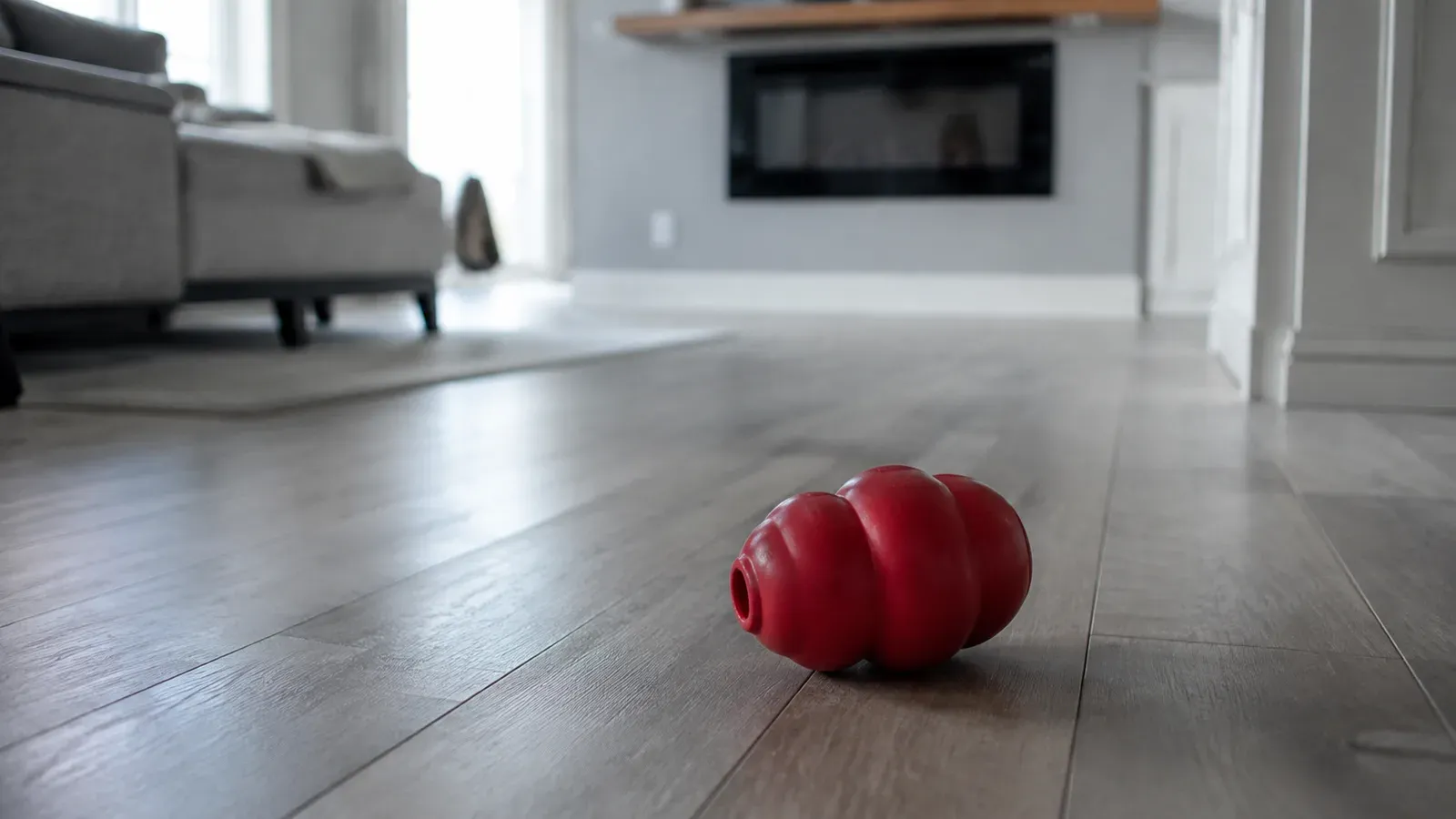
Where your dog's limit currently sits, more precisely than almost anything else you can observe. The moment they stop eating is the moment the absence stopped being manageable, and that is a number you can work with.
Used this way, food stops being a distraction and becomes a measurement. Give the same filling in the same conditions, note when engagement ends, and work at absences shorter than that. As the threshold moves, so does the point at which the food gets abandoned — which is one of the earliest signs of progress, often visible before duration improves at all.
This also means resisting the urge to raise the value of the filling. Better food may tempt a stressed dog to keep eating slightly longer, which obscures exactly the signal you were reading. A thermometer needs a fixed scale.
Read next
In Qualma: Record whether the food was finished, and roughly when engagement stopped.
Why is licking useful?
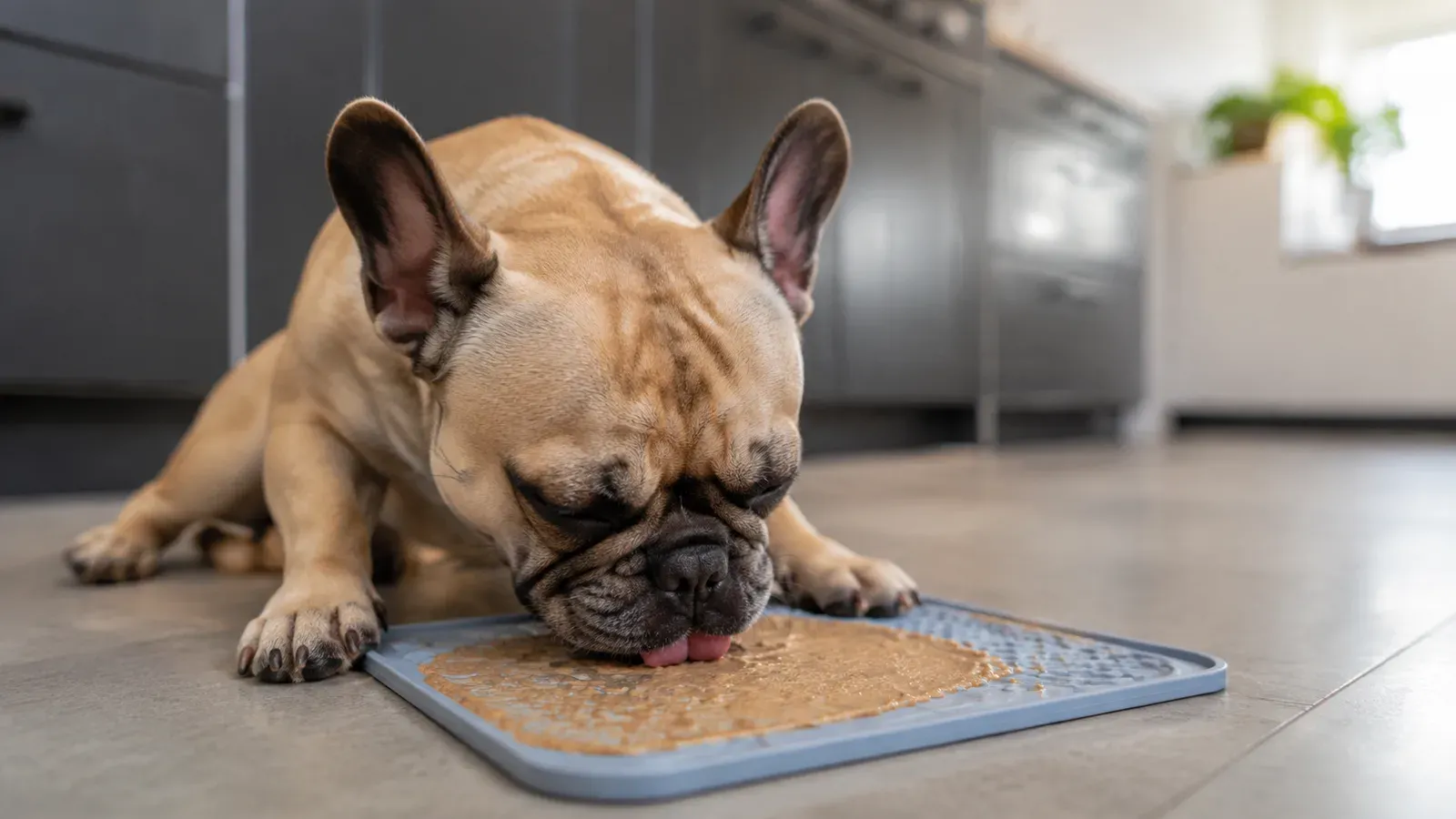
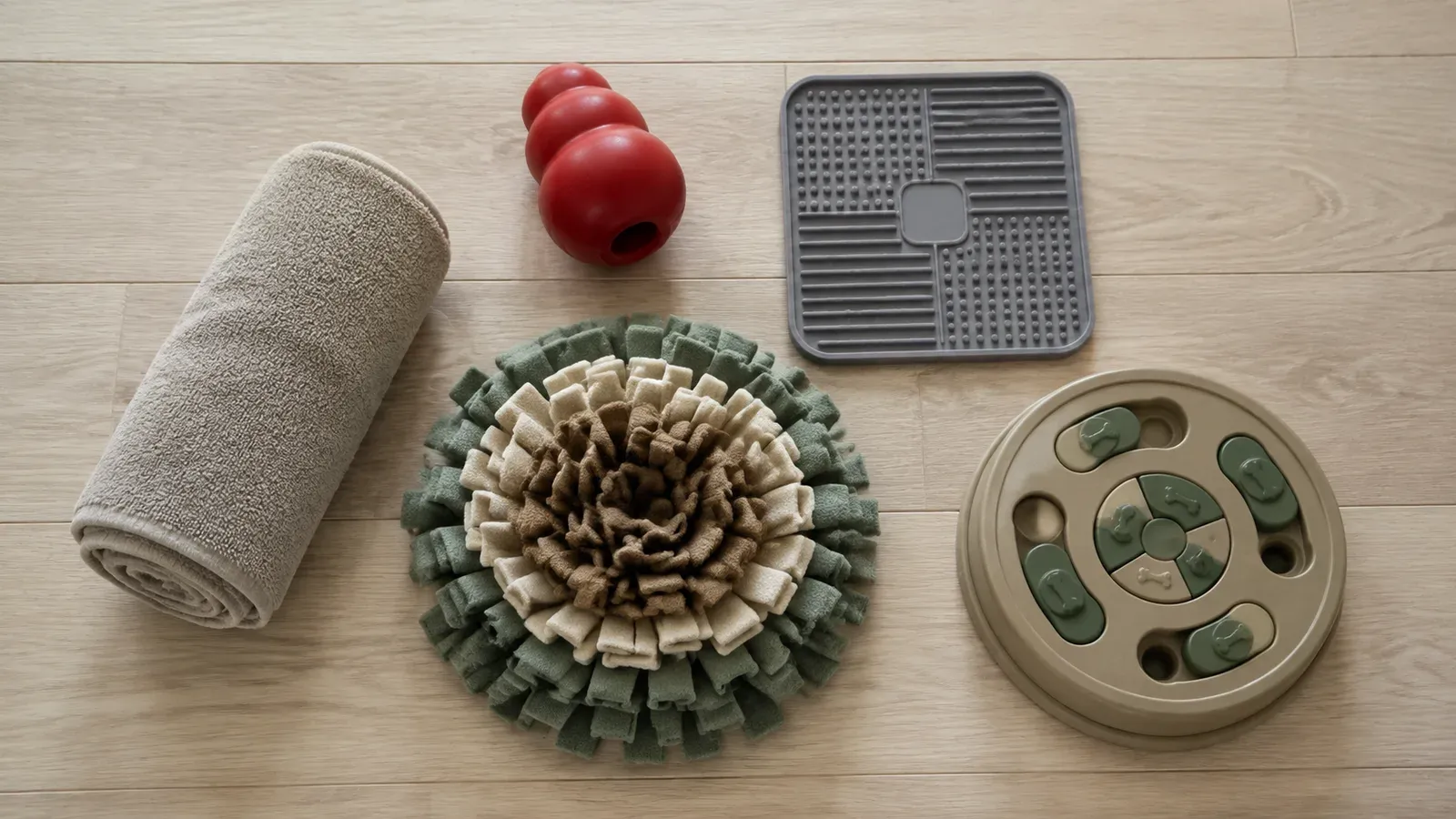
Licking is a slow, repetitive behavior that many dogs find settling, and it holds attention for longer than eating from a bowl. A lick mat with something soft spread across it gives a dog several minutes of low-arousal activity rather than thirty seconds of consumption.
It suits anxious dogs better than most high-energy enrichment for exactly that reason: the goal here is to bring arousal down rather than to give a dog something exciting to do.
Does scent work help anxious dogs?
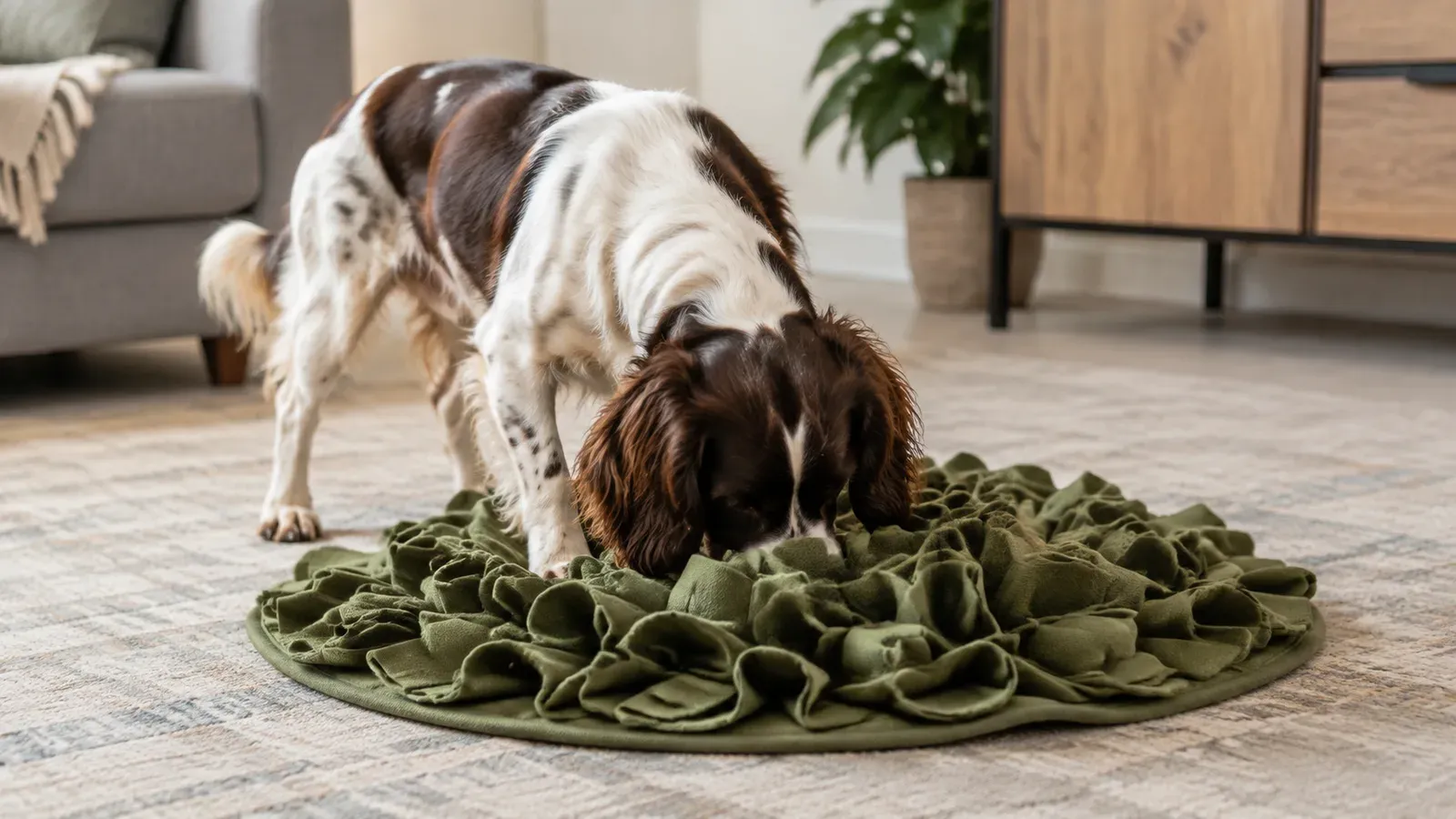
It is among the best options available, because it uses something your dog already knows how to do and requires no confidence with people, other dogs or new places. A search slows a dog down, gives them one clear task, and reduces the environmental monitoring anxious dogs do by default.
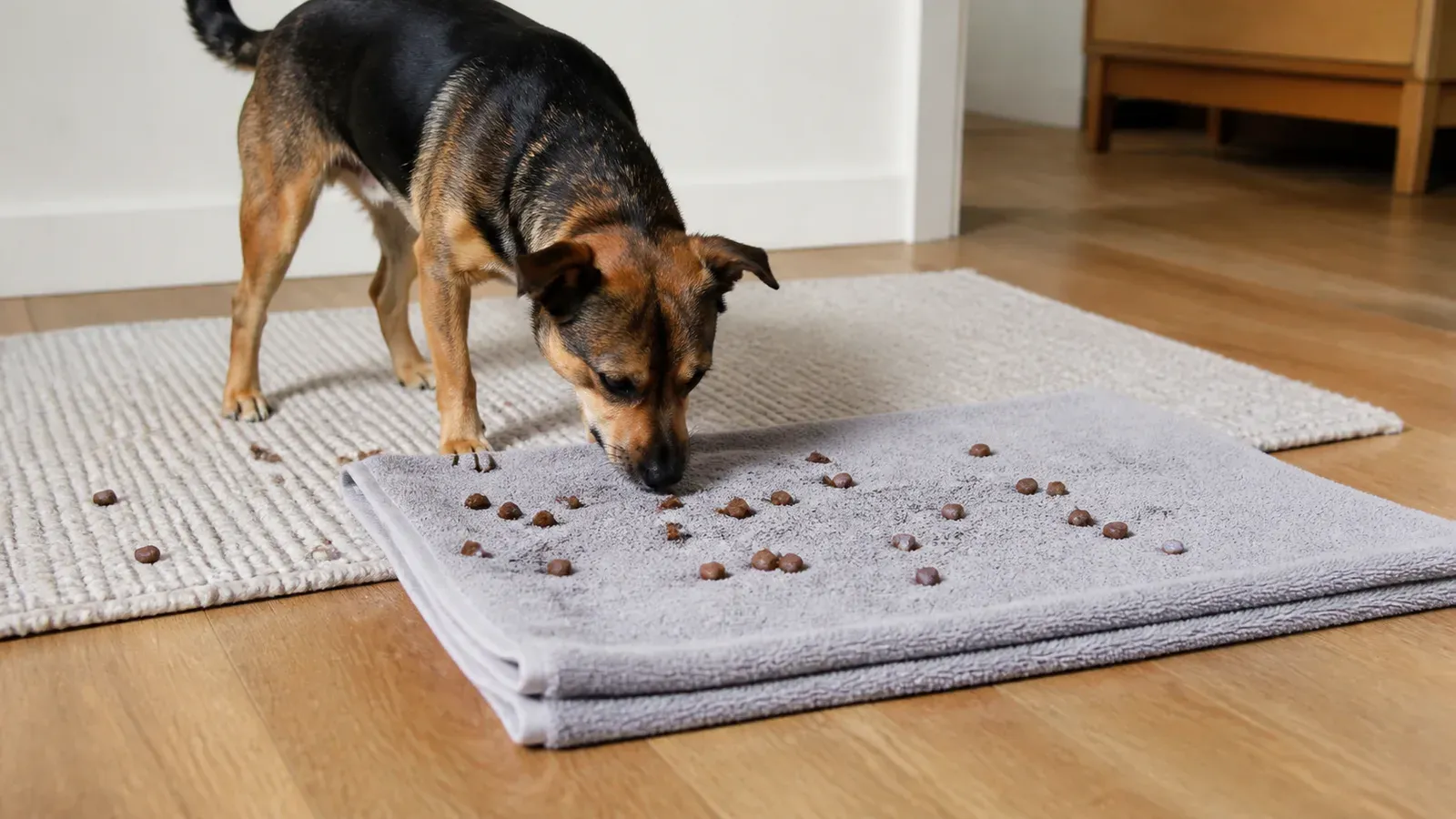
Starting is deliberately unimpressive. Scatter five or six pieces of food in a small area in plain sight, let your dog find them, and stop while they are still interested. Difficulty increases only once the current level is easy — food partly hidden, then under a towel, then in a second room.
If your dog wanders off partway through, the search was harder than they were ready for. Make the next one easier rather than more interesting; frustration undoes the calming effect you are working for.
Read next
Does enrichment need to be expensive?
No, and cheaper often works better. A handful of food scattered across a towel, a cardboard box with kibble inside, or a rolled hand towel with treats in the folds regularly produces more engagement than an expensive puzzle a dog cannot interpret.
The effectiveness comes from clarity rather than cost. A task your dog can solve quickly builds a pattern of success, and that pattern is what makes the activity settling. Complexity can come later, once the game itself is understood.
What is actually safe to leave with an unsupervised dog?
Less than the average pet shop suggests, and this section matters more than any other on this page. An item that is perfectly safe under supervision can be dangerous when nobody is there to intervene, and an anxious dog chews differently from a relaxed one — faster, harder, and with less discrimination.
The general rule is that anything which can break into swallowable pieces, splinter, or be worked loose should not be left with a dog you cannot see. If you are unsure about a specific item, your veterinarian is the right person to ask about your dog in particular.
- Avoid cooked bones entirely. They splinter, and the pieces are sharp.
- Be cautious with very hard chews. Antlers, hooves and hard nylon are a common cause of fractured teeth.
- Watch for swallowable parts. Squeakers, rope strands, plastic fragments and anything glued on.
- Size up, not down. A toy that fits comfortably in your dog's mouth is a choking risk.
- Check items regularly. Replace anything worn, cracked or reduced in size.
- Count the calories. Daily food enrichment adds up quickly, and weight gain has its own consequences.
Read next
What should you do before you leave?
Something calm rather than something stimulating. A short sniffing activity or a few minutes of licking brings arousal down before an absence; a vigorous play session sends your dog into the absence already wound up.
Avoid making the enrichment itself a departure cue. If a stuffed toy only ever appears at the moment you pick up your keys, your dog learns what the toy means, and it starts predicting the thing they are worried about rather than softening it. Give the same items on days you are staying home too.
How do you keep it working over time?
Rotate rather than escalate. Three or four activities used in turn stay interesting far longer than one used daily, and rotating costs nothing while buying novelty repeatedly gets expensive quickly.
Keep the difficulty roughly constant while your dog is still learning to cope with absences. Changing the enrichment and the duration in the same week leaves you unable to tell which mattered — and the whole value of enrichment for an anxious dog lies in what it tells you.
In Qualma: Note which activity was used alongside the session, so an improvement can be attributed rather than guessed at.
How do you know whether it is helping?
Compare absences with and without it, holding everything else steady. If the enrichment is genuinely helping, your dog settles sooner or copes with slightly longer; if it is not, the absence looks the same and the item is simply present.
Be prepared for the answer to be that it makes no difference. That is a useful finding rather than a failure — it tells you the difficulty is the separation itself rather than boredom during it, which points you back toward the training and away from spending more money on toys.
How Qualma helps
Find out whether the enrichment is doing anything
Enrichment is the easiest thing to keep buying and the hardest to evaluate, because the effect is small, gradual, and mixed in with everything else that changes week to week.
Recording what you used alongside how the absence went makes the comparison possible. Over a few weeks the pattern shows whether engagement is improving, whether a particular activity travels better than others, and whether food is being finished when it was not before.
- What you offered. The activity or item used for that session.
- Whether it was engaged with. Finished, partly eaten, or untouched — the most informative field on the page.
- Alongside the behavior. So enrichment and the absence are recorded together rather than separately.
- Trends over time. The Analysis view surfaces patterns across the history you have built.
Food refusal is not a failed session. It is the clearest reading you get of where your dog's limit currently sits.
Start recording engagementCommon questions
- Why won't my dog eat a Kong when left alone?
- Because eating requires a settled state, and a distressed dog does not have one. It is not fussiness or a problem with the filling — the same dog would usually take it immediately while you were in the room. The moment they stop eating is a useful marker of where their current limit sits.
- Will enrichment fix my dog's separation anxiety?
- No. It can make a manageable absence more comfortable and it can tell you a lot about how your dog is coping, but it does not teach a dog that being alone is safe. That comes from repeated absences your dog gets through without distress.
- What enrichment is safe to leave with a dog alone?
- Items that cannot break into swallowable pieces, splinter, or be worked apart. Avoid cooked bones entirely, be cautious with very hard chews such as antlers and hooves because of the risk of fractured teeth, and choose sizes too large to fit fully in your dog's mouth. Check items regularly and replace anything worn. For a specific item and a specific dog, ask your veterinarian.
- Does expensive enrichment work better?
- Generally not. Scattered food, a rolled towel or a cardboard box often produces more engagement than a complex puzzle a dog cannot interpret, because the effectiveness comes from being solvable rather than from being sophisticated.
- Should I give enrichment right before I leave?
- Something calm rather than something stimulating, and ideally not only at departure. If a particular item appears exclusively when you are about to leave, it becomes a departure cue and starts predicting the thing your dog is worried about. Offer the same activities on days you are staying home.
Log tonight's session from your phone
The Qualma app is available now on Android and iPhone. Sign in with your existing account — no need to subscribe twice.


Where to go next
Train
Thresholds, gradual exposure, session structure and judging progress.
Understand
What separation anxiety is, the signs, and how it differs from boredom.
Living with it
Guilt, a shrinking life, burnout, cost — and getting some freedom back.
Support
Veterinary assessment, professionals, cover and environment.
Let the food tell you where the limit is
Record what you offer and whether your dog engages with it. Over a few weeks that single field says more about progress than the length of the absence does.
Start with Qualma