
Living With a Dog With Separation Anxiety: Your Life, Not Just Theirs
Almost everything written about separation anxiety is about the dog. Very little of it acknowledges that the person managing it has usually reorganised their entire life around a problem they did not cause and cannot quickly fix.
This page is about that side. The guilt, the planning, the cancelled evenings, the resentment nobody admits to, and the practical question of how to get some of your life back while the training is still going.
Why is this so much harder than people expect?
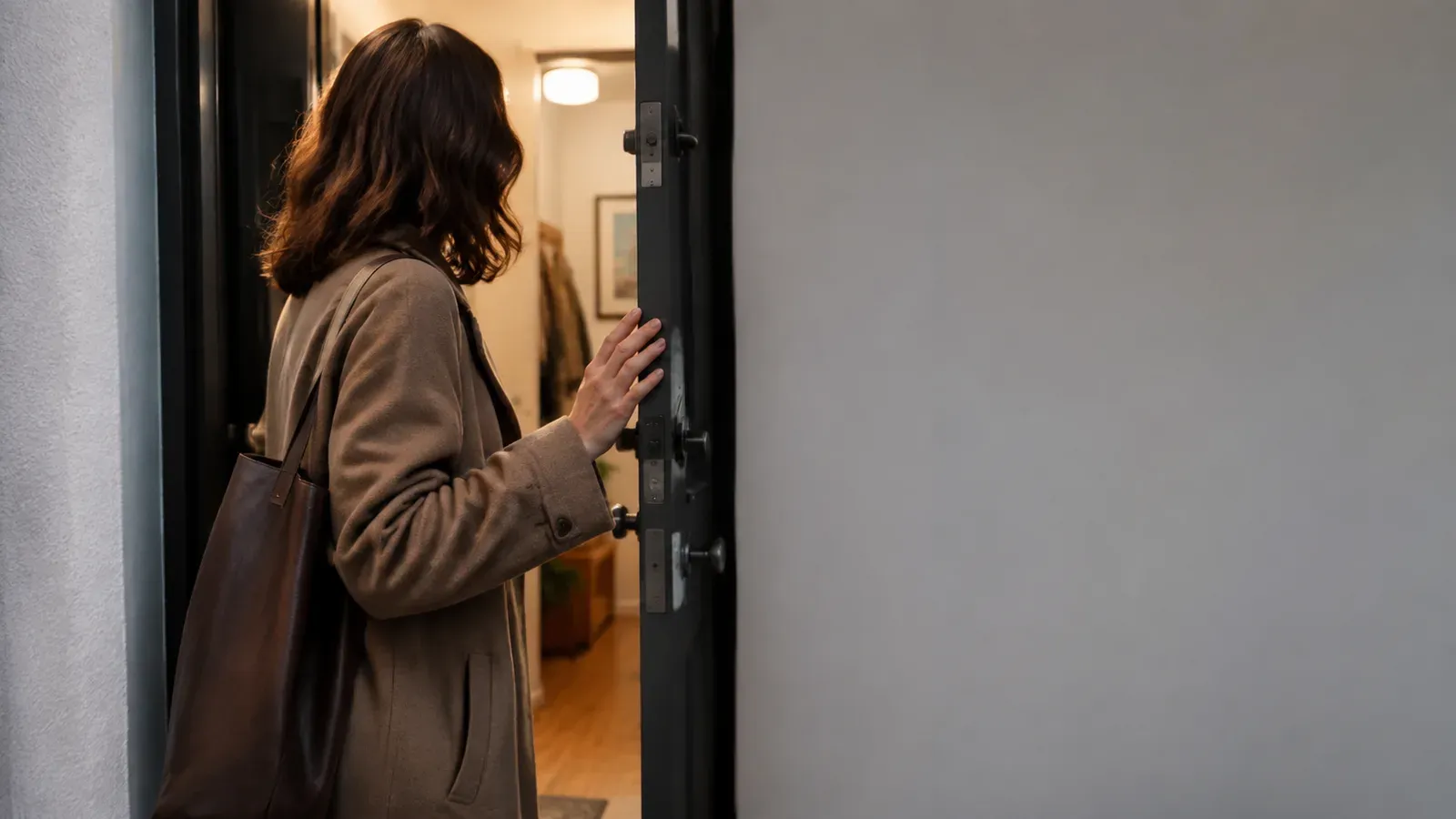
Because it does not stay in one part of your life. A dog who cannot be left alone touches work, friendships, holidays, relationships, sleep and money, and it does so continuously rather than in a crisis you can point at.
It is also largely invisible. From outside, you have a dog. The daily arithmetic — who is home, for how long, what can be moved, what has to be cancelled — is not something most people see, which is why the support that would normally arrive around a hard thing often does not arrive around this one.
Read next
When did your world get this small?
Usually not in one decision. It happens through a long series of individually reasonable ones: skipping this dinner, leaving that thing early, not booking the trip, choosing the closer option. Each is sensible on its own and none feels like a turning point.
The result is a life that has quietly narrowed without anyone deciding it should. Noticing that is not self-pity — it is the first step to reversing some of it, because a pattern you have not named is very hard to interrupt.

Why does leaving feel like a betrayal?
Because you can see the distress and you are the one causing it, at least in the immediate sense. That is a hard combination for anyone who cares about their dog, and it does not respond well to being told it is irrational.
What is worth holding onto is that the guilt is not evidence you are doing something wrong. Working carefully at short absences your dog can cope with is the thing that helps; avoiding all absences forever is not available and would not fix it either. The discomfort of leaving is part of the treatment rather than a sign you should stop.
Read next
Is it normal to feel resentful?
Yes, and almost nobody says so out loud. Alongside the love and the worry there is often frustration, occasional anger, and sometimes a straightforward wish that this were not your problem — particularly after a bad week or a cancelled plan.
Feeling that does not make you a bad owner and it does not mean you love your dog less. It means you are managing something genuinely difficult with limited resources and no end date. The owners who struggle most tend to be the ones who also feel guilty about feeling frustrated, which adds a second weight on top of the first.
Why can't you stop checking the camera?
Because it works, briefly. Checking resolves the uncertainty for a moment, and that relief is exactly what makes it hard to do less of. The trouble is the relief is temporary and the checking is not, so an evening out becomes an evening spent monitoring an evening out.
One thing that genuinely helps: decide before you leave when you will check, and stick to it. Twice, at set points, rather than continuously. It is not that checking is wrong — it is that unlimited checking removes the benefit of having gone out at all.

What happens when you have nothing left?
Progress slows, which is the cruellest part of it. Training this requires consistency, and consistency requires an owner with some capacity — so the weeks when you are most depleted are the weeks the work suffers, which produces more difficult days, which is more depleting.
The way out is not more effort. It is usually reducing the load somewhere: fewer sessions but more regular ones, more cover for a fortnight, or accepting a plateau on purpose while you recover. A deliberate pause is a strategy. Grinding on until you have nothing left is what ends up costing months.
Why does everyone else's dog seem to be doing better?
Because you are comparing your whole situation with someone else's summary. The dog who 'was fine after three weeks' had a different starting point, a different history, a different household and possibly a different problem — and you are hearing about them precisely because it went well.
The only comparison that carries information is your dog against your dog, a month ago. Everything else is noise, and for most owners it is actively discouraging noise.
What does success actually look like for you?
It is worth deciding deliberately, because the default is 'a dog who can be left indefinitely' and for some dogs that is not where this lands. Plenty of households arrive somewhere workable rather than somewhere perfect: two hours reliably, cover for the rest, and a life that functions.
Choosing your own definition is not lowering the bar. It is the difference between a plan you can sustain and one that guarantees you feel you are failing regardless of how much your dog improves.
Can you get some freedom back before the training is finished?
Yes, and waiting until the training is complete is a common mistake. The absences your dog cannot manage still need covering — so cover them, deliberately, and use that cover for something you actually want rather than only for obligations.
Book one thing. Arrange the sitter, or the family member, or the neighbour, and go. It costs the same as covering a work commitment and it does considerably more for your ability to keep going.
- Put it in the calendar. An intention without a date does not survive a difficult week.
- Use cover for pleasure, not only for duty. The arrangement is identical; the benefit is not.
- Start small. Two hours you actually enjoy beats a weekend you spend anxious.
What does it do to the people around you?
It creates an imbalance that is easy to miss. One person usually becomes the default — the one who stays, who leaves early, who knows the routine — and that role tends to be assigned by circumstance rather than agreed on.
It is worth saying out loud, because unspoken imbalance turns into resentment on both sides. The person doing more often feels unsupported; the other frequently has no idea of the scale of it, since most of the work is invisible planning rather than visible effort.
What does it cost?
More than most people expect, and often more than they have accounted for. Sitters, walkers, daycare, cameras, training, veterinary appointments and replaced doors add up quietly, and the costs arrive exactly when you are least able to think clearly about them.
Worth doing once: add it up honestly for a month. Not to feel worse, but because seeing the real number usually changes the decisions — several owners find that a professional consultation they had been putting off costs less than three months of the daycare they were using instead.
How do you look after yourself through this?
Concretely, and preferably before you need to. Protect one fixed thing each week that is yours and cover it properly. Tell one person the unedited version rather than the light one that ends in a joke. Set a floor you will not go below, and write it down while things are calm enough to decide clearly.
And if you have been low for weeks rather than days, treat that as its own problem rather than a character flaw. Chronic caregiving strain is well recognised and it responds to support — your doctor, a therapist, or simply other people in the same position. Your dog's progress depends on you being able to keep going, which makes this practical rather than indulgent.
How Qualma helps
You do not have to hold all of it in your head
A great deal of the exhaustion in this is administrative rather than emotional. Remembering which absences went well, what was different about them, what the vet said, what you tried last month and whether it helped — that is a real cognitive load, and it sits on top of the worry rather than beside it.
Writing it down somewhere structured removes most of that. It also does something quieter but more useful: it makes gradual progress visible. Improvement in this is slow enough to be invisible day to day, and a record is often the only way to see that anything has changed at all.
- One place for the history. Sessions, context and notes, instead of memory and scattered messages.
- Ready for appointments. Observations you can show a vet or behavior professional.
- Progress you can see. The Analysis view surfaces trends that are invisible day to day.
- Your dog's own baseline. Compared with their history, not with anyone else's dog.
On the days it feels like nothing is working, the record is what shows you whether that is true.
Start keeping the recordCommon questions
- Is it normal to feel resentful of my dog?
- Yes, and it is far more common than the silence around it suggests. Managing a problem with no end date and constant logistical cost produces frustration in almost anyone. It does not mean you love your dog less or that you are doing badly — and feeling guilty about the frustration tends to be more corrosive than the frustration itself.
- How do I stop feeling guilty every time I leave?
- Probably not entirely, but it helps to know the guilt is not evidence of doing something wrong. Short absences your dog can cope with are the thing that improves this; avoiding every absence forever is neither possible nor helpful. The discomfort is part of the process rather than a signal to stop.
- Can I go out before my dog's training is finished?
- Yes, and you should. The absences your dog cannot yet manage need covering regardless — so arrange the cover and use some of it for something you want to do rather than only for obligations. Waiting until training is complete before living your life is a common and costly mistake.
- Should I rehome my dog?
- That is a decision only you can make, and it deserves an honest conversation rather than a verdict from a web page. Before it, it is worth having exhausted the things that genuinely change the picture: a veterinary assessment, a qualified behavior professional, and reliable cover. Many owners considering it have not yet had all three, and one of them changes the situation more often than people expect.
- How long will this take?
- Nobody can tell you honestly, and treat any confident number with suspicion. What is more predictable is the shape — uneven, with setbacks, slower at the start than most people expect. Judging progress against your own dog a month ago rather than against a timeline is what keeps it bearable.
Log tonight's session from your phone
The Qualma app is available now on Android and iPhone. Sign in with your existing account — no need to subscribe twice.


Where to go next
You are doing more than anyone can see
Keep a record of it — not for the app's sake, but because on the weeks it feels like nothing is changing, that record is the only thing that can tell you otherwise.
Start with Qualma