
Separation Anxiety Training: Helping Your Dog Build Confidence Alone
Most separation anxiety training goes wrong in the same way. The goal quietly becomes a number — thirty minutes, an hour, a whole afternoon — and the dog's experience during those minutes stops being the thing that is measured.
This page is about the other approach. It covers what you are actually building, how to tell where your dog's current limit sits, how to structure a session so it teaches something, and how to judge whether any of it is working when progress refuses to move in a straight line.
What are you actually training?
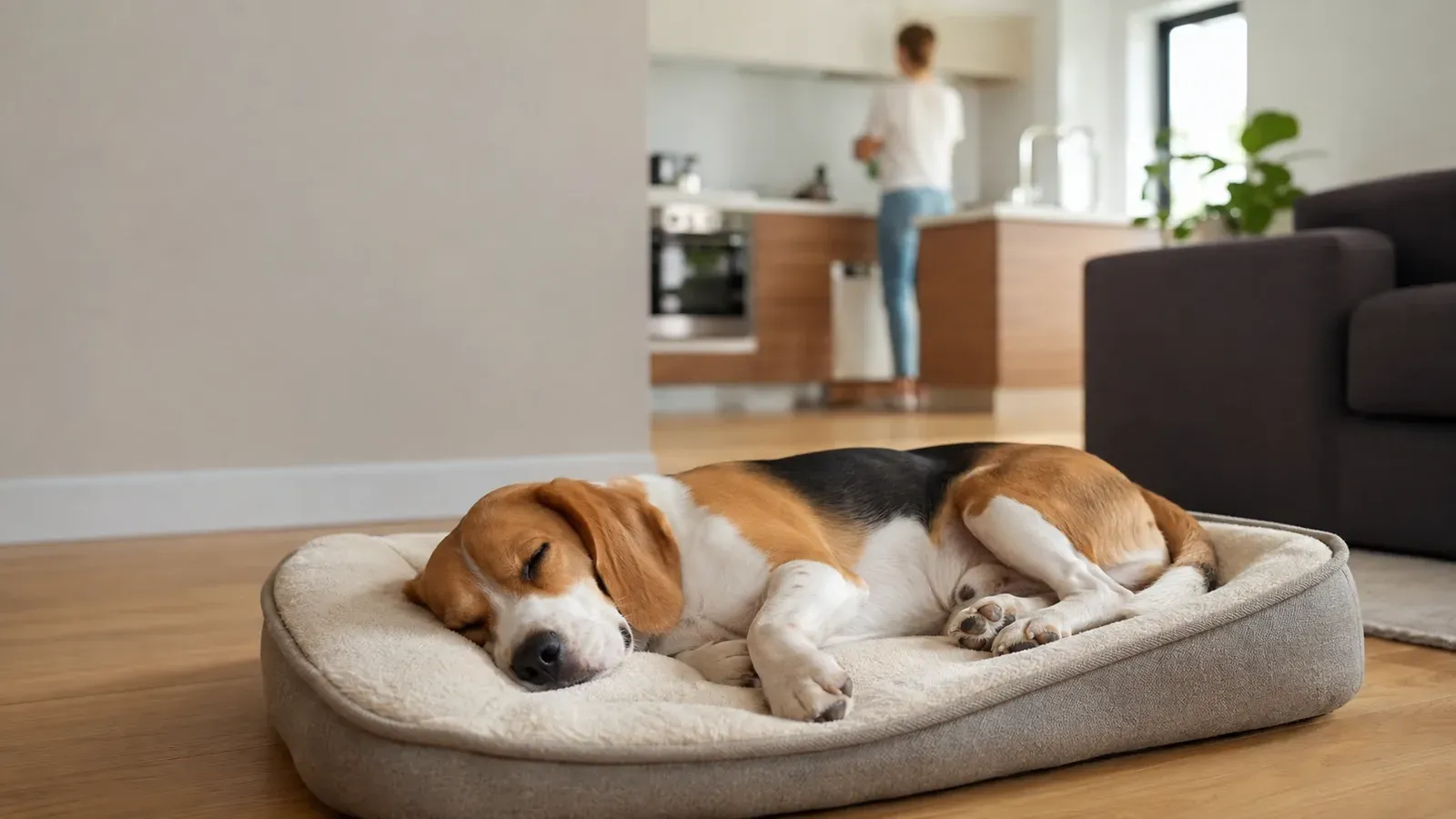
Not tolerance of longer absences — comfort during them. Those sound similar and produce completely different plans. A dog can be left for two hours and spend all of it in a state of suppressed alertness, and a dog can be left for four minutes and genuinely relax. The second dog is further along.
The distinction matters because duration is easy to measure and comfort is not, so duration quietly becomes the goal by default. Every practice on this page exists to keep the harder question in view: not how long your dog was alone, but what the absence was like for them.
What needs to be in place before training starts?
A way to see what happens when you are gone, and a rough idea of where your dog's current limit sits. Without the first you are guessing; without the second you will almost certainly start too far along and spend weeks undoing it.
The observation part is simpler than it sounds. A phone propped against a shelf, recording a short absence you watch back afterwards, tells you more in fifteen minutes than a fortnight of judging by how the flat looks when you return. What you are looking for is the first moment your dog changes — not the dramatic part, the quiet one before it.
- A camera or recording of some kind. It does not need to be a pet camera. Anything that captures the room will do.
- A baseline you actually watched. One short absence, recorded and reviewed, so the starting point is observed rather than assumed.
- Cover for the absences you cannot avoid. Work, appointments and errands do not pause for training, and long absences your dog cannot cope with undo the short ones you are building.
Read next
In Qualma: Record a baseline session before you change anything, so later sessions have something to compare against.
What does being over threshold actually look like?
Threshold is the point at which your dog stops coping and starts reacting, and it is defined by behavior rather than by a number of minutes. Below it a dog can settle, take food, and recover normally when you return. Above it none of those things reliably happen, and the absence stops teaching anything useful.
The practical consequence is uncomfortable but simple: training that happens above the threshold does not build tolerance, it rehearses panic. A dog who spends twenty minutes distressed has practised being distressed for twenty minutes. This is why the shortest absences often produce the fastest progress, and why pushing usually costs more time than it saves.
Your dog's threshold is not fixed. It moves with sleep, health, the time of day, what happened an hour earlier, and how many absences there have already been that week. A session that worked on Tuesday can be too much on Thursday without anything having gone wrong.
How does gradual exposure actually work?
You leave for a length of time your dog can handle without distress, return before anything changes, and repeat until that length is unremarkable. Then you extend it slightly. The mechanism is not complicated; the discipline of staying below the limit is the hard part.
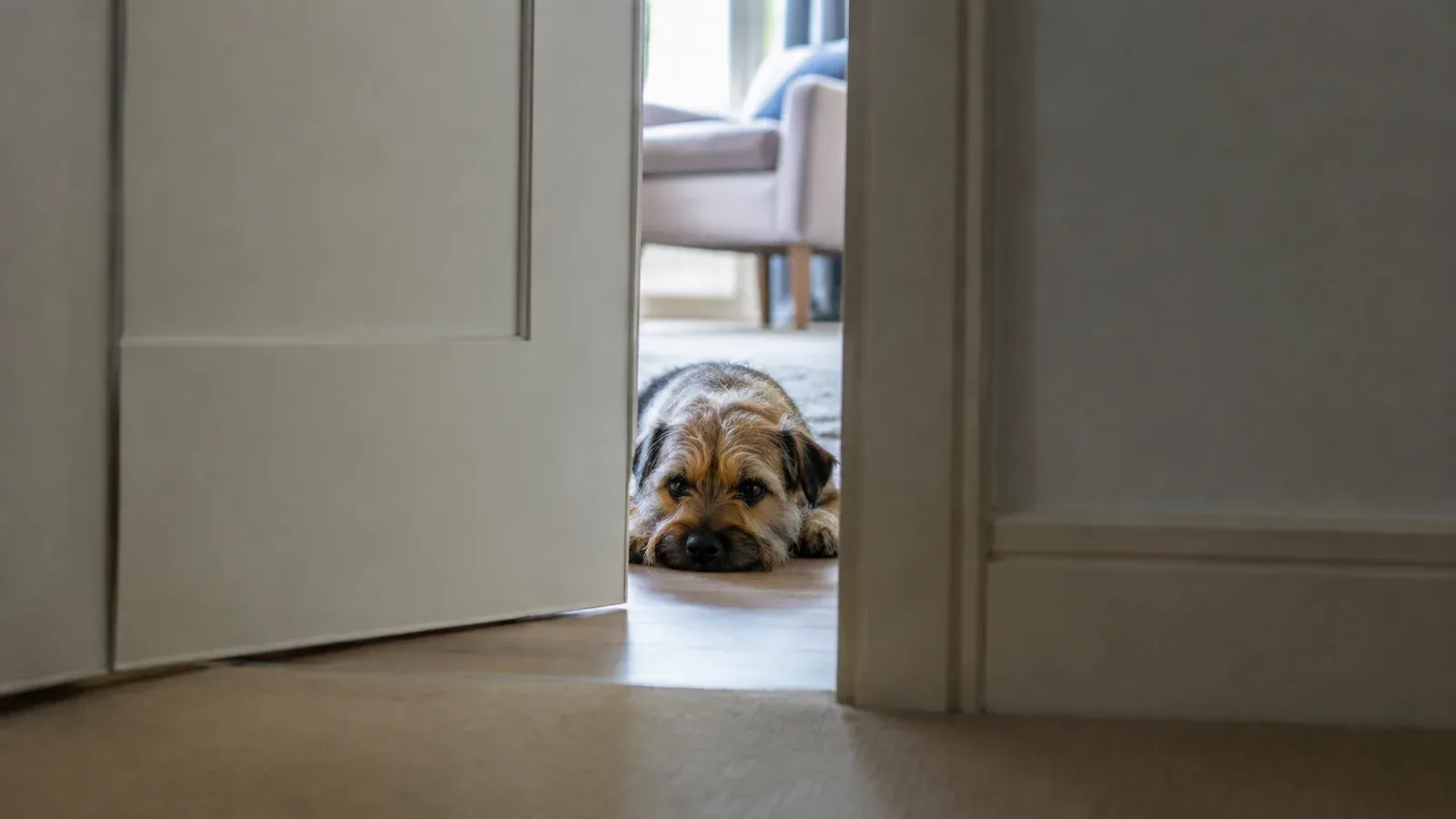
There is no universal schedule, and you should be suspicious of any source that publishes one. A useful first step for one dog is closing the door for three seconds; for another it is twenty minutes. Both are correct, because the step size is set by the dog's response rather than by the calendar.
The most common error is treating an easy session as permission to jump. If your dog handled ten minutes comfortably, the next session is not thirty. Progress that holds is built by repeating what worked until it is boring, then adding a little.
In Qualma: Log the length and how your dog coped, so the next step is chosen from a pattern rather than from the last session alone.
Why does your dog react before you have even left?
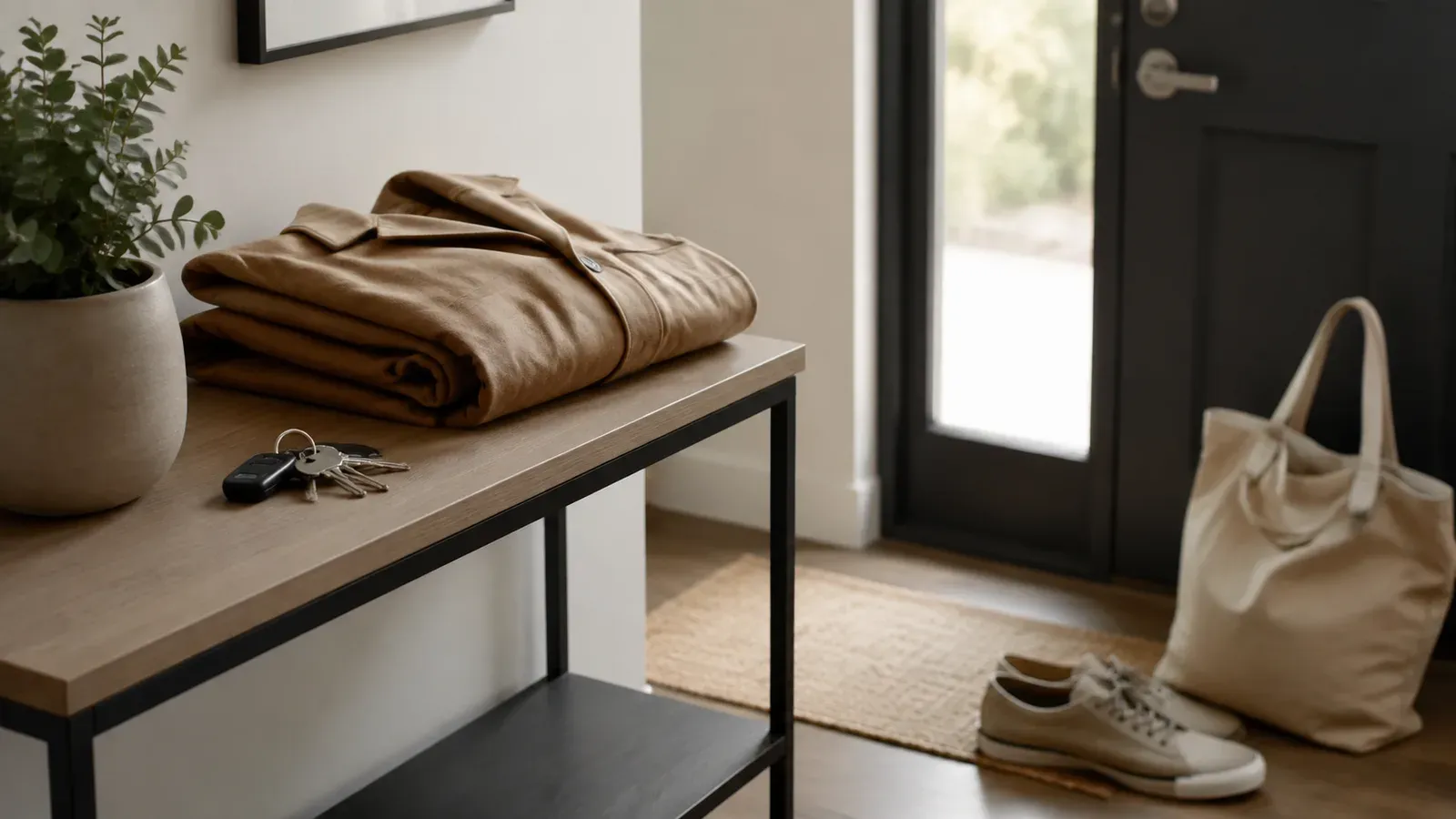
Because the departure started long before the door did. Dogs read sequences — shoes, keys, a bag, a laptop closing, a particular tone of voice — and for a dog who finds absences difficult, those cues become the beginning of the absence rather than a prelude to it. By the time you reach the door, the reaction is already underway.
This is worth knowing before you start training, because it changes what you are practising. If your dog is already aroused at the point of departure, a short absence is not really short — it began when you picked up your keys. Working with the cues themselves is often more productive than working with the door.
Can you build independence while you are at home?
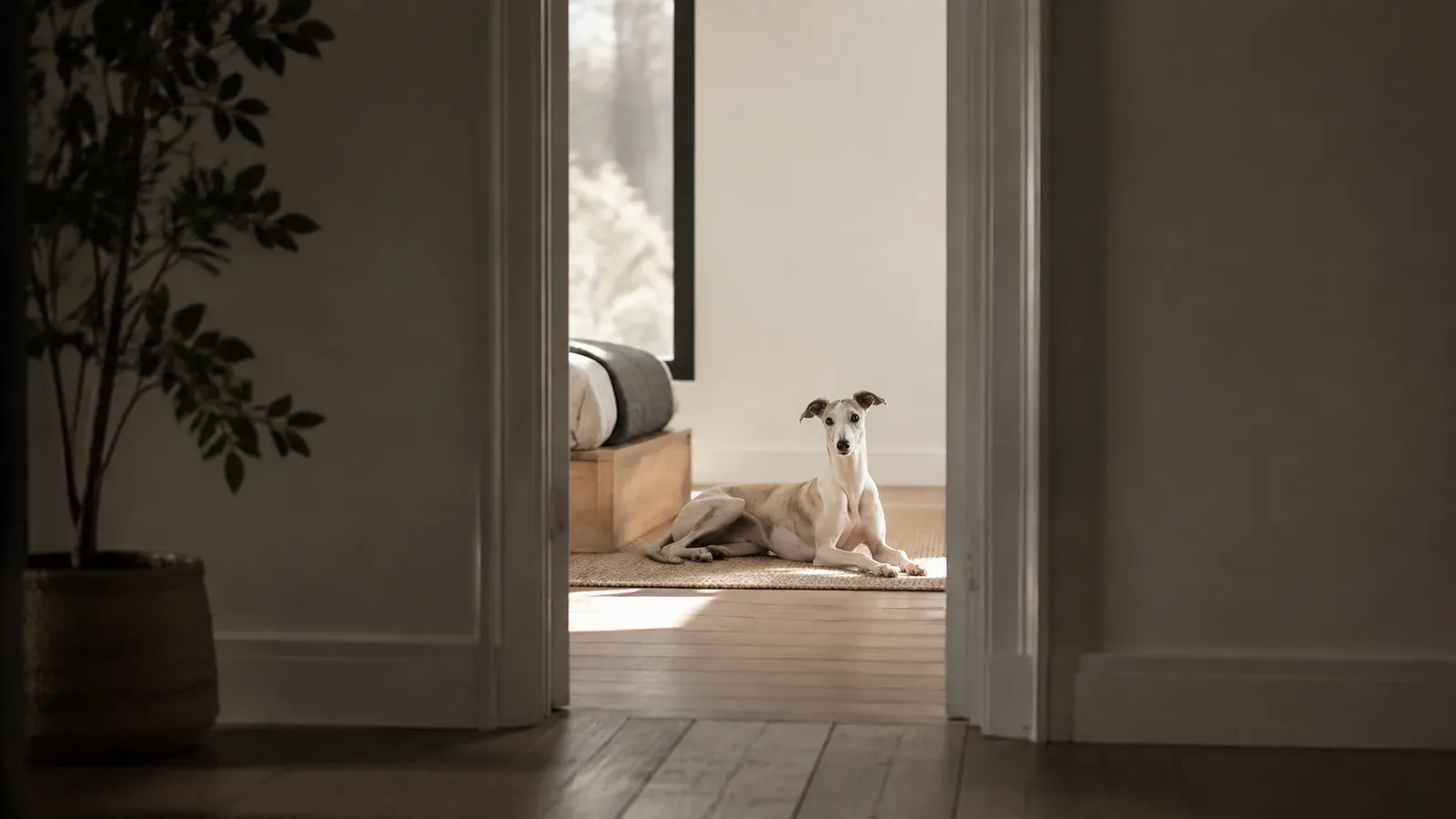
Yes, and it is some of the most useful work available because it costs you nothing and carries no risk of a failed absence. Rest in another room, settling a few metres away while you work, a closed door between you for thirty seconds — each of these is separation at a scale your dog can manage.
One caution worth stating plainly: discouraging your dog from following you around is not, on its own, treatment for separation anxiety. A dog can be taught not to follow and still panic when the front door closes, because those are different problems. Independence work supports the training; it does not replace it.
What does a training session actually look like?
Prepare, set the conditions, leave, observe, return, allow recovery, and record what happened. The recording is the part most often skipped and the part that makes the rest worth doing, because the useful information is in the pattern rather than in any single session.
Keep the conditions similar between sessions where you can. Changing the time of day, the enrichment, the room and the duration all at once produces a result you cannot interpret. If something improves, you want to know what to repeat.
- Duration. How long you were actually gone.
- First signal. The earliest moment your dog changed — not the loudest.
- Intensity. How far it escalated, if it did.
- Recovery. How long until your dog settled after you returned.
- Context. Time of day, what happened beforehand, anything unusual.
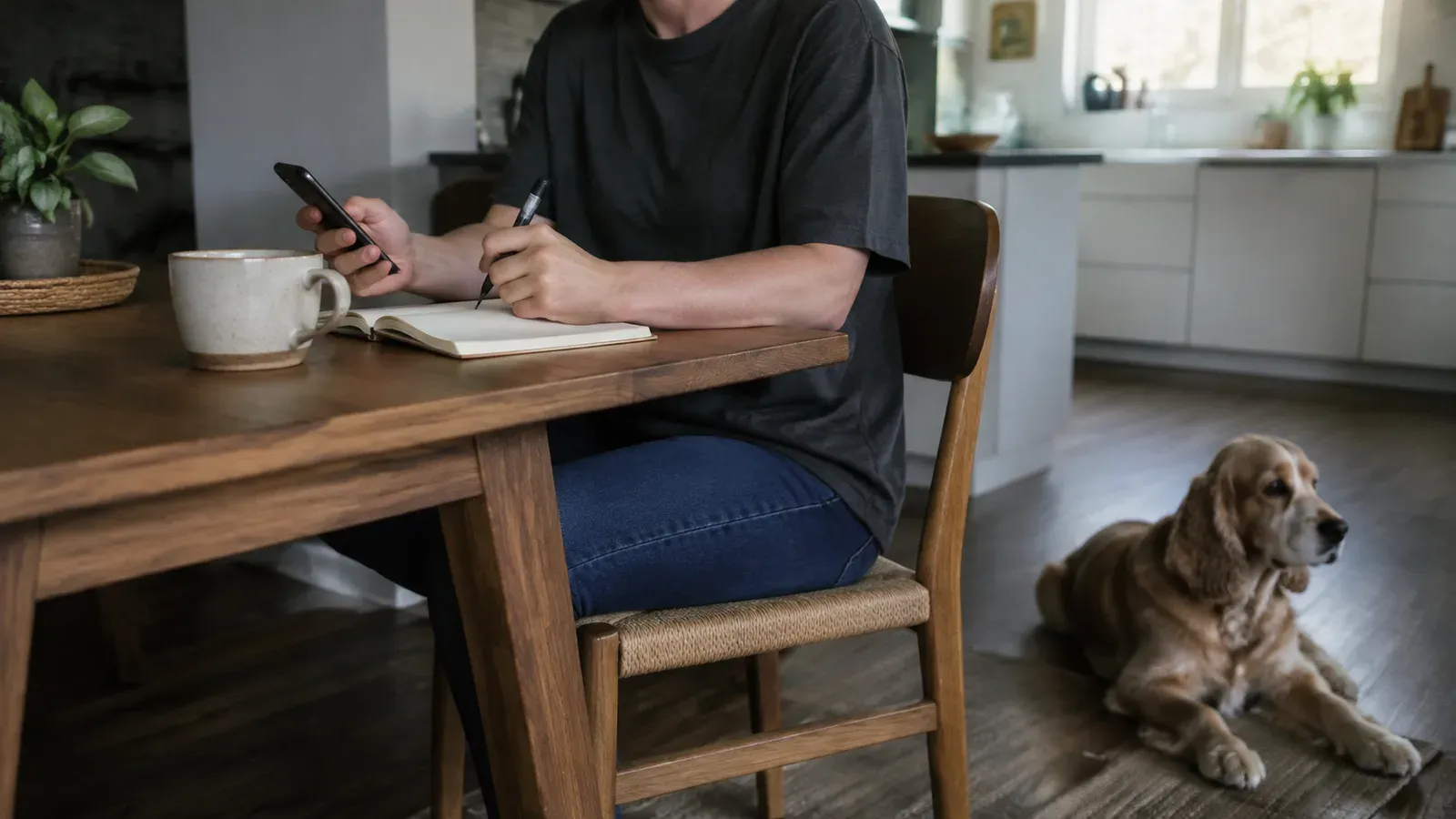
In Qualma: Record the session with its context, so an unusual day can later be explained rather than mistaken for regression.
How long should a session be?
Short enough that your dog stays below threshold, which for some dogs is a matter of seconds and for others is well over an hour. There is no universal answer, and a number taken from someone else's dog is worse than no number at all, because it feels authoritative while being unrelated to the animal in front of you.
A more useful question than 'how long should this be' is 'how long can my dog currently do comfortably' — and that has an observable answer. Work a little below it. The number will move.
How do you know when to increase the time?
When the current length has been comfortable several times in a row, in different conditions — not once, and not on a good day. Repeating a length until it is genuinely unremarkable is what makes the next step hold.
Progress does not move in a line, and expecting it to is the source of a great deal of unnecessary discouragement. The real pattern is an uneven upward drift with dips throughout. A difficult session in week six is not a return to week one; it is a dip in a line that is still rising.
Resist the urge to keep testing the maximum. Finding out how long your dog can just about bear tells you very little and costs a great deal, because every session spent above threshold makes the next one harder.
What do you do after a bad day?
Treat it as information rather than as a verdict. Difficult sessions cluster around identifiable things — fireworks, illness, a change of routine, a stressful week, a visitor, poor sleep — and a session interpreted alongside its context is far more useful than one judged on its own.
Practically, drop back to a length your dog can manage comfortably and rebuild from there. This feels like losing ground and generally is not; dogs regain a familiar length much faster than they built it the first time. What genuinely costs ground is continuing to push through a bad patch.
Read next
In Qualma: Compare the session with the fortnight around it before concluding anything has gone backwards.
How do you measure progress beyond minutes?
By watching the shape of the absence rather than its length. Several things usually improve before duration does, and noticing them is what keeps you working through the period where the numbers have not moved yet.
- Later onset. Your dog takes longer to notice or react.
- Lower intensity. The reaction is milder even if it still happens.
- Real rest. Your dog lies down and actually relaxes rather than holding a position.
- Food engagement. Where food is used, your dog eats it — and finishes it.
- Faster recovery. Settling more quickly once you are back.
- Consistency. Fewer surprising days in either direction.
What goes wrong most often?
Almost always the same handful of things, and almost always with good intentions behind them.
- Going too fast. Usually after one good session.
- Testing the maximum. Informative once, damaging as a habit.
- Reading silence as calm. A quiet dog may be coping or may be frozen, and the difference matters.
- Changing several things at once. It produces an improvement you cannot repeat.
- Comparing with another dog. Including your own previous dog.
- Exercising the dog into exhaustion. A tired dog is not a dog who has learned that absence is safe.
What if the plan is not working?
Check the foundations before concluding that your dog is the problem. Most stalled plans are stalled for a reason that has nothing to do with effort: the starting point was too ambitious, uncontrolled absences are continuing alongside the training, the threshold has been misjudged, or something physical is making everything harder.
If several weeks of careful work have produced nothing, that is a reason to bring in help rather than to try harder. Your veterinarian can rule out pain and illness, which are more common contributors than most owners expect, and a qualified behavior professional can look at the plan itself. Neither conversation is an admission of failure — both are ordinary parts of working on a difficult problem.
How Qualma helps
Train with better information than memory can hold
After twenty sessions, nobody can accurately recall which ones went well and what was different about them. The detail that matters — the first signal, how long recovery took, what had happened that morning — is exactly the detail memory loses first, and it is the detail that tells you what to do next.
Qualma is where that record lives. You log a session as it happens, and the history becomes something you can look at rather than something you half-remember.
- Sessions with context. Duration, behaviors, the conditions beforehand, and what you noticed.
- Triggers and preconditions. Recorded alongside the session rather than separately.
- Enrichment and environment. So you can see whether what you changed made any difference.
- Patterns over time. The Analysis view surfaces trends across your recorded history.
Make training decisions from your dog's history, not from one difficult or one encouraging day.
Track your next sessionCommon questions
- How long does separation anxiety training take?
- There is no reliable answer, and anyone offering a fixed timeline is guessing. It depends on the starting point, the severity, how consistent the training can be, whether uncontrolled absences continue alongside it, and your dog's health and history. What is more predictable is the shape: uneven, with dips, and slower than most owners expect at the start.
- Should I let my dog cry it out?
- No. Leaving a distressed dog to panic does not teach them that absence is safe; it gives them repeated practice at panicking, and it commonly makes the underlying problem worse rather than better. Training works below the point of distress, not through it.
- How do I know if my dog is over threshold?
- Look for the earliest change rather than the loudest one: pacing, panting when the room is not warm, whining that starts as the door closes, an inability to settle, or refusing food they would normally take. A recording of the first five minutes usually answers this more clearly than anything you can observe from outside the door.
- Can I train while still leaving my dog for work?
- It is much harder, because long absences your dog cannot yet manage work against the short ones you are building. Where cover is possible — a sitter, a walker, a family member, daycare if it suits your dog — arranging it during the training period usually shortens the overall process considerably.
- My dog was fine and suddenly is not. What happened?
- Sudden changes in an adult dog deserve a veterinary conversation before a training one. Pain, illness, sensory change and cognitive decline can all produce distress that looks exactly like separation anxiety, and treating those with a training plan will not help. Once medical causes are ruled out, routine changes and specific frightening events are the usual explanations.
Log tonight's session from your phone
The Qualma app is available now on Android and iPhone. Sign in with your existing account — no need to subscribe twice.


Where to go next
Treatment & support
Veterinary assessment, professionals, cover and everything alongside training.
Understand
What separation anxiety is, the signs, and how it differs from boredom.
Start here
How Qualma approaches separation anxiety, and where to begin.
Enrichment
Food toys, licking, scent work, safety, and what enrichment can and cannot do.
Living with it
Guilt, a shrinking life, burnout, cost — and getting some freedom back.
All articles
Every guide on training, setbacks, enrichment and living with an anxious dog.
Build a history you can learn from
Record your sessions as they happen, and let the pattern — not a single day — tell you what to do next.
Start tracking with Qualma