
Dog Is Quiet When Left Alone but Does Not Sleep: Calm or a Freeze Response?
Is your dog quiet when left alone but not actually resting? Learn the difference between true calm and a freeze response—and what it means for separation anxiety training.
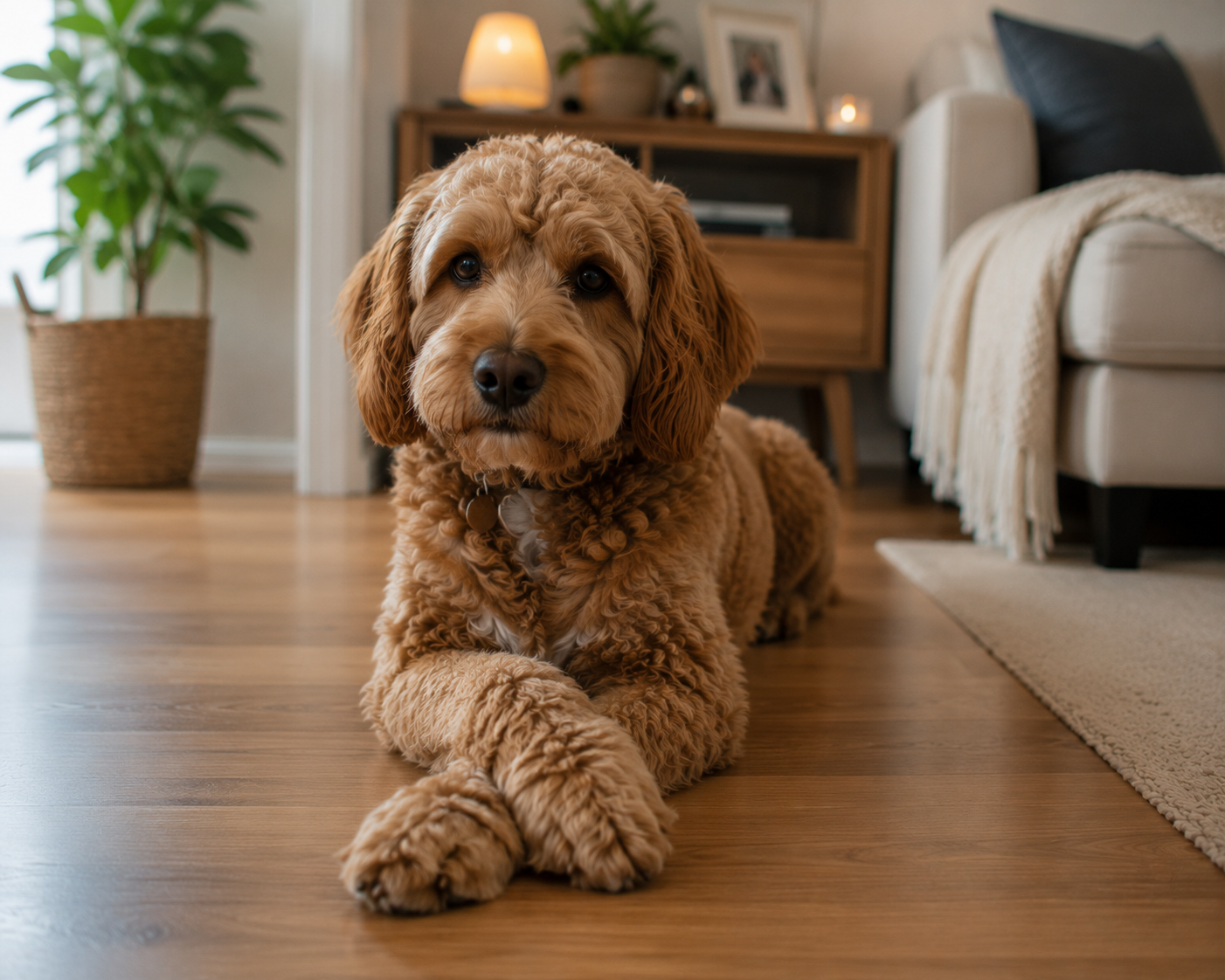
One of the most misleading signals in separation anxiety is silence. Owners often look at a camera, see that their dog is not barking, not destroying anything, not visibly reacting, and assume that things are improving. But then something feels off. The dog is not resting. Not sleeping. Not settling in a way that looks natural. Instead, they remain still, alert, or quietly watch the environment for long periods of time. This creates a difficult question: is the dog calm, or are they simply not expressing distress in obvious ways? The distinction matters more than it seems, because quiet behavior can either reflect true regulation or a freeze response, where the dog is still but not relaxed. Understanding the difference requires looking beyond noise and into patterns of movement, posture, and recovery. When you shift from asking “is my dog quiet?” to “is my dog actually relaxed?”, your interpretation of progress changes completely.
Why Silence Feels Like Progress
When you start working on separation anxiety, your attention naturally goes to the most visible signs of distress. Barking, whining, destruction, pacing — these are clear indicators that your dog is struggling, and reducing them feels like progress.
So when those signals disappear, even partially, it creates a sense of relief.
The environment is quieter. The situation feels more manageable. From the outside, it looks like your dog is coping.
But silence is not the same as calm.
Dogs do not need to vocalize to be stressed. In fact, some dogs shift in the opposite direction. Instead of expressing distress outwardly, they become still, controlled, and watchful.
This is where interpretation becomes critical.
Because what looks like improvement may simply be a different expression of the same underlying state.
What Calm Actually Looks Like
Calmness in a dog is not defined by the absence of movement. It is defined by the presence of relaxation.
A truly calm dog settles into positions that allow rest. Their body softens. Their breathing becomes slower and more regular. They shift naturally between light sleep and deeper rest without reacting to every small sound.
There is a sense of rhythm.
Even if the dog is awake at times, they are not holding tension. They are able to disengage from the environment rather than monitor it constantly.
This is the baseline you are looking for.
Not silence. Not stillness. But the ability to let go.
What a Freeze Response Looks Like Instead
A freeze response is often mistaken for calm because it is quiet and controlled.
The dog may lie down or sit in one place for long periods, but their body does not fully relax. Their posture may remain slightly tense, their head elevated, their eyes tracking movement or sound.
They are not actively reacting, but they are not resting either.
This state sits between action and relaxation. The dog is not escalating, but they are not recovering. They are holding tension instead of releasing it.
Over time, this becomes visible in patterns.
The dog does not fall into deeper sleep cycles. They react quickly to small noises. They may shift position less frequently than expected, as if maintaining a state of readiness.
From a distance, it looks stable.
From a behavioral perspective, it is incomplete regulation.
Why Dogs Shift Into Freeze Instead of Reacting
Not all dogs express anxiety in the same way.
Some dogs externalize stress through movement and vocalization. Others internalize it, reducing movement and controlling their response instead of expressing it outwardly.
This can be influenced by temperament, past experiences, and how the dog has learned to cope with stress.
A dog that has learned that reacting does not change the situation may shift toward stillness. A dog that is more sensitive to environmental cues may choose observation over movement. A dog that is overwhelmed may reduce activity as a way to manage internal pressure.
The important part is not the behavior itself, but what it represents.
Stillness is not always safety.
Why This Matters for Separation Anxiety Training
If you interpret a freeze response as calm, you may assume your dog is ready for more.
You increase duration. You test longer absences. You expect the same pattern to continue.
But because the underlying state is not fully regulated, the threshold is fragile.
What happens next often feels confusing. The dog may suddenly react again, even though they seemed fine before. Or the quiet behavior continues, but does not evolve into true relaxation.
This is where progress feels inconsistent.
The issue is not that the dog cannot handle the situation. It is that they are not fully comfortable within it yet.
And until that comfort develops, pushing forward creates instability.
What the Camera Actually Reveals
Without a camera, this distinction is almost impossible to make.
You would come home to a quiet space and assume everything went well.
With a camera, you start seeing details that change your interpretation completely.
You see how long your dog stays in one position. You see whether they ever fall asleep. You see how quickly they react to small sounds, and whether they return to a resting state afterward.
You begin to notice patterns.
Does your dog relax more over time, or do they remain in the same alert posture? Do they transition between states, or stay fixed in one? Do they recover after a disturbance, or remain activated?
These patterns tell you more than any single moment.
They tell you whether your dog is coping or just holding.
What to Track to Understand the Difference
Understanding whether your dog is calm or in a freeze response comes down to observation over time.
You are not looking for one signal. You are looking for consistency.
Track how long it takes your dog to settle, whether they sleep, how often they change position, and how they respond to small environmental triggers. Notice whether they return to a relaxed state after those triggers, or remain alert.
Also track how they behave after you return.
A dog that was truly calm tends to stay regulated. A dog that was holding tension often shows a release — increased movement, excitement, or signs of accumulated stress.
This is where tracking becomes powerful. It moves you from guessing to understanding.
Why Quiet Does Not Always Mean Progress
Silence can be a step forward, but it is not the final indicator.
Progress in separation anxiety is not measured by the absence of noise. It is measured by the presence of relaxation.
A dog that is quiet but tense is closer to calm than a dog that is actively reacting, but they are not there yet.
Recognizing this prevents you from moving too quickly.
It allows you to support the transition from controlled stillness to genuine comfort.
Final Thoughts
The question is not whether your dog is quiet.
The question is whether your dog is at ease.
That distinction changes how you interpret everything you see. It changes how you adjust training, how you evaluate progress, and how you decide what comes next.
Because what you are building is not silence.
You are building the ability to relax in your absence.
And that is something you can only see when you look closely enough.
Log tonight's session from your phone
The Qualma app is available now on Android and iPhone. Sign in with your existing account — no need to subscribe twice.