
Freezing Your Dog's Food to Make It Last Longer
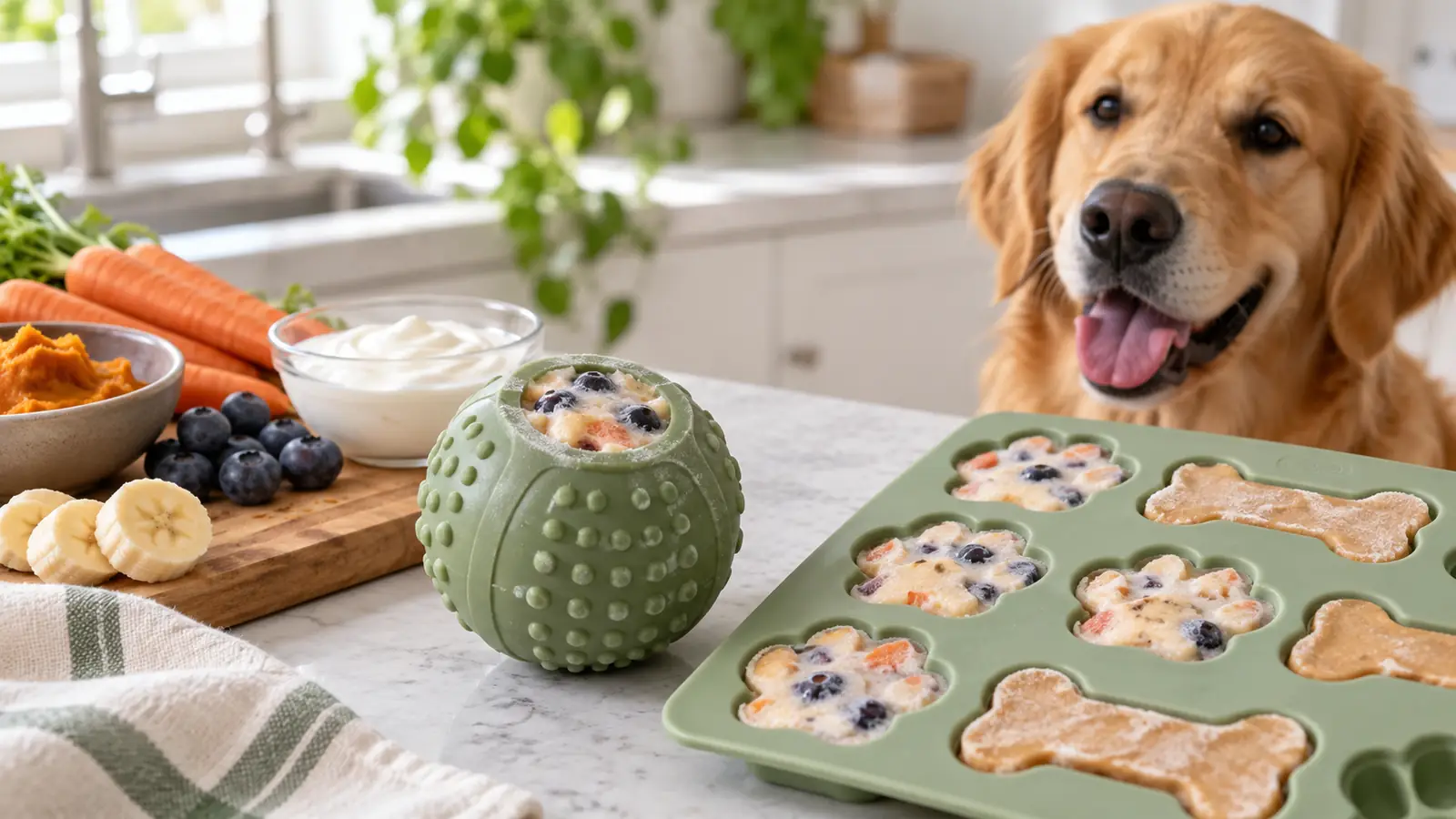
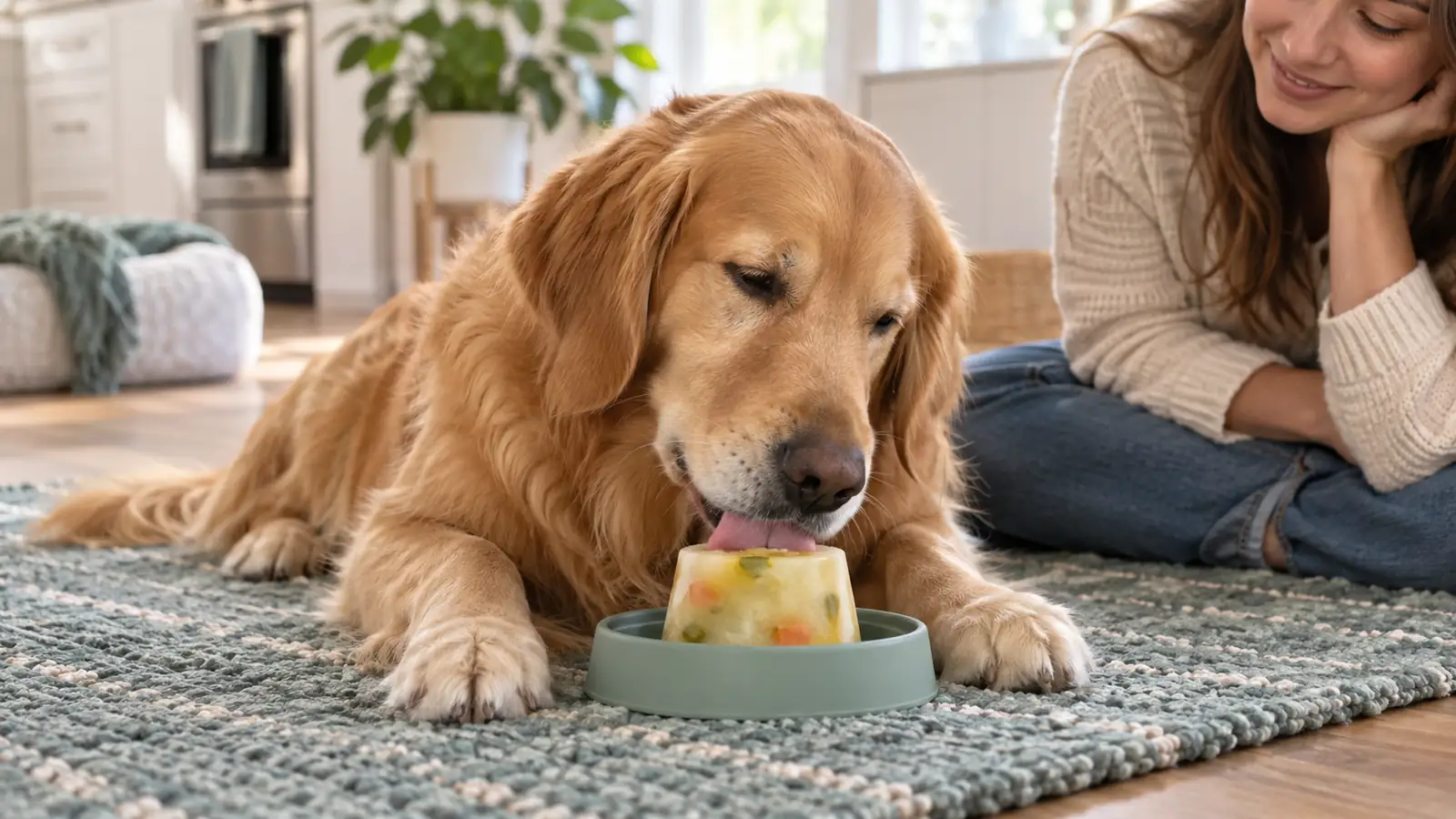
Freezing your dog's ordinary food — or a few vet-safe additions — makes it take longer to eat.
Is this right for your dog?
For dogs who reliably eat when left alone. Not for dogs who refuse food when anxious — see the red flag below before you try this.
What you'll need
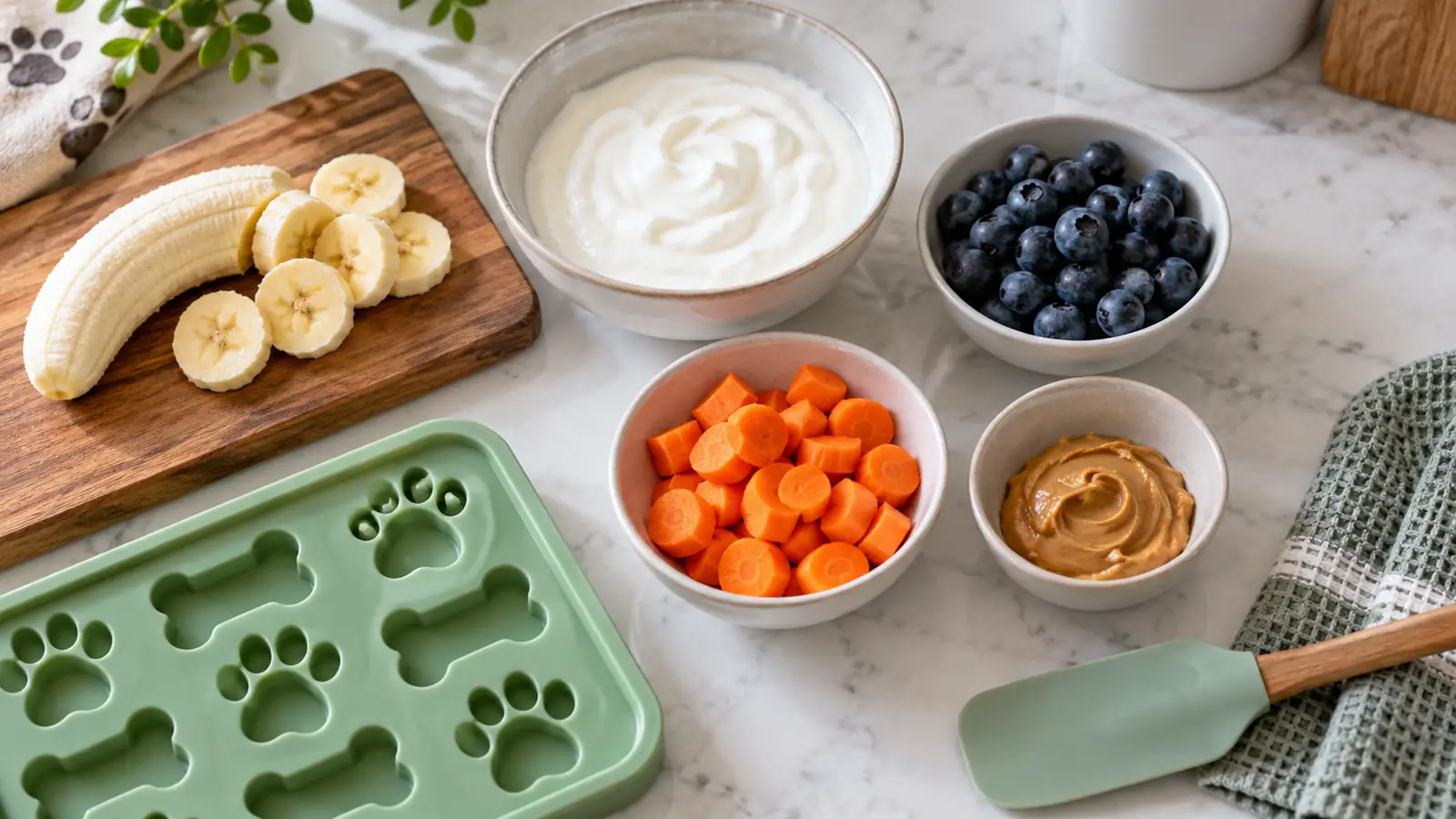
Your dog's regular kibble or wet food, or plain canned pumpkin, plain unsweetened yogurt (check your dog tolerates dairy first), or safe fruit like blueberry or watermelon. Never grapes or raisins. An ice-cube tray or silicone mold sized to your dog.
How to do it
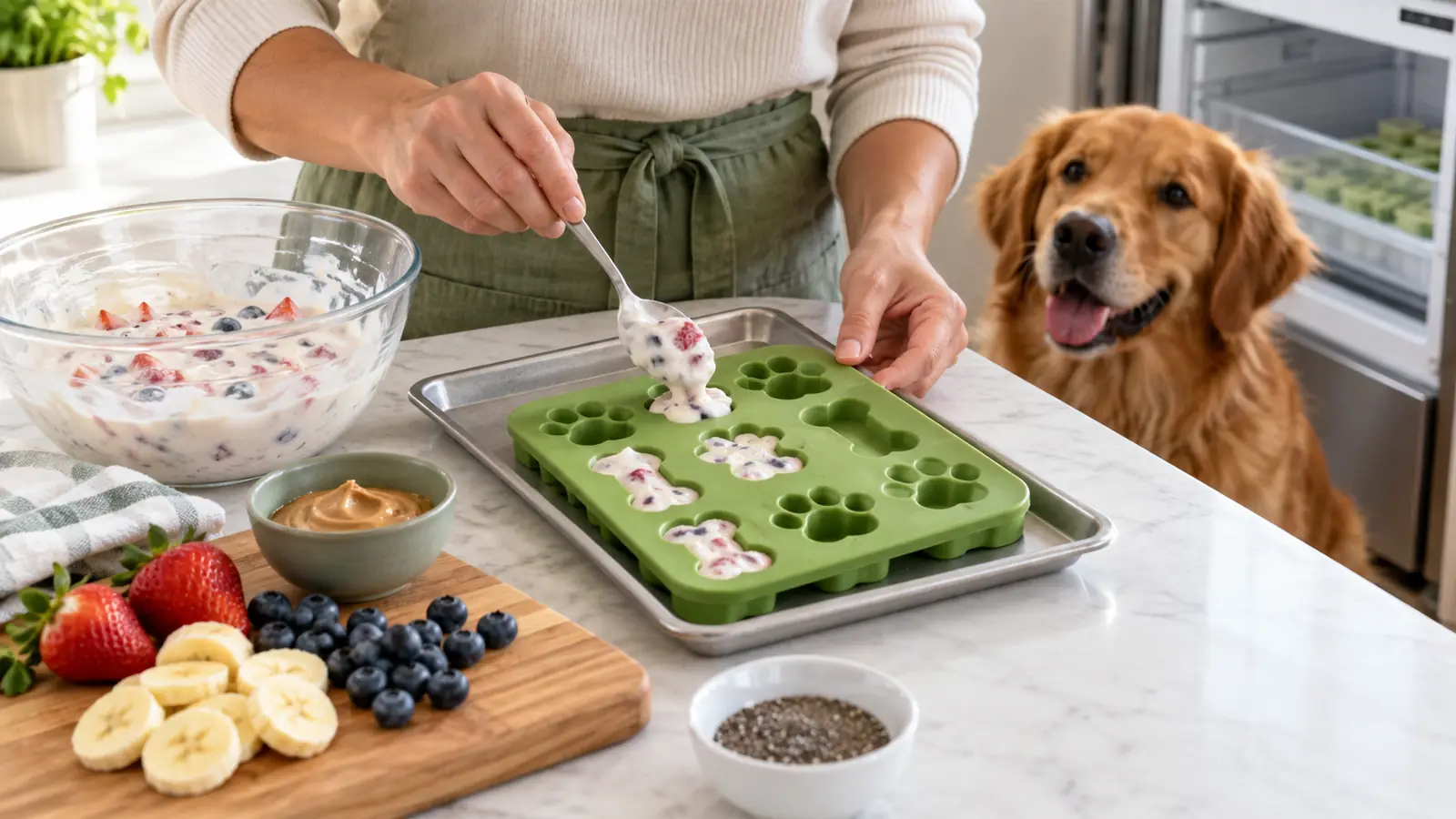
- Mix the food with a little water or plain broth to help it freeze solid.
- Freeze it in a mold sized so your dog can't break off large pieces.
- Give it on some days you're leaving and some days you're staying home, not only at departure.
Why it works
Extending how long food takes to eat is a form of food-based enrichment — it fills part of an absence with a low-arousal activity.
Safety & precautions
No xylitol, chocolate, grapes, raisins, onion, or garlic — ever. No bones. Check dairy tolerance before using yogurt. Count these calories as part of the day's food, don't add them on top. Size the treat to your dog to avoid choking. Supervise the first few times you give it.
When this isn't enough
If your dog doesn't touch it when left alone, that's a real sign of anxiety severity — not a taste problem. Don't just try a different recipe. Look at the Train pillar, or talk to a vet, instead.
See what's actually helping
Track which activities you try and how your dog responds — Qualma turns it into a pattern you can see.
Try it in Qualma