
Groomer and Vet Visits for Fearful Dogs
A dog who trembles or tries to hide the moment they realize where the car is heading is not being dramatic. Groomer and vet appointments mean restraint, unfamiliar hands, and equipment a fearful dog cannot understand. This article covers what cooperative care actually means, why happy visits with no procedure at all make such a difference, how to practice handling at home, and what to ask a vet or groomer before you book.
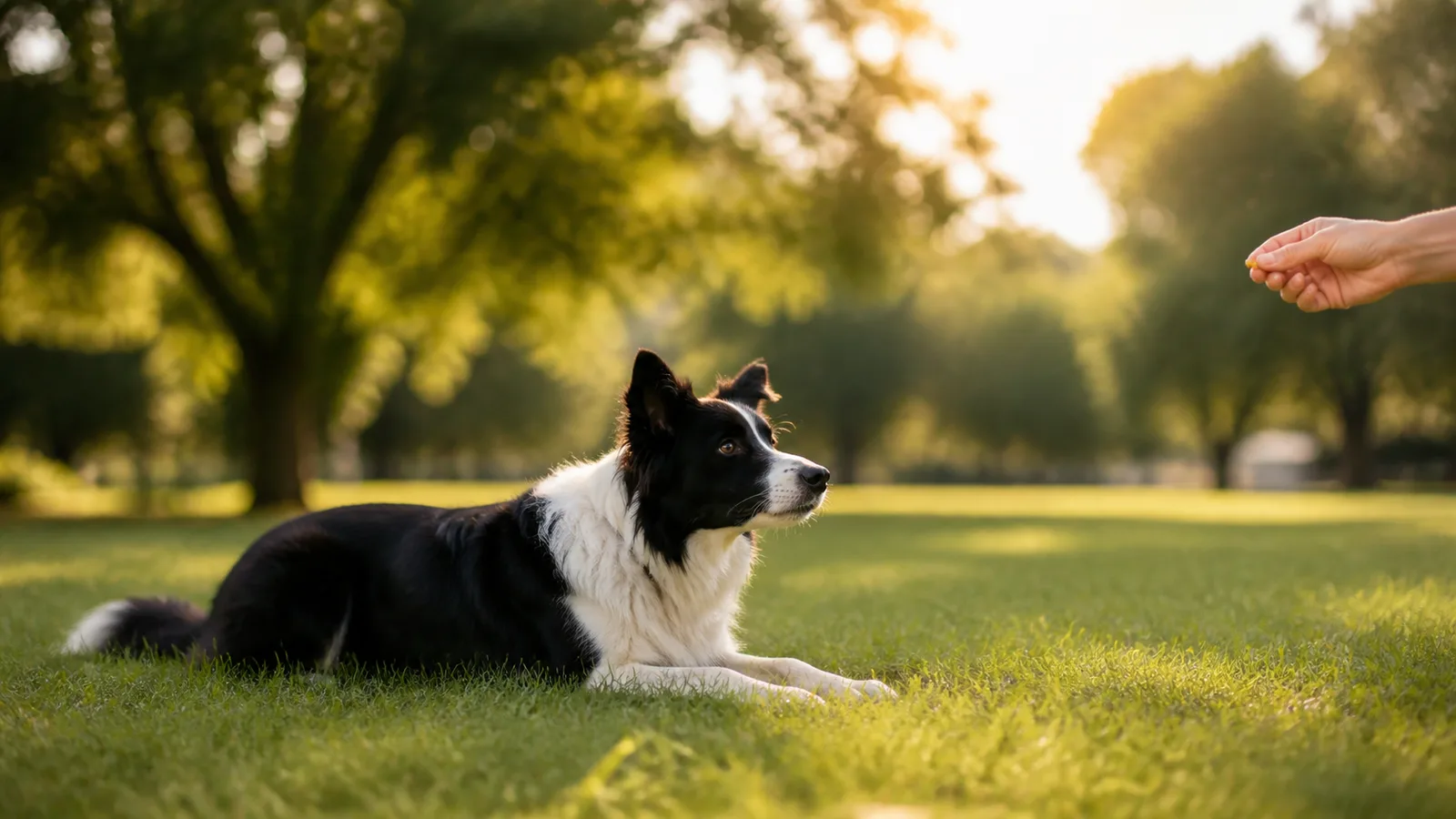
A dog who trembles, drools, or tries to hide the moment they realize where the car is heading is not being dramatic. Groomer and vet appointments are, for a genuinely fearful dog, encounters with restraint, unfamiliar hands, and equipment they cannot understand, all happening in a place that already smells wrong to them. Owners often push through these appointments anyway because the care itself is necessary, and end up with a dog who dreads the next one even more than the last. This article covers what cooperative care actually means, how to build it gradually rather than forcing a single appointment through, and how to work with a groomer or vet in a way that protects your dog's trust rather than spending it.
What Does "Cooperative Care" Actually Mean?
Cooperative care means training your dog to actively participate in their own handling, rather than simply enduring it while restrained. In practice this looks like a dog offering a paw for a nail trim, choosing to place their chin in your hand for an ear check, or holding still voluntarily because they have learned the process and trust what happens next. The distinction matters enormously, because a dog who is restrained through fear learns to fear the process more each time, while a dog who participates voluntarily can actually become more comfortable with repetition.
This is not about eliminating restraint entirely or pretending every procedure can be made pleasant. It is about building your dog's capacity to tolerate handling with far less stress than an unprepared dog experiences, and about giving them some genuine agency in a situation that would otherwise feel completely outside their control. That sense of agency is often what separates a dog who merely survives an appointment from one who can actually cope with it.
Why Do "Happy Visits" Make Such a Difference?
A happy visit is a trip to the vet or groomer that involves no actual procedure at all, just calm, low-pressure time in the environment paired with something genuinely good. Your dog walks in, gets treats from the front desk staff, perhaps sits on the scale for a treat, and leaves, having experienced the location without anything frightening happening to them. Repeated enough times before a real appointment is needed, this can meaningfully change how your dog feels about walking through that door.
Most veterinary practices and groomers are glad to arrange this if you ask, and many actively encourage it, since it makes their own job considerably easier down the line. Call ahead and explain what you are hoping to do, and most places will accommodate a quick visit with no charge for simply walking in, saying hello, and leaving. The investment is a handful of short visits now in exchange for years of appointments that go more smoothly.
How Do You Practice Handling at Home?
Start with whatever your dog already tolerates without any sign of stress, and build outward slowly from there rather than jumping straight to the parts of handling they find hardest. If your dog is comfortable with you touching their shoulder, begin there, pair it consistently with something they genuinely enjoy, and only move toward paws, ears, or the mouth once each easier step is met with genuine relaxation rather than mere tolerance. Rushing this sequence is the single most common reason home practice fails to transfer to a real appointment.
Keep sessions short, ideally under a couple of minutes, and end on a success rather than pushing until your dog becomes uncomfortable. A useful habit is practicing the specific things a vet or groomer will actually do: gently manipulating a paw as if checking a nail, lifting a lip briefly as if checking teeth, holding an ear as if examining it. Doing this regularly, disconnected from any real appointment, means the actual appointment is not the first time your dog has experienced that particular touch.
What Should You Look for in a Vet or Groomer?
Ask directly about their experience with fearful or anxious dogs specifically, not just their general experience with animals, since these are genuinely different skills. A good sign is a professional who asks you about your dog's specific triggers before touching them, who is willing to slow down or pause if your dog shows stress, and who does not treat a nervous dog as an inconvenience to be processed quickly. The way a practice talks about handling nervous animals on a first phone call tells you a great deal before you ever walk through the door.
It is also worth asking directly what they do when a dog will not cooperate, in the same way it is worth asking a trainer that exact question. An answer built around patience, breaks, and adjusting the approach is a good sign. An answer built around holding the dog still more firmly is worth taking seriously as a warning, and it is entirely reasonable to look elsewhere if that is what you hear.
Is Sedation Ever the Right Choice?
For some dogs and some procedures, yes, and it is worth discussing honestly with your vet rather than treating it as a last resort to feel guilty about. If a necessary procedure genuinely cannot happen safely without it, sedation can be the more humane choice compared to forcing a fully conscious, panicking dog through a restrained procedure repeatedly. This is a clinical decision for your vet to make with you, weighing the specific procedure, your dog's temperament, and what has already been tried, and it is the same kind of collaborative conversation we describe more generally in why your vet should be part of the plan.
Nothing in this article is veterinary advice, and this conversation belongs with your own vet rather than being decided from a general article. Bring it up directly rather than waiting to be offered it, since not every practice raises it unprompted. What matters is that the option exists and is worth raising if handling has become genuinely traumatic for your dog despite real effort at the gentler approaches above. You do not simply have to push through every time, and asking is not a failure to manage things yourself.
How Does This Connect to Separation Anxiety Specifically?
The skills overlap more than owners often expect. Both cooperative care and separation anxiety work depend on the same underlying principle: building your dog's tolerance gradually, in steps small enough that they stay within their comfort zone, rather than forcing exposure and hoping they adapt. A dog who has learned to cope with graduated, respectful handling at the vet has often built genuine resilience that shows up in other anxious situations too.
The reverse is also true. If your dog already struggles with separation anxiety, a stressful vet or grooming experience can add to their overall stress load in ways that make everything else harder for a few days afterward. Reading your dog's stress signals accurately in both contexts is the same skill, and we cover what those signals actually look like in how to tell if your dog is stressed.
Does Building General Confidence Help With This Too?
Genuinely, yes, and it is worth thinking about handling comfort as part of a dog's overall confidence rather than an entirely separate skill. A dog who has had varied, positive experiences with new people, new environments, and being touched by someone other than their owner tends to bring more baseline resilience into a vet or grooming appointment. We go through why general confidence-building matters and how it connects to a dog's broader coping ability in why socialization matters more than most owners realize.
This does not mean confidence work alone will fix a dog who is already seriously fearful of handling specifically, since that fear often needs its own direct attention. It means the two efforts reinforce each other rather than substitute for one another. Working on both together tends to produce better results than either pursued alone, and neither one is a shortcut past the other.
What If You Need an Appointment Before Any of This Is in Place?
Be honest with the practice about your dog's fear level before you arrive, rather than letting them discover it in the room. Ask whether you can wait somewhere quieter than a busy waiting area, whether the appointment can be scheduled for a quieter time of day, and whether the vet or groomer is willing to move more slowly than usual given the circumstances. Most practices will accommodate this when asked directly, and it is worth being specific rather than simply saying your dog is "a bit nervous."
Consider bringing something that smells familiar, such as a blanket from home, and avoid feeding your dog right before travel if car anxiety is also part of the picture, since a queasy stomach makes everything else harder. This single appointment does not need to be perfect. It needs to end without making the next one harder than it already was, and a calm, unhurried exit matters as much as anything that happened during the visit itself.
What To Do This Week
Call your vet or groomer and ask about arranging a single happy visit, with no procedure involved, purely to let your dog experience the location calmly. Most practices can accommodate this within a week or two. It costs you very little beyond the time to go, and it is worth doing even if your dog already has an appointment booked.
Alongside that, pick one specific handling behavior your dog already tolerates reasonably well, such as a gentle paw touch, and practice it for a minute or two a day. Always end on success rather than pushing until your dog becomes uncomfortable, since that is what makes the habit stick. These two small steps, repeated consistently, do more to prepare your dog for real appointments than any single difficult visit ever will.
Log tonight's session from your phone
The Qualma app is available now on Android and iPhone. Sign in with your existing account — no need to subscribe twice.