
Cleaning Up After Accidents — and Why the Smell Matters
You already know an accident while you were out is not spite. What almost nobody tells you is what to actually do about the carpet or the corner your dog keeps returning to. This article covers what actually removes the scent, why ordinary cleaners often fail even when a surface looks and smells clean to you, what to avoid, and why the same spot getting reused can quietly work against the training you are already doing.
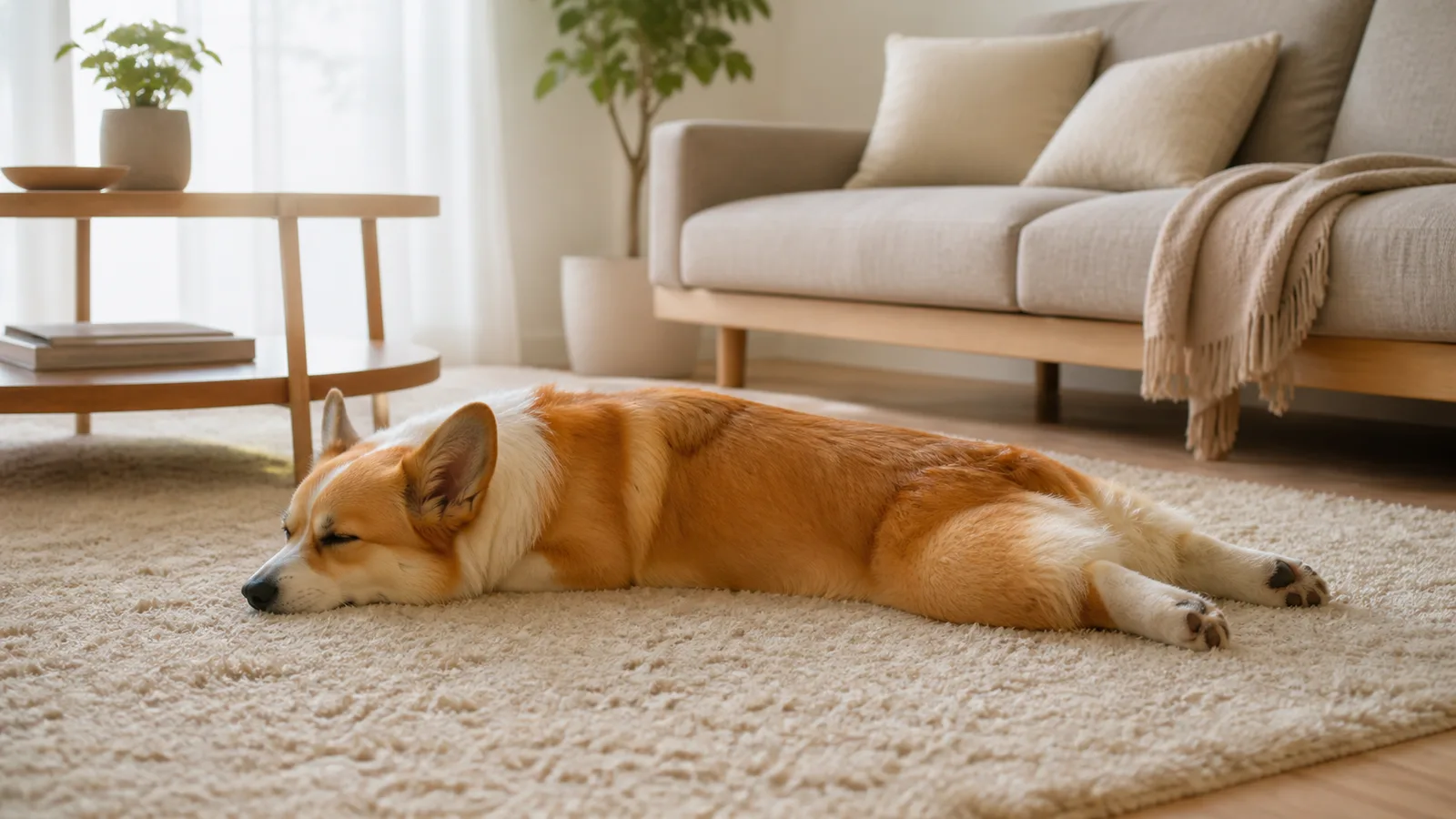
You already know why your dog had an accident while you were out, and you have probably already read that it is not spite or revenge. What almost nobody tells you is what to actually do about the carpet, the floorboards, or the corner of the room your dog keeps returning to. Cleaning it up properly matters considerably more than most owners realize, not just for the smell in your home but for whether the same spot keeps getting used again. This article covers what actually removes the problem, what makes it worse, and how to protect your home during a period when accidents may still happen.
Why Does an Ordinary Clean Not Fully Solve This?
Because your dog's nose detects far more than yours does, even after a surface looks and smells clean to you. Standard household cleaners, including many marketed as odor removers, can mask a scent for human noses while leaving residue that a dog can still detect at concentrations we cannot perceive at all. That residual scent matters because it can function as a signal that this spot has been used before, which makes a repeat accident in the same location more likely rather than less.
This is not about your dog remembering a specific event or deliberately returning to a spot out of habit in a conscious sense. It is closer to a location retaining a scent cue that influences behavior below the level of anything either of you are actively thinking about. Removing that cue properly is a genuinely practical step in reducing repeat accidents, not just a matter of keeping your home pleasant.
What Actually Removes the Scent?
An enzymatic cleaner, specifically one designed for pet urine or waste, is what actually breaks down the compounds involved rather than simply covering them with a stronger scent. These products work through an enzymatic reaction that breaks apart the specific molecules responsible for the smell, rather than masking them the way a fragranced spray or a general household cleaner does. This distinction matters enough that it is worth checking the label rather than assuming any pet-safe cleaner will do the same job.
Follow the product's instructions closely, since enzymatic cleaners typically need to stay wet on the surface for a meaningful length of time to work properly, often considerably longer than the few seconds most people spend wiping up a spill. Blot up as much of the original mess as you can first, apply the cleaner generously enough to reach anywhere the accident may have soaked, and resist the urge to scrub it away too quickly. Patience here does more than a stronger product used impatiently.
What About Carpets, Rugs, and Soft Furnishings?
These are considerably harder than a hard floor, because liquid soaks down through the fibers and into the padding or subfloor beneath, well past where a surface clean can reach. A stain that looks gone on top can still be sitting, and still detectable, in the layer underneath, which is exactly why the same spot on a carpet so often gets used again despite apparently thorough cleaning. For anything beyond a very minor and immediately caught accident, treating a carpet properly usually means soaking the enzymatic cleaner in deeply enough to reach that lower layer, not just treating the surface.
For repeated accidents in the same spot on carpet or a rug, it is worth being honest about whether full removal is realistically achievable with cleaning products alone. Some fabrics simply hold onto scent more stubbornly than a cleaning product, however good, can fully remove. In some cases, particularly with a rug that has become an easy repeated target, temporarily removing it from the space entirely is more effective than another round of cleaning. Put it back once training progress has reduced how often accidents happen there at all.
Does the Cleaning Actually Affect Training Progress?
Yes, in a genuinely practical rather than purely hygienic sense. A location that continues to carry scent cues from a previous accident is a location more likely to be used again, which means incomplete cleaning can quietly work against the training you are doing elsewhere. Thorough cleaning is not a separate chore from the training; it is a meaningful part of removing the conditions that make repeat accidents more likely.
This connects to something broader about your dog's environment during this period, beyond just this one issue. A calm, predictable space supports training generally, which is something we cover in why routine helps dogs with separation anxiety. A home that still carries old accident scents works against that predictability in a small but real way, even if you cannot consciously smell it yourself. Removing that residue is one more piece of the same broader picture.
Should You Restrict Access to the Affected Area?
Often yes, at least temporarily, and this is a genuinely reasonable and practical step rather than an overreaction. If a specific spot keeps being used despite proper cleaning, blocking access to that area during absences for a few weeks removes the opportunity entirely while you work on the underlying cause. This is not a punishment and does not need to be framed as one; it is simply management while training addresses the reason the accidents are happening in the first place.
Combine this with making other, appropriate areas easy to access if that is relevant to your situation. Keep working on the separation anxiety training that addresses why the accidents are happening at all, since blocking access alone does not solve the underlying problem. Without that ongoing work, blocking one spot tends to simply shift the accidents to wherever access remains. This step works best alongside training, not instead of it.
What Should You Avoid Doing?
Avoid rubbing your dog's nose in it, showing them the mess, or any form of after-the-fact scolding, even if the instinct in a frustrated moment is powerful. Your dog cannot connect a punishment delivered minutes or hours later to the act of eliminating, and this approach does not reduce future accidents. What it reliably does is teach your dog to fear you finding evidence of an accident, which can actually make things worse by adding anxiety about hiding it, on top of whatever caused the accident in the first place.
Also avoid ordinary household cleaners containing ammonia specifically. Ammonia is a component of urine, and using an ammonia-based cleaner can, counterintuitively, make an area smell more like a place to eliminate rather than less. Check labels carefully, because some general-purpose cleaners include it without this being obvious at a glance. Using one undoes exactly the work you are otherwise trying to do.
Is It Ever a Medical Issue Rather Than Anxiety?
Yes, and this is worth ruling out properly rather than assuming, particularly if the accidents are new, sudden, or do not fit the pattern you would expect from anxiety alone. Conditions such as a urinary tract infection, diabetes, kidney disease, or age-related incontinence can all cause accidents that have nothing to do with your dog's emotional state, and no amount of cleaning or training addresses those underlying causes. We go through how to work out which one you are actually dealing with in dog pees or poops when left alone.
If you have not already ruled out a medical cause, it is worth doing so before assuming this is purely behavioral. The fix is completely different depending on the answer, and treating a medical issue as a training problem delays your dog getting the actual help they need. Nothing in this article is veterinary advice, and a proper check with your vet is the only way to know for certain which situation you are actually in.
How Do You Manage Your Own Frustration About This?
Separately from managing the mess itself, because frustration in the moment is a completely normal reaction to cleaning up the same spot for the third time this month. It does not mean you love your dog any less, and it does not mean you are handling the situation badly. Owners who feel this way are not unusual, and the feeling itself is not something to feel additionally guilty about on top of everything else.
If the accidents themselves, on top of everything else you are managing, have you feeling worn down or questioning whether you are doing enough, that feeling is worth taking seriously rather than pushing past. It is worth reading about specifically in why you shouldn't feel guilty about your dog's separation anxiety. We also go through why the "revenge" explanation is wrong, and what is actually happening instead, in my dog is not taking revenge. Both are worth reading alongside this one if the frustration is sitting heavily right now.
What To Do This Week
Buy a proper enzymatic cleaner made specifically for pet accidents if you do not already have one. Use it on any spot that has had a repeat accident, following the soak time on the label rather than rushing it, since a quick wipe rarely gives the enzymes time to work. For carpet or fabric, go deeper than the surface, because the layer underneath is very often where the lingering scent actually sits. A cleaner used properly once does more than a rushed one used several times.
If one particular location keeps being used despite proper cleaning, block access to it during absences for the next few weeks. Keep your separation anxiety training running alongside that block, since it is what addresses the underlying cause rather than just the symptom. A genuinely clean environment combined with ongoing training does more than either one alone. It is considerably more effective than endless cleaning on its own, or training that ignores what the environment is still quietly signaling.
Log tonight's session from your phone
The Qualma app is available now on Android and iPhone. Sign in with your existing account — no need to subscribe twice.