
A New Baby, a New Partner, or Someone Moving Out: Why It Affects Your Dog
A new baby arrives, a partner moves in, someone moves out, or a work schedule changes, and suddenly the dog who was managing fine is barking or having accidents again. None of these events feel like they are about the dog, but they change your dog's sense of security considerably more than they change yours. This article covers why household changes trigger or worsen separation anxiety, and how to support your dog through it without pretending nothing is different.
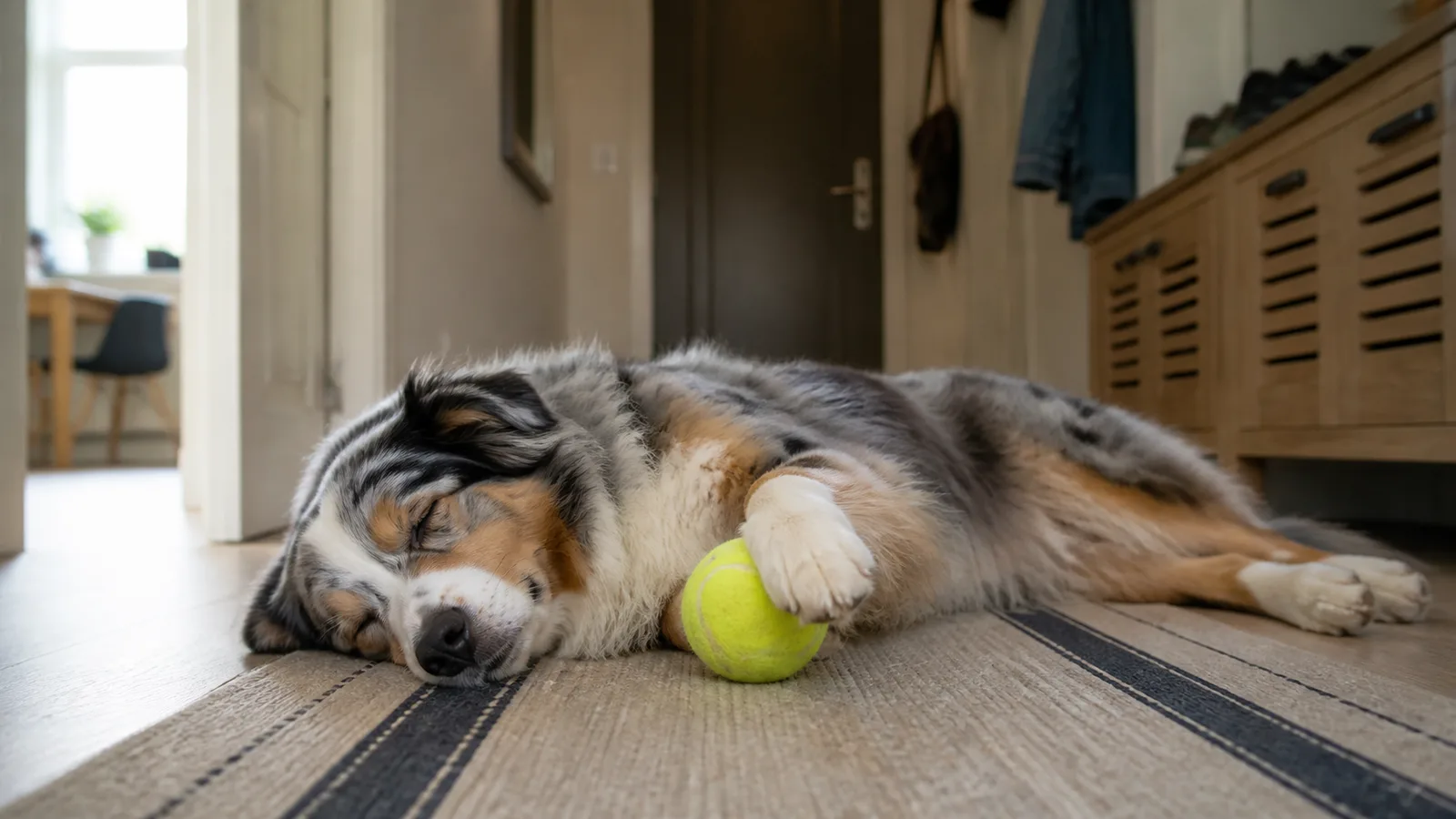
A new baby arrives, a partner moves in, a housemate leaves, or someone's schedule changes completely, and suddenly the dog who was managing perfectly well is barking, pacing, or having accidents again. Owners are often blindsided by this, since none of these events feel like they are about the dog at all, and the timing can seem almost coincidental at first. It rarely is. Dogs build their sense of security around patterns of people, presence, and routine, and changing any of those patterns changes the dog's world considerably more than it changes yours. This article covers why household changes trigger or worsen separation anxiety, what tends to happen with each type of change specifically, and how to support your dog through the transition without pretending the change is not happening.
Why Do Household Changes Affect Dogs So Much?
Because dogs do not experience a household change the way you do. You understand that a new baby, a new partner, or someone moving out is a life event with a clear reason behind it, and you can hold that context in mind even while things feel chaotic. Your dog experiences none of that context. They experience a sudden shift in who is present, how much attention they receive, what the routine looks like, and how the home sounds and smells, with no explanation attached to any of it.
This is one of several recognized triggers for separation anxiety appearing or worsening at a specific point in a dog's life, alongside things like a house move or a sudden loss. We go through the fuller picture of why timing like this matters in why do dogs develop separation anxiety. A dog who was previously fine can genuinely develop new anxiety around this kind of change, not only have an existing anxiety worsen.
What Happens When a New Baby Arrives?
Attention redistributes suddenly and dramatically, and dogs notice this more than owners often expect. A dog used to being greeted first, walked at a predictable time, and given consistent attention throughout the day can experience a genuine drop in all three at once, right around the time the household is also under the most pressure to notice and respond to it. The change is rarely intentional neglect; it is simply the reality of caring for a newborn, but the dog does not know that.
What helps most is protecting small, predictable pieces of your dog's day even when everything else is in flux. A consistent five-minute walk at roughly the same time, or a specific moment of calm attention that happens regardless of how the rest of the day went, gives your dog something stable to hold onto. It does not need to be much to matter considerably, and consistency here counts for more than quantity.
What Happens When a Partner Moves In or Someone Moves Out?
Either direction changes your dog's sense of who is normally present, and either can genuinely trigger new anxiety or bring back anxiety that had settled. A partner moving in adds a new person to learn, new sounds and habits to adjust to, and potentially a shift in your own availability as your attention divides differently. Someone moving out removes a presence your dog had built expectations around, sometimes including someone who provided company during your own absences.
If someone is moving out who used to be home at times you are not, that gap in coverage matters practically as well as emotionally, and it is worth planning for directly rather than discovering it as a problem after the fact. If a new person is moving in, involve them in your dog's existing routine as early as possible rather than letting the routine simply absorb the disruption on its own. A new person who quickly becomes part of feeding time or a regular walk becomes a source of stability considerably faster than one who remains a stranger the dog has to work out independently.
What Happens When a Work Schedule or Routine Shifts?
This one is easy to underestimate because it can look, from your side, like a minor scheduling adjustment rather than a significant change. A shift from working from home to commuting, a new shift pattern, or even a change in when you typically leave for the day can meaningfully disrupt a dog's sense of a predictable day. Dogs build expectations around timing more than owners often realize, and disrupting that timing is a real change even when nothing else about the household looks different.
We go through this specific pattern, including why it so often surprises owners, in dog anxiety after a routine change. Owners often assume the old routine is what needs protecting, when actually the priority is establishing a new one your dog can rely on. The short version is that consistency in the new pattern, once it becomes the pattern, tends to matter more than trying to preserve the old one.
Is This Regression, or Is It a New Problem?
Often it looks and feels exactly like regression, and in a meaningful sense it is, even when the underlying cause is a genuinely new trigger rather than a return of something old. The behaviors that reappear are frequently the same ones your dog showed before, simply because those are the coping responses they already have available, whatever set them off this time. Treating it as familiar regression rather than starting from scratch is usually the right instinct.
We cover how to recognize regression after a stressful event, and importantly how to come back from it without restarting your entire training history, in separation anxiety regression after fireworks, storms or a stressful weekend. The trigger there is a single frightening night rather than an ongoing life change, but the underlying pattern is identical. Drop back a step or two and rebuild rather than starting from the very beginning, which applies directly here even though the cause looks completely different on the surface.
How Long Should You Expect the Adjustment to Take?
Genuinely variable, and resistant to a fixed timeline, which is frustrating to hear but more honest than a specific number would be. Some dogs adapt within a couple of weeks once the new pattern becomes established and predictable. Others take considerably longer, particularly if the change is ongoing rather than a single event, such as a newborn whose own routine keeps shifting for months.
What matters more than the length of the adjustment is whether you can see a direction of travel. A dog who is slowly, unevenly settling into the new normal is on a reasonable path even if progress feels slow. A dog who shows no improvement at all after a genuinely stable new routine has been in place for several weeks is worth a closer look, and that pattern of stalled progress is covered in when training stops working.
Should You Try to Protect Your Dog From the Change Entirely?
No, and attempting to shield your dog completely from something like a new baby or a new housemate is neither realistic nor actually helpful in the long run. The goal is not to prevent your dog from experiencing the change, since that is rarely possible and would only delay an adjustment that has to happen eventually. The goal is to introduce the new normal with enough structure and predictability that your dog can build a stable expectation around it, rather than experiencing it as one long unpredictable disruption.
This is part of why routine matters so heavily during any period of household change, arguably more than during stable periods, which we cover in why routine helps dogs with separation anxiety. A new routine, held consistently, can do more for your dog's sense of security than the old routine ever could once it has genuinely disappeared. Predictability inside the change is what your dog actually needs, not an impossible attempt to prevent the change from happening at all.
What If the Change Also Affects Your Dog's Confidence Generally?
Household changes can sometimes ripple outward into a dog's confidence beyond just alone-time specifically, particularly for a dog who was already somewhat uncertain before the change happened. A dog who was mildly anxious in general can become more so when their whole sense of household predictability is disrupted at once, even in areas that seem unrelated to the original change. This is worth watching for rather than assuming every new behavior is specifically about being left alone.
Building general confidence and resilience is a longer project than managing any one specific transition, and it is worth understanding as its own piece of the picture rather than folding it entirely into this one change. A dog whose confidence has genuinely dipped may need more than a settled routine to fully recover it. We go through why that matters and how it connects to separation anxiety specifically in why socialization matters more than most owners realize.
What To Do This Week
Identify the one or two pieces of your dog's routine that matter most to them, and protect those specifically even while everything else around the household is in flux. It does not need to be everything, and trying to preserve every piece of the old routine at once is usually not realistic during a genuine life change. A consistent morning walk or a predictable feeding time is often enough to give your dog a genuine anchor during an otherwise unpredictable stretch. Pick the anchor that is realistic for you to actually keep, not the one that sounds most ideal on paper.
Then involve any new people in that routine as early and as directly as possible, rather than letting them remain separate from it. A new partner who joins the morning walk, or an older sibling who is included in a calm moment with the dog, becomes part of the stability your dog is looking for. That happens considerably faster than it would for someone who stays at the edges of the routine, watching rather than participating. Small, repeated inclusion does more here than one big introduction ever could.
Log tonight's session from your phone
The Qualma app is available now on Android and iPhone. Sign in with your existing account — no need to subscribe twice.