
How to Calm a Dog With Anxiety: What Actually Helps and Why
Wondering how to calm an anxious dog? Learn what actually helps reduce stress, what doesn’t, and how to build calm behavior over time instead of reacting in the moment.
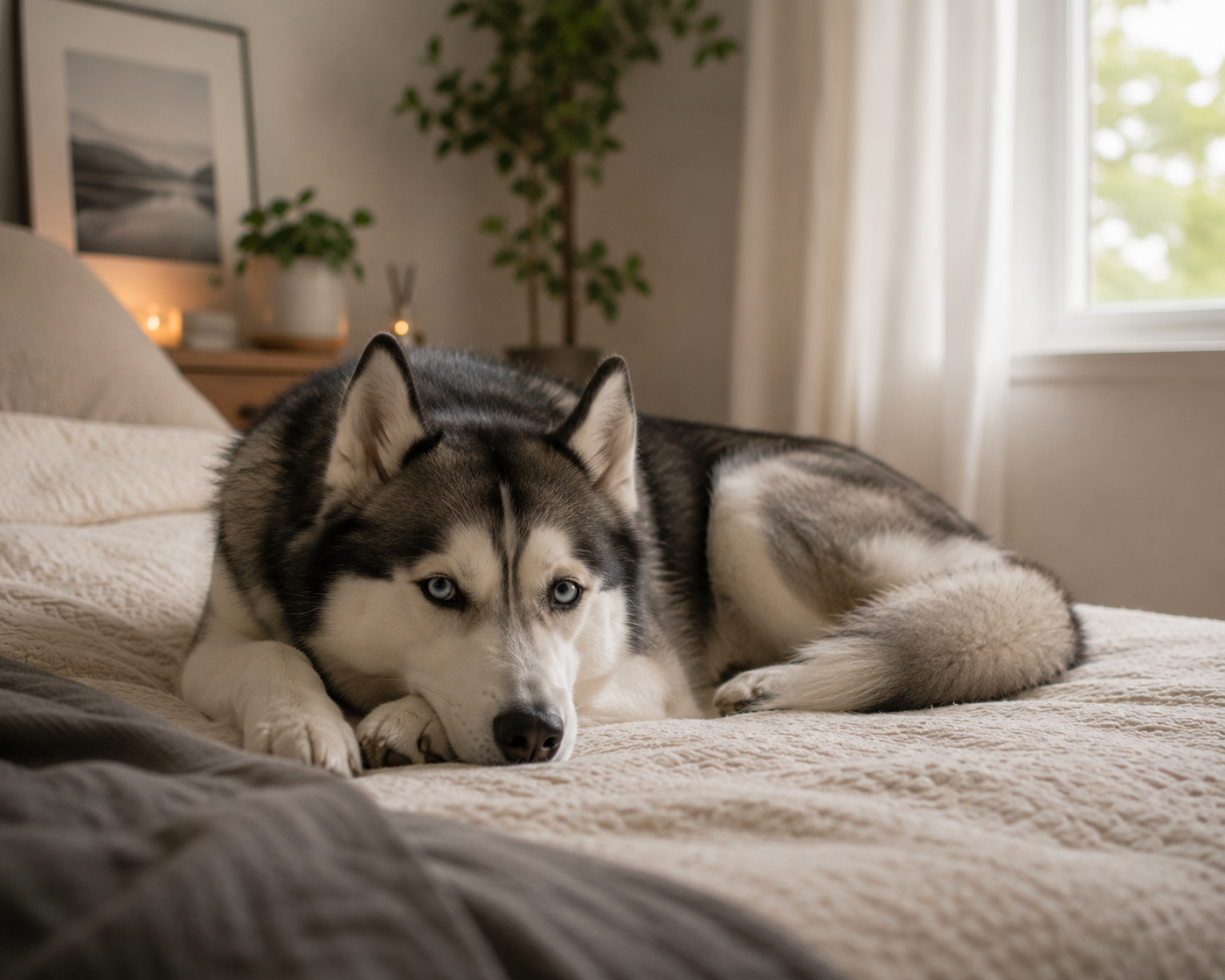
Calming a dog with anxiety is often approached as something that can be solved quickly, with the right technique, the right toy, or the right environment. But in reality, anxiety is not something that can be switched off in the moment, because it is not just a behavior—it is a state. Many owners look for immediate solutions when their dog becomes restless, vocal, or unable to settle, especially during alone time or after stressful events, and while certain tools can help reduce intensity, they do not replace the underlying process of regulation and learning. The difference between calming a dog and suppressing behavior is what determines whether the situation improves or repeats. Understanding what actually changes your dog’s emotional state, what only masks symptoms, and how to build calmness over time allows you to respond more effectively without creating additional stress. When you shift from trying to “fix” anxiety in the moment to supporting regulation consistently, calming your dog becomes a process rather than a reaction.
Why Calming a Dog Is Not the Same as Stopping Behavior
When a dog is anxious, the visible behavior is only the surface. Barking, pacing, whining, or restlessness are not the problem themselves, but expressions of an internal state that has already shifted.
This is where many approaches fail, because they focus on stopping what is visible rather than understanding what is driving it. If a dog is barking and the barking stops, it may look like the situation improved, but if the emotional state remains elevated, the behavior will return in another form or at another moment.
Calming, in the real sense, means reducing the level of activation in your dog’s system. It means moving from a state of alertness or stress toward a state where settling is possible. This is slower, less obvious, and often less satisfying in the moment, but it is the only approach that creates lasting change.
Understanding this difference changes how you respond. Instead of trying to interrupt the behavior, you start looking at what supports regulation.
The Environment Shapes More Than You Think
One of the most underestimated factors in calming an anxious dog is the environment itself. Not just in terms of space, but in terms of predictability, sound, and overall stimulation.
Dogs are constantly processing their surroundings. Sudden noises, movement, light changes, or even subtle shifts in routine can increase their level of alertness without you noticing it immediately. When the environment is unpredictable, the dog’s system remains slightly activated, even if there is no obvious trigger.
This is why calm environments are not necessarily quiet environments, but consistent ones. Background sound, stable lighting, and familiar spaces reduce the number of variables your dog has to process. The fewer unpredictable elements there are, the easier it is for the dog to settle.
Creating this kind of environment does not eliminate anxiety, but it lowers the baseline from which anxiety builds.
Why Physical and Mental Balance Matters
Calmness is not only an emotional state—it is also influenced by physical and mental balance.
A dog that has not had enough physical activity may struggle to settle because energy has not been released. At the same time, a dog that is overstimulated may also struggle, because their system has not had time to return to baseline.
The same applies to mental activity. Engagement without overload supports calmness, but constant stimulation can keep the dog in a heightened state.
This is why timing matters. Activity followed by rest creates a rhythm that allows the nervous system to regulate. Without that rhythm, calmness becomes harder to achieve, regardless of what you try in the moment.
What Actually Helps in the Moment
When your dog is already anxious, the goal is not to eliminate the feeling instantly, but to prevent it from escalating further.
Calm presence matters more than intervention. Your own behavior—how you move, how you speak, how you react—affects how your dog interprets the situation. Sudden movements or attempts to “fix” the moment can increase activation instead of reducing it.
Low, predictable interaction can help, but it needs to match your dog’s state. Some dogs benefit from proximity without direct engagement. Others need space to settle without interruption. The key is not applying a universal method, but observing what reduces intensity rather than increases it.
What helps in the moment is subtle. It is not about doing more, but about doing less in a more controlled way.
Why Routine Is One of the Strongest Calming Tools
Routine creates predictability, and predictability reduces uncertainty.
Dogs do not need rigid schedules, but they benefit from consistent sequences. When the day follows a recognizable pattern, the dog learns what to expect, and that expectation reduces the need for constant vigilance.
Feeding, walks, rest, and interaction forming a stable structure allows the nervous system to relax between events. Without this structure, every moment becomes slightly more uncertain, and that uncertainty keeps the system activated.
Routine does not calm your dog directly. It creates the conditions where calmness becomes possible.
The Role of Sound in Supporting Calmness
Sound can influence how a dog experiences their environment, especially when anxiety is triggered by sudden or unpredictable noise.
White noise, calming music, or soft background sound can reduce the contrast between silence and sudden sounds, making the environment feel more stable. This is particularly helpful in apartments or after events like fireworks, where residual sensitivity remains.
However, sound does not address the emotional cause of anxiety. It supports the environment, not the internal state. When used correctly, it reduces triggers. When relied on as a solution, it creates frustration.
Understanding this distinction allows sound to become a useful tool rather than a misplaced expectation.
Why Progress Is Built Outside the Stressful Moment
One of the most important shifts in thinking is understanding that calmness is not created during peak anxiety. It is built outside of it.
When your dog is already stressed, their ability to learn or adapt is limited. What you do in that moment can prevent escalation, but it does not build long-term resilience.
Resilience is built during calm states, through repeated experiences where your dog learns that certain situations are safe and predictable. This is especially relevant for separation anxiety, where gradual exposure to being alone creates the conditions for calmness.
The moment of stress is not where progress happens. It is where progress is tested.
The Mistake of Looking for a Single Solution
There is a tendency to search for one thing that will solve the problem—a product, a technique, a specific routine. But anxiety is rarely resolved by a single change.
It is the combination of environment, routine, exposure, and observation that creates improvement. Each element contributes a small part, and together they shift the overall state.
Looking for a single solution keeps the focus on immediate results. Understanding the system allows for long-term change.
Final Thoughts
Calming an anxious dog is not about finding the right intervention at the right moment. It is about creating conditions where calmness becomes more likely over time.
This requires patience, consistency, and a shift in perspective. Instead of reacting to each episode, you begin shaping the environment and the experiences that influence those episodes.
Your dog does not need to be perfectly calm at all times. They need to learn how to return to calm, and that learning happens gradually.
When you focus on that process, the moments of anxiety become less overwhelming, because you understand where they come from and where they are going.
And that understanding is what makes calmness possible.
Log tonight's session from your phone
The Qualma app is available now on Android and iPhone. Sign in with your existing account — no need to subscribe twice.


Continue reading
Veterinary & Behaviorist Advice
How To Tell If Your Dog Is Stressed: The Signs Most Owners Miss
Dog Separation Anxiety
Separation Anxiety Regression After Fireworks, Storms, or a Stressful Weekend
Veterinary & Behaviorist Advice