
How to Cover Absences While You Train Your Dog
Once you know your dog should not be left alone past the point where they panic, the next question is how to manage that alongside a job. This is where most owners give up, because the logistics look impossible. They usually are not: you do not need to cover every hour your dog is alone, only the few that cross their limit. This article covers sitters, walkers, daycare and free options, why a midday walker often does not solve it, and how to check the cover is working.
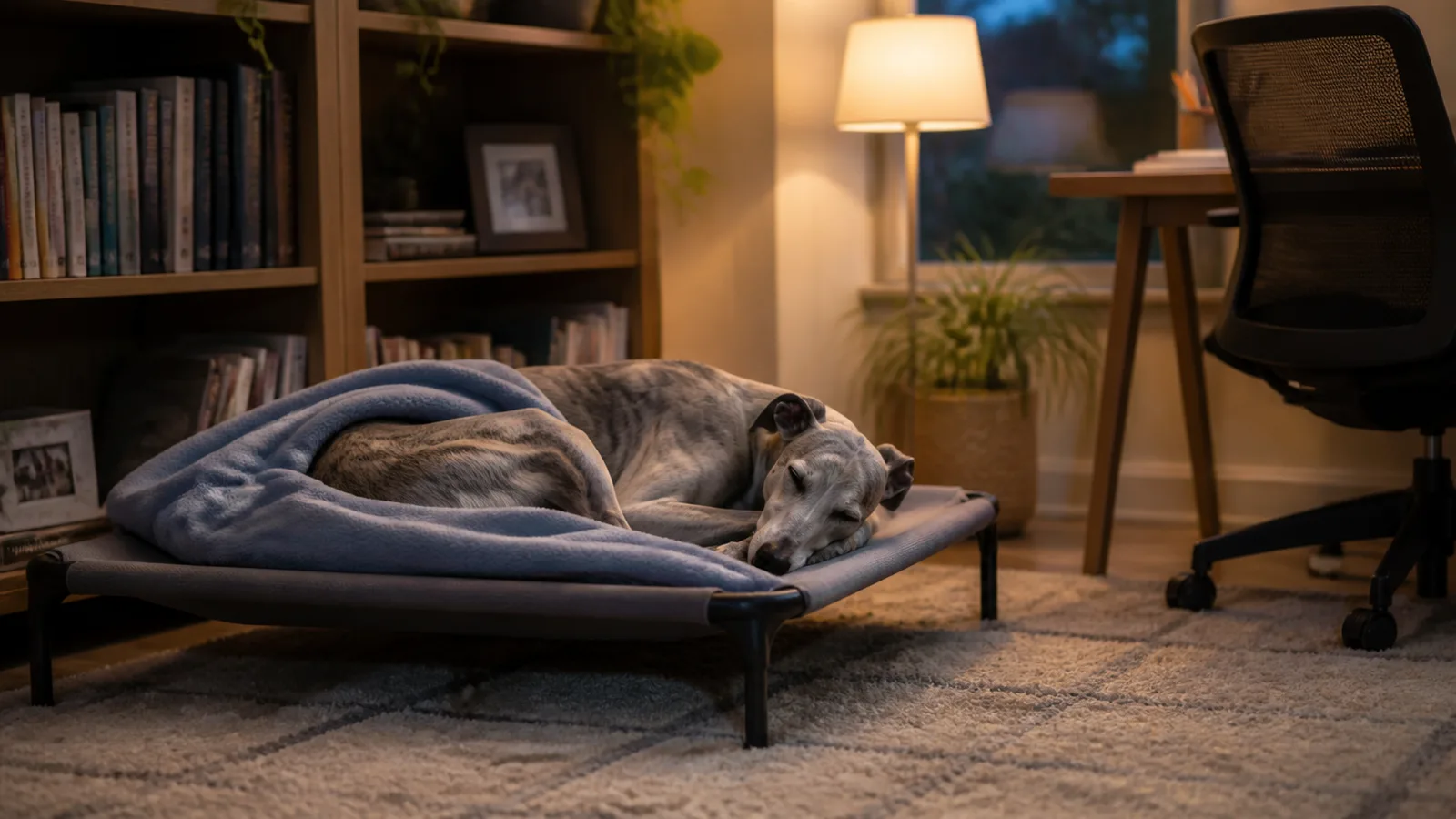
Once you understand that your dog should not be left alone past the point where they panic, the obvious question is how anyone is supposed to manage that alongside a job and a life. This is where most owners quietly give up on separation anxiety training, not because they disagree with the principle but because the logistics look impossible. The good news is that covering absences is usually a smaller problem than it first appears, because you do not need to cover every hour your dog is alone. You only need to cover the hours that cross their limit, and for many households that turns out to be a handful of hours a week rather than the whole working day. This article walks through the realistic options, what each one costs in money and effort, and how to tell whether the cover you have arranged is actually helping.
What Does It Mean to Cover an Absence?
Covering an absence means arranging things so your dog is not left alone for longer than they can currently handle. That might mean a person is with them, or that they are somewhere else entirely, or simply that a long absence has been split into two short ones. The word "cover" makes it sound like you need a babysitter for every hour of the day, which is not what is being asked. What you are protecting is the stretch of time that pushes your dog into genuine distress.
This only works if you know roughly where that limit sits, which is why the first step is always observation rather than booking. The reliable way to find that number is to watch a real absence instead of guessing from how the house looks when you get back, which we cover in why a camera may be the most important tool you have. Without that number you will almost certainly buy more cover than you need, in the wrong places, and conclude that the whole approach is unaffordable. With it, most owners discover the problem is narrower than they feared.
How Do You Work Out What Actually Needs Covering?
Start by writing out a normal week hour by hour, including the absences you treat as routine and barely notice. Mark every stretch where your dog is alone for longer than their current limit, and leave everything else alone. Most people are surprised by the result: the week usually contains two or three genuinely problematic stretches rather than a solid block of impossible days. Those marked stretches are the only thing you need to solve.
This exercise matters because it changes what you are shopping for. An owner who thinks they need eight hours of cover every weekday is looking at a cost that no household can sustain, and will give up before they start. An owner who knows they need three hours covered on Tuesday and Thursday is looking at a manageable arrangement that a neighbor, a student, or a single daycare day might solve entirely. The plan becomes affordable the moment it becomes specific.
Who Can Realistically Look After Your Dog?
There are more options than most owners consider, and they are not equally good for a dog with separation anxiety. The main ones are a pet sitter who comes to your home, a dog walker, daycare, a friend or family member, a neighbor, taking your dog to work, or rearranging who in the household is home when. Each has a different cost, a different level of reliability, and a different effect on an anxious dog. The right answer usually combines two or three rather than relying on one.
For separation anxiety specifically, cover in your own home tends to work best. Your dog stays in the environment they already know, keeps their normal routine, and does not have to cope with a new place on top of being away from you. A sitter who sits in your living room with a laptop is doing something genuinely useful even if it feels like you are paying someone to do nothing. What they are providing is company, which is the exact thing your dog is missing.
Why Does a Midday Dog Walker Often Not Solve It?
This is the single most common mistake, and it is worth understanding before you spend money on it. A dog walker who visits for thirty minutes in the middle of a six-hour absence does not turn that absence into a covered one. It turns it into two long absences with a break in the middle, and both of those may still be well over your dog's limit. If your dog panics after forty minutes, a walk at the three-hour mark arrives long after the damage is done.
There is a second problem that catches people out. For many anxious dogs, the walker leaving is its own departure, complete with its own panic. You have not reduced the number of frightening departures your dog experiences that day, you have increased it from one to two. This does not mean walkers are useless — they are excellent for exercise, toileting, and for dogs whose limit is genuinely a few hours. It means a walker is not automatically a solution to separation anxiety, and buying one without checking will feel like the approach failed when it was never the right tool.
Is Daycare a Good Idea?
Daycare works extremely well for some dogs and badly for others, and the difference is usually about the dog rather than the facility. A sociable dog who enjoys other dogs may have a genuinely good day and come home tired and settled. A dog who finds other dogs stressful, or who is easily over-aroused, may spend the day in low-level fear and come home with less capacity to cope than they started with. Separation anxiety and comfort around other dogs are completely separate things, and one does not predict the other.
If you are considering it, do a short trial before committing to a schedule, and ask the facility how they handle a dog who is not settling. Watch what your dog is like that evening rather than judging by how they seemed at pickup, because an over-aroused dog often looks cheerful and is actually exhausted in an unhelpful way. It also helps to ask whether your dog will have somewhere quiet to retreat to. A good daycare will answer these questions readily, and a defensive answer tells you something useful.
Can Friends, Family or Neighbors Help?
They often can, and this is the most underused option because owners feel awkward asking. The request is smaller than it sounds when you have done the hour-by-hour exercise: you are not asking someone to look after your dog, you are asking whether they could be in your apartment for two hours on Tuesday. Neighbors who work from home, retired family members, and students nearby are frequently willing when the ask is that specific. It helps enormously to name the exact hours rather than asking for open-ended help.
Two arrangements are worth knowing about. The first is swapping with another dog owner, where you cover each other's difficult stretches on different days, which costs nothing but coordination. The second is a conversation with your employer about shifting your hours or working from home on the days that matter most, which more people succeed at than expect to. If explaining the situation to other people feels difficult, you are not unusual — the invisible logistics of this are something we have written about in the hidden burden of being a separation anxiety dog parent.
What If You Cannot Afford Cover At All?
Start with the changes that cost nothing, because there are usually more of them than owners expect. Splitting a long absence into two shorter ones, moving errands to a day when someone else is home, doing the shop online, or rearranging which household member leaves when can remove a surprising amount of over-threshold time without any money changing hands. Reducing the length of the worst absence in the week does more good than reducing the number of absences overall.
If, after all of that, the numbers still do not work, that is a genuine situation rather than a personal failing, and it is worth raising with your veterinarian. Medication is not a way of avoiding the training and it is not a sign that you have done something wrong. For some dogs it increases what they can currently tolerate, which buys you room to work in when the practical options have run out. We cover that conversation in why your vet should be part of the plan, and it is a reasonable thing to ask about rather than a last resort.
How Do You Know the Cover Is Actually Working?
Watch, rather than assume, because cover that looks fine can quietly fail. Put a camera on the covered absence at least once and check that your dog actually settles while the person is there. Some dogs remain anxious with a sitter present because it is you specifically they are attached to, and that is important information rather than a failure of the arrangement. If that is what you see, the answer is usually a person your dog knows better, or a shorter absence, rather than abandoning the idea.
Pay particular attention to the handover moments, because they are where problems hide. Check what happens when the sitter arrives and, more importantly, when they leave, since that departure can trigger the same panic as yours. Also be careful not to mistake a still, silent dog for a settled one, as those are genuinely different states — we explain how to tell them apart in calm or a freeze response. A dog who lies motionless and watchful for two hours is not being successfully covered.
What To Do This Week
Do the hour-by-hour map before you contact anyone or spend anything. Write out your normal week, mark only the stretches that go past your dog's current limit, and count them. Most owners find two or three, and seeing that number written down is usually the moment the problem stops feeling impossible and starts feeling like something with a solution.
Then solve the single worst one first, using whatever option is easiest for you to arrange rather than whatever seems most thorough. If that is asking a neighbor, ask the neighbor. If it is moving one errand to Saturday, move it. You are not trying to build a perfect week of cover — you are trying to stop the worst absence of the week from crossing the line, because that is the one setting the pace of everything else.
Log tonight's session from your phone
The Qualma app is available now on Android and iPhone. Sign in with your existing account — no need to subscribe twice.